2026년 7월 17일, 상하이. 중국 스타트업 문샷이 키미 K3를 공개했다. 파라미터 2조 8천억, 세계 최대의 오픈웨이트 모델이다. 가중치는 7월 27일 누구에게나 열린다.
On July 17, 2026, in Shanghai, the Chinese startup Moonshot released Kimi K3. Two-point-eight trillion parameters — the largest open-weight model in the world. The weights open to anyone on July 27.
미국 최상위 모델을 다 이긴 것은 아니다. 문샷도 앤트로픽의 페이블 5와 오픈AI의 GPT-5.6에는 뒤진다고 밝혔다. 하지만 어떤 코딩 평가에선 1위를 했고, 종합 지능 지표에선 세계 4위다. 값은 미국 최상위 모델의 절반쯤이고, 게다가 열려 있다.
It did not beat every top American model. Moonshot said so itself: overall, it trails Anthropic's Fable 5 and OpenAI's GPT-5.6. But it took first place on one blind coding test, and ranks fourth in the world on the composite intelligence index. It costs about half of the top American model — and it is open.
최고는 아니다. 그러나 충분히 좋다. 싸고, 열려 있다.
Not the best. But good enough. Cheap, and open.
같은 주 한국 증시는 검은 월요일을 맞았다. 코스피는 7월 20일 6,516으로, 하루에 4.46% 빠졌다. 지능이 충분히 좋아지자, 그 지능을 만드는 기계에 돈을 걸었던 시장이 먼저 흔들렸다.
That same week Korea's market had its Black Monday. On July 20 the Kospi closed at 6,516, down 4.46% in a day. The moment intelligence became good enough, the market that had bet on the machines making it was the first to shake.
아이폰인가, ATM인가
An iPhone, or an ATM
지능이 흔해진다는 건 무슨 뜻인가. 답은 이 기술을 무엇으로 보느냐에 달렸다.
What does it mean for intelligence to become common? The answer depends on what you take this technology to be.
ATM이라면, 한 가지 일을 대신하는 기계다. 창구 직원의 일을 자동화하고, 거기서 끝난다.
An ATM replaces one task. It automates the teller's work, and there it ends.
아이폰이라면 다르다. 한 가지 일이 아니라 모든 일 밑에 깔리는 판이다. 그 위에서 새로운 일이 수없이 생기고, 하던 일의 방식이 통째로 바뀐다.
An iPhone is different. Not one task, but a floor laid beneath every task. On top of it countless new kinds of work appear, and the way old work is done is remade entirely.
지난 4월, 자강헌이 국회에서 연 토론회의 진단도 같았다. AI는 앱이 아니라 인프라라고. 1920년대의 전기처럼, 모든 것 밑에 깔리는 판이라고. 그리고 참석자 다수가 앞으로 가장 중요하게 꼽은 것은, 직원의 기본 역량으로서의 AI 활용이었다.
Last April, the forum Jagangheon held at the National Assembly reached the same reading: AI is infrastructure, not an app — a floor laid beneath everything, like electricity in the 1920s. And what most participants named as the thing that would matter most going forward was AI fluency as a baseline capability for every worker.
기본이 된다는 말에는 그늘이 있다. 기본은 남보다 앞서게 해주지 않는다. 갖추지 않으면 뒤처질 뿐이다.
But there is a shadow in the word baseline. A baseline does not put you ahead of anyone. Fail to have it and you simply fall behind.
거품인가, 아닌가
Bubble, or Not
시장은 이 지능을 두고 갈렸다.
The market split over this intelligence.
한쪽은 거품이라 부른다. 오가는 건 막대한 구독료와 수백조 원의 인프라 투자뿐, 실제 벌어들이는 것은 그에 못 미친다고. 언젠가 터진다고.
One side calls it a bubble. All that moves, they say, is enormous subscription fees and hundreds of trillions of won in infrastructure spending — while what is actually earned falls short. It bursts eventually.
다른 쪽은 반박한다. 실체가 있다고. 생산성을 실제로 끌어올리고, 값이 싸질수록 사람들은 더 많이 쓴다고.
The other side pushes back. It is real, they say. It genuinely raises productivity, and the cheaper it gets the more people use it.
두 말은 팽팽하다. 그런데 둘 다 틀린 질문을 붙들고 있다. 이 다툼은 하나의 그림 앞에서 정리된다.
The two are evenly matched. But both are holding the wrong question. The argument settles in front of a single picture.
노지에서 하우스로
From Open Field to Greenhouse
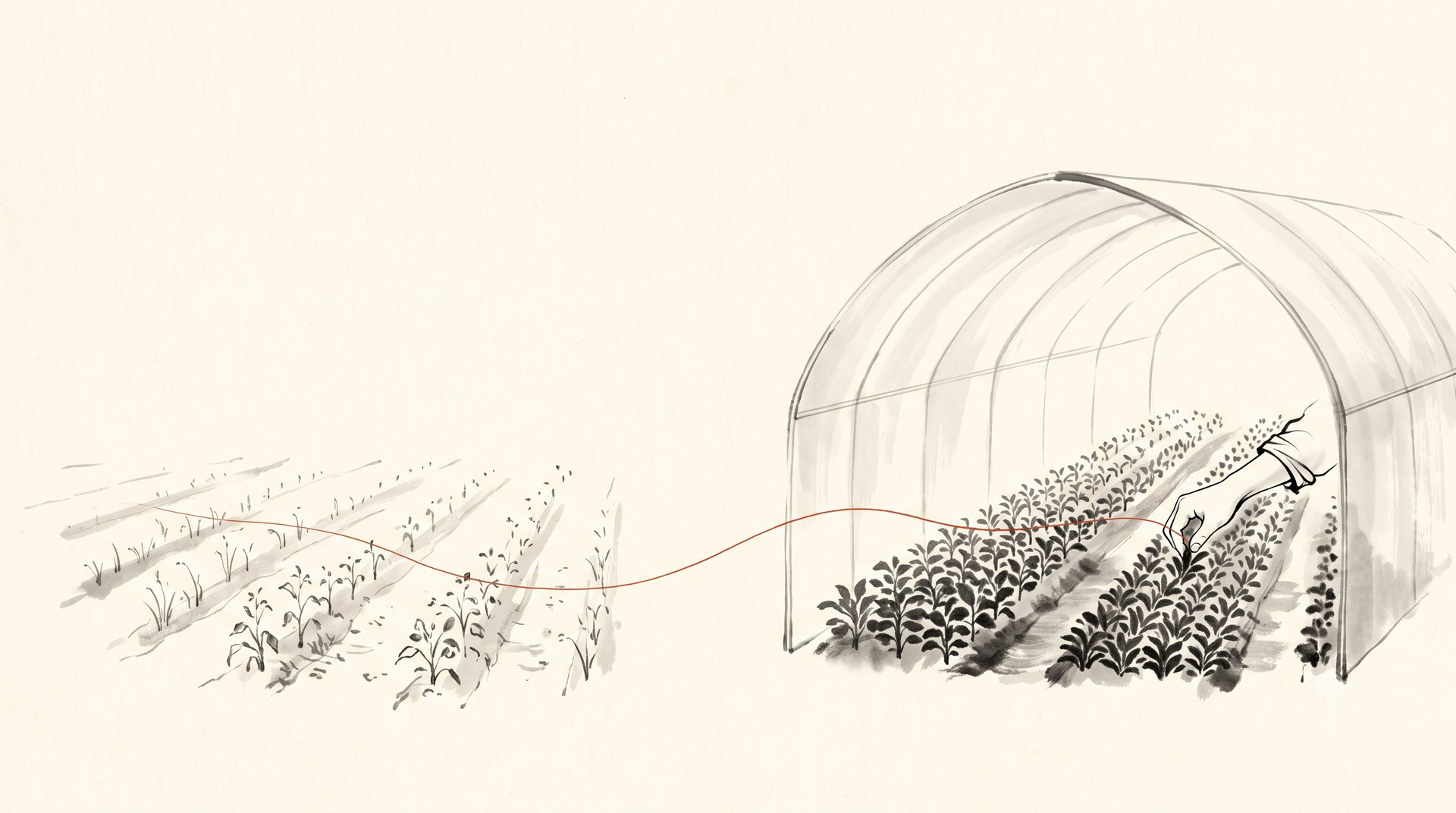
예전엔 노지에서 농사를 지었다. 하늘에 맡기고, 계절을 따랐다. 이제 그 자리에 하우스가 선다.
Once, farming was done in the open field. You left it to the sky and followed the seasons. Now a greenhouse stands in that same place.
하우스는 분명한 발전이다. 겨울에도 농사를 짓는다. 수확이 늘고, 품질이 고르다. 계절을 이긴다. 나라 전체의 생산은 실제로 두꺼워진다. 거품이 아니다.
The greenhouse is real progress. You farm even in winter. Yields rise, quality is even, the season is beaten. The nation's output does genuinely grow thicker. It is not a bubble.
그런데 하우스 안에서 짓는 사람을 보면 셈이 달라진다.
But look at the person farming inside the greenhouse, and the arithmetic changes.
생산량은 늘었다. 그러나 소득은 제자리다. 모두가 하우스를 지어 값이 내려갔기 때문이다. 일은 오히려 늘었다. 비닐을 관리하고, 온도를 맞추고, 겨울 난방까지 대야 한다.
Output rose. Yet income stayed flat — because everyone built a greenhouse, and the price came down. The labor, meanwhile, grew. Managing the film, holding the temperature, paying for winter heat.
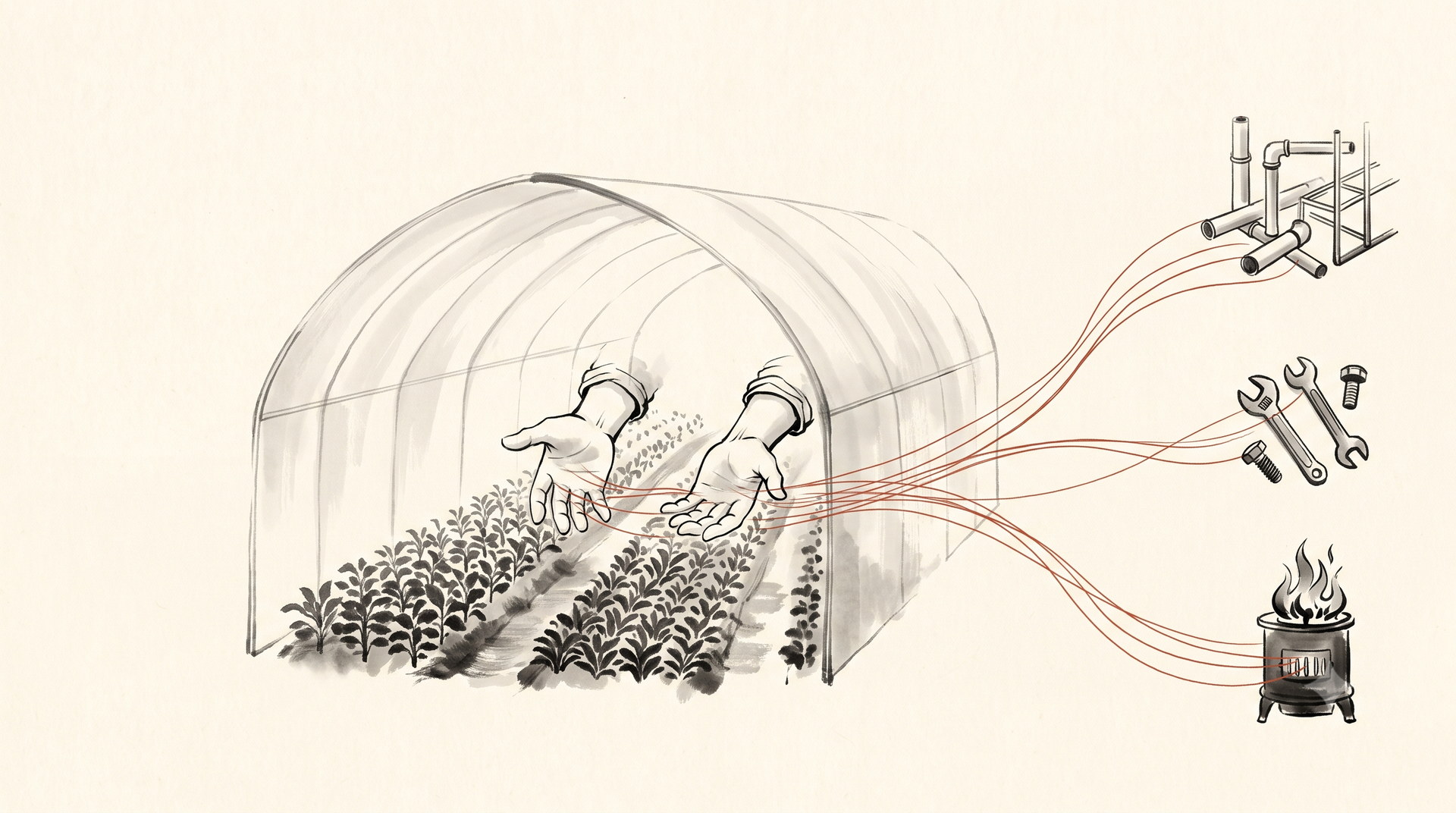
그리고 매달 나가는 새 비용이 생겼다. 하우스를 만든 제조사에게, 설치한 시공업자에게, 겨울 내내 태우는 에너지에게. 늘어난 몫은 그리로 흘렀다. 짓는 사람의 손에는 남는 게 없다.
And new bills arrive every month. To the firm that made the greenhouse, to the crew that installed it, to the energy burned all winter long. The added gains flowed there. In the grower's hand, nothing remains.
이것이 자강헌이 4월 국회에서 내놓은 Ghost GDP다. 나라는 부유해지는데 그 안의 사람은 뒤처지는 구조. 그때 증거는 사모자본이었다. 이번엔 AI다.
This is what Jagangheon called Ghost GDP at the National Assembly in April — a structure where the nation grows richer while the person inside it falls behind. Back then the evidence was private capital. This time it is AI.
그러니 거품이냐 아니냐는 틀린 질문이다. 거품이 아니다. 생산성 경쟁의 경기장이 바뀐 것이다. 노지가 하우스로 바뀌었을 뿐, 더 뛴다고 앞서지는 않는다.
So bubble-or-not is the wrong question. It is not a bubble. The arena of productivity competition has moved. The open field became a greenhouse — and running harder no longer puts you ahead.
빠져나갈 수 없다
No Way Out
하우스를 안 지으면 되지 않느냐고 물을 수 있다. 그럴 수 없다.
Then don't build the greenhouse, one might say. You can't.
이웃이 모두 하우스를 지으면, 노지에 남은 사람은 값에서 밀린다. 겨울에도 나오는 이웃의 수확 앞에서, 계절을 따르는 농사는 버티지 못한다. 하우스가 있는 세상에서, 하우스가 없는 사람은 하우스를 지을 수밖에 없다.
Once every neighbor builds one, whoever stays in the open field is beaten on price. Against a neighbor's harvest that comes even in winter, farming by the seasons cannot hold. In a world with greenhouses, the person without one has no choice but to build one.
유발 하라리가 짚은 딜레마가 이것이다. 한 사람이, 한 나라가 AI를 제한해도 소용없다. 옆에서 쓰는 한 경쟁은 모두를 끌어당긴다. 멈추는 쪽이 진다. 그래서 아무도 멈추지 못하고, 모두가 더 많이 일한다.
This is the dilemma Yuval Harari pointed to. It is no use for one person, or one nation, to hold AI back. As long as the others use it, competition pulls everyone in. Whoever stops, loses. So no one stops, and everyone works more.
직원에게 AI 활용을 가르친다. 일하는 방식이 바뀐다. 처음엔 수월해진다. 그러나 곧, 그것은 앞서기 위한 도구가 아니라 남기 위한 조건이 된다. 하우스는 선택이 아니라 전제가 된다.
You teach your staff to use AI. The way work is done changes. At first it gets easier. But soon it becomes not a tool for getting ahead, but the condition for not falling out. The greenhouse is no longer a choice. It is a premise.
값은 어디로 갔나
Where Did the Value Go
하우스에서 짓는 사람의 소득이 제자리인 것은 기술의 법칙이 아니다. 늘어난 몫이 어디로 갔느냐의 문제다.
That the grower's income stays flat is not a law of technology. It is a question of where the added gains went.
값이 내려간 만큼은 소비자가 가져갔다. 그리고 나머지는 위로 갔다. 하우스를 판 곳, 지어 준 곳, 데워 준 곳. 농부는 값을 매기는 자리가 아니라, 매겨진 값을 받는 자리에 있었다.
As much as the price fell, the consumer took. The rest went upward. To the ones who sold the greenhouse, built it, heated it. The farmer sat not in the seat that sets the price, but in the seat that takes the price set.
Ghost GDP의 첫 증거였던 사모자본에서도 그랬다. 성장의 과실은 인프라 소유자에게 집중됐고, 은퇴한 의사와 소방관의 연금은 환매조차 하지 못했다.
It was the same in private capital, Ghost GDP's first evidence. The fruits of growth concentrated among the owners of infrastructure, while retired doctors and firefighters' pensions could not even withdraw their money.
AI도 같은 지도다. 하우스를 판 제조사는 모델을 쥔 곳이다. 시공업자는 그 위에 클라우드를 얹은 곳이다. 겨울 난방은 데이터센터를 돌리는 전력이다. 그리고 그 밑에 부품을 대는 곳 — 반도체다. 하우스를 짓는 사람과, 하우스를 파는 사람은 다르다.
AI maps onto the same ground. The firm that sold the greenhouse is the one holding the model. The installer is the one who laid the cloud on top. The winter heat is the power running the data centers. And beneath it, the one supplying the parts — the chips. The one who builds the greenhouse and the one who sells it are not the same.
한국이라는 부품상
Korea, the Parts Supplier
한국은 그 파는 쪽 자리를 노린다. 값을 받는 농부가 아니라, 하우스에 들어가는 부품을 파는 쪽. 삼성전자와 SK하이닉스가 대는 고대역폭메모리, HBM이 그것이다.
Korea aims for that selling seat. Not the farmer who takes the price, but the one who sells the parts that go inside the greenhouse. The high-bandwidth memory, HBM, that Samsung and SK Hynix supply.
1편에서 본 도박판 — 두 종목이 코스피 시가총액의 절반을 넘긴 판 — 이 올라탄 기반이 이 자리다. 모델 경주에서 누가 이기든 부품은 팔린다. 미국이 이기든 중국이 이기든, 그들은 우리 메모리를 산다.
The gambling floor from the first piece — where two stocks passed half the Kospi's market cap — rests on this seat. Whoever wins the model race, the parts still sell. Whether America wins or China wins, they buy our memory.
그러나 여기 착시가 있다. 토론회가 주권의 착시라 부른 것이다. 한국은 자신이 통제하지 못하는 시스템 안에서 세계 최고의 부품을 만든다. 영국이 잠수함과 탄두는 스스로 만들되, 그것을 실어 나르는 트라이던트 미사일은 미국에서 빌리듯이. 계약이 끊기면 능력은 사라진다.
But there is an illusion here. The forum called it the sovereignty illusion. Korea builds world-class components inside a system it does not control. As Britain builds its own submarines and warheads yet leases the Trident missiles that carry them from the United States — cancel the contract, and the capability vanishes.
부품을 대는 자리도 영원하지 않다. 병목은 사라지지 않고 옮겨갈 뿐이며, 옮겨가면 부품의 종류도 바뀐다. 같은 시기 중국의 창신은 범용 D램을 저가로 파고들고 있다. 오픈웨이트 모델은 기업 안으로 퍼진다. 오늘의 HBM이 내일의 부품이라는 보장은 없다.
Nor is the parts-supplier's seat forever. The bottleneck does not disappear; it moves — and when it moves, the kind of part changes too. In the same period China's CXMT is undercutting the commodity DRAM market on price. Open-weight models spread inside companies. There is no guarantee that today's HBM is tomorrow's part.
부품상은 전쟁이 계속되는 한 번성한다. 그러나 무엇이 부품인지 정하는 것은 부품상이 아니다.
The supplier prospers as long as the war goes on. But it is not the supplier who decides what the part is.
같은 날, 두 개의 붕괴
Same Day, Two Collapses
7월 20일, 코스피 6,516. 1편과 2편은 같은 날의 같은 숫자를 본다.
July 20, Kospi 6,516. The first piece and the second look at the same number on the same day.
1편은 이 붕괴를 레버리지 도박판의 붕괴로 읽었다. 2편은 같은 붕괴를, 지능이 흔해지며 값이 흐르는 방향이 드러난 순간으로 읽는다. 다른 사건이 아니다. 한 몸이다.
The first read that collapse as the collapse of a leveraged gambling floor. The second reads the same collapse as the moment the direction of the value's flow came into view, as intelligence turned common. Not two events. One body.
두 종목에 판을 몰아준 것도, 그 두 종목이 값을 매기는 자리를 노린 부품상이라는 것도, 그 자리마저 주권의 착시 위에 서 있다는 것도, 하나의 구조다.
That the board was piled onto two stocks, that those two stocks chased the seat that sets the price as parts suppliers, that even that seat stands on a sovereignty illusion — it is one structure.
남는 물음
The Question That Remains
경기장이 바뀌었다. 하우스를 지을지 말지는 물음이 아니다. 하우스가 있는 세상에서는 모두가 하우스로 들어간다.
The arena has moved. Whether to build the greenhouse is not the question. In a world with greenhouses, everyone goes in.
그러니 물음은 지능을 얼마나 잘 쓰느냐에서 멈추지 않는다.
So the question does not stop at how well you use the intelligence.
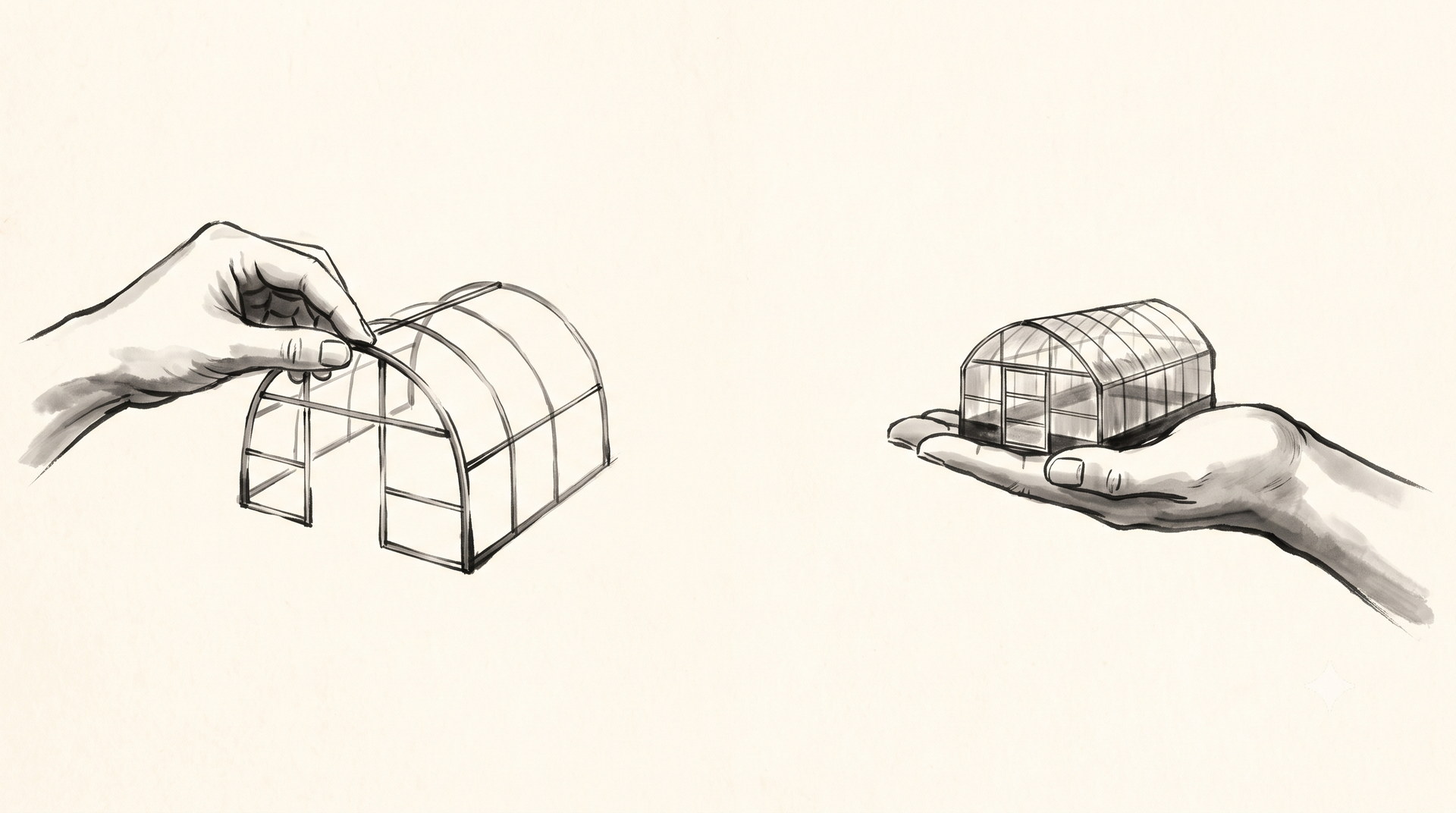
값을 매기는 자리에 서 있는가, 받는 자리에 서 있는가. 늘어난 몫을 걷는 쪽인가, 흘려보내는 쪽인가. 짓는 손인가, 파는 손인가.
Are you in the seat that sets the price, or the one that takes it? Are you the side that collects the added gains, or the side that lets them pass through? The hand that builds, or the hand that sells?
지능이 흔해진 시대에 남는 것은 더 나은 지능이 아니다. 그 앞에서 어디에 설지를 아는 눈이다.
What remains in an age when intelligence is common is not better intelligence. It is the eye to know where to stand before it.
주(註)Notes
본문 삽화 3점은 AI 이미지 생성 도구로 제작했으며, 실제 장면을 촬영한 사진이 아니다. 인포그래픽 3점은 개념도로, 아래 자료를 근거로 자강헌이 작성했다.
The 3 illustrations were made with an AI image-generation tool; they are not photographs of real scenes. The 3 infographics are conceptual diagrams produced by Jagangheon from the sources below.
출처: 키미 K3 — Moonshot 기술 블로그·Artificial Analysis·Tom's Hardware·The Decoder(2조 8천억 params, MoE, 벤치마크, task당 약 $0.94). 시장 — 한국거래소·이데일리·서울경제(코스피 7·20 종가 6,516.27, −4.46%, 매도 사이드카). 메모리·에너지 — SemiAnalysis·Bloomberg. Ghost GDP·주권의 착시 — 자강헌 국회 토론회(2026·4·2) 및 관련 글. 시장 수치는 2026년 7월 20일 종가 기준이며 이후 변동될 수 있다.
Sources: Kimi K3 — Moonshot technical blog, Artificial Analysis, Tom's Hardware, The Decoder (2.8T params, MoE, benchmarks, ~$0.94 per task). Market — Korea Exchange, Edaily, Seoul Economic Daily (Kospi July 20 close 6,516.27, −4.46%, sell sidecar). Memory/energy — SemiAnalysis, Bloomberg. Ghost GDP and the sovereignty illusion — Jagangheon's National Assembly forum (Apr 2, 2026) and related posts. Market figures are as of the July 20, 2026 close and may change thereafter.
세계관: 능동적 중립 · 방법: Deep Context Inquiry.
Worldview: Active Neutrality · Method: Deep Context Inquiry.