실리콘밸리의 테크 억만장자들과 중국 공산당 최고위 엘리트들. 이 두 집단의 가장 기묘한 공통점은 자본도, 권력도, 야망도 아닙니다. 유머 감각의 완벽한 부재입니다. 그리고 댄 왕은 이 유머 없는 무자비함이야말로 오늘날 세계를 재편하는 가장 강력한 동력이라고 말합니다. 그 무자비함 속에서 인간의 주체성은 어디로 향하고 있을까요?
Silicon Valley billionaires and the Chinese Communist Party's top elite. What these two groups share most strangely is neither capital, power, nor ambition — but the complete absence of humor. And Dan Wang argues that this humorless ruthlessness is precisely the most powerful force reshaping the world today. Where is human agency heading inside that ruthlessness?
⏵ 처방편 「파도 위에서 설계하다 — 능동적 중립의 처방」 8분 영상도 함께 보기 — YouTube ⏵ Watch the prescription — "Designing on the Wave — A Prescription After Corgi-fication" 8-minute video — YouTube
1.
유머를 잃은 두 제국
Two Empires That Lost Their Humor
댄 왕(Dan Wang)이 2026년 1월 1일 발표한 연례 서한 「빛의 안전한 전송(The Secure Transport of Light)」은 한 문장으로 시작합니다. "실리콘밸리와 중국 공산당이 닮은 점 중 하나는 둘 다 진지하고, 자아도취적이며, 참으로 유머 감각이 전혀 없다는 것입니다." 단순한 농담이 아닙니다. 이 진단은 서한 전체를 관통하는 핵심 진앙(震央)입니다.
Dan Wang's 2026 annual letter, "The Secure Transport of Light," opens with a single sentence: "One thing Silicon Valley and the Chinese Communist Party have in common is that both are earnest, narcissistic, and utterly devoid of humor." This is not a passing joke. It is the seismic epicenter that runs through the entire letter.
댄 왕이 인용하는 두 가지 농담을 보십시오. 샘 알트만은 한 테크 컨퍼런스에서 "AI가 아마도 세상을 멸망시킬 것 같지만, 그동안 심층 학습을 통해 위대한 기업들이 탄생할 것입니다"라고 말했습니다. 종말론적 예언과 비즈니스 어조를 한 호흡에 결합하는, 그들 세계에서 통하는 최고의 유머. 한편 시진핑은 당이 친절하게 발간한 「시진핑 농담 공식 목록」에서 회고합니다. "그때의 PM2.5는 지금보다 더 나빴다. 나는 그것이 PM250이라고 농담하곤 했다."
Look at the two jokes Dan Wang cites. At a tech conference, Sam Altman said: "AI will probably destroy the world, but in the meantime great companies will be born through deep learning." A combination of apocalyptic prophecy and business tone in a single breath — the height of humor in their world. Meanwhile, in the Party-published "Official Catalog of Xi Jinping's Jokes," Xi reminisces: "Back then PM2.5 was worse than now. I used to joke that it was PM250."
유머의 부재가 의미하는 것
What the Absence of Humor Means
유머는 본질적으로 거리두기의 능력입니다. 자신이 처한 상황을 한 발 떨어져서 객관화하고, 모순을 여유롭게 비틀어 볼 때 유머가 발생합니다. 그러므로 유머 감각의 완벽한 부재란, 그 사람이나 집단이 자신의 목표에 너무 깊이 매몰되어 외부 시선으로 자신을 볼 능력을 잃었다는 강력한 신호입니다. 댄 왕이 진단하는 것은 단순한 성격 결함이 아니라, 두 시스템이 모두 자기 폐쇄적 합리성에 갇혀 있다는 구조적 사실입니다.
Humor is fundamentally the capacity for distance. It arises when one steps back, objectifies one's situation, and twists its contradictions with ease. The complete absence of humor, then, is a powerful signal that a person or group has become so deeply absorbed in their goals that they have lost the ability to see themselves from the outside. Dan Wang is diagnosing not a personality flaw, but a structural fact: both systems are trapped within their own self-enclosed rationality.
그리고 바로 이 무자비함이 그들의 추진력입니다. 댄 왕은 단호하게 말합니다. "그들이 성공적인 이유는 무자비하기 때문일 것입니다." 거인들이 자신을 의심하지 않을 때, 시스템은 가장 빠르게 폭주합니다. 그러나 그 폭주의 그늘에서, 평범한 시민의 주체성은 점점 깎여 나갑니다. 이것이 우리가 오늘 해부할 풍경의 시작점입니다.
And this very ruthlessness is their driving force. Dan Wang puts it bluntly: "They are successful, perhaps, because they are remorseless." When giants do not doubt themselves, systems run amok at maximum velocity. But in the shadow of that runaway, the agency of ordinary citizens is steadily worn away. This is the starting point of the landscape we will dissect today.
2.
실리콘밸리 — 상자 속의 신과 인류의 코기화
Silicon Valley — God in a Box and the Corgi-fication of Humanity
2.1 사이비 종교가 된 기술
2.1 Technology Turned Cult
댄 왕은 2026년 초, 예일에서 스탠퍼드로 거처를 옮겼습니다. 10년 만에 돌아온 베이 에어리어는 훨씬 기묘해져 있었습니다. 2015년 사람들은 소비자 앱과 암호화폐와 비즈니스 소프트웨어를 만들었습니다. 그것은 지금 되돌아보면 훨씬 순수하고 차분한 시절이었습니다. 2026년 샌프란시스코의 모든 것은 AI가 규정합니다. 캘리포니아의 자연미 한가운데서 너드들은 "상자 속의 신(God in a Box)"을 만들려 고군분투합니다. 그 배경에는 피터 틸이 적그리스도의 본질에 대해 강의하며 배회합니다. 댄 왕의 표현 그대로, 그것은 "실제 삶보다는 고딕 호러 소설에 더 어울려 보이는 기괴한 환경"입니다.
In early 2026, Dan Wang moved from Yale to Stanford. The Bay Area he returned to after a decade was far stranger. In 2015, people built consumer apps, cryptocurrencies, and business software — a much purer, calmer time in retrospect. In 2026, everything in San Francisco is defined by AI. Amid California's natural beauty, nerds struggle to create "God in a Box." In the background, Peter Thiel paces, lecturing on the nature of the Antichrist. As Dan Wang puts it, "this bizarre environment seems more suited to Gothic horror fiction than to actual life."
왜 종교적이라는 표현이 정확한가? 인류의 모든 문제를 해결해 줄 동시에 우리를 멸망시킬 수도 있는 초지능. 그것을 상자에 가두고 통제하겠다는 발상은 기술적이라기보다 철저히 신학적입니다. 그리고 이 신학은 익숙한 구조를 가지고 있습니다. 17세기 프랑스 철학자 블레즈 파스칼이 던진 도박 — "신이 존재할 때 얻는 무한한 보상과 신이 존재하지 않을 때 잃는 유한한 손실을 비교하면, 무조건 신을 믿는 쪽이 이득"이라는 그 도박을 실리콘밸리는 AGI라는 신의 자리에 그대로 옮겨놓았습니다.
Why is "religious" the precise word? Superintelligence that will solve all of humanity's problems while also potentially destroying us. The notion of locking it in a box and controlling it is less technological than thoroughly theological. And this theology has a familiar structure. The wager that 17th-century French philosopher Blaise Pascal threw — "If you compare the infinite reward of believing in God when He exists against the finite loss of believing when He doesn't, belief always wins" — Silicon Valley has transposed exactly onto the seat of AGI as god.
2.2 결정적 전략 자산이라는 신앙
2.2 The Faith of Decisive Strategic Advantage
이 신학을 가장 정직하게 표현한 용어가 바로 결정적 전략 자산(Decisive Strategic Advantage, DSA)입니다. 어떤 국가나 랩이 초지능에 먼저 도달하면 세계를 완전히 지배할 수 있는 과학적·군사적 우위를 점하게 된다는 믿음. 댄 왕은 이 믿음을 단순한 가설이 아니라 실리콘밸리 전체를 묶는 신앙 체계로 봅니다. 만약 이 가능성을 믿는다면, 두 가지가 동시에 일어납니다. 첫째, 인류의 '코기화(Corgi-fication)'를 걱정하게 됩니다. 둘째, 상대를 차단하기 위해 모든 것을 던지게 됩니다.
The most honest expression of this theology is the term Decisive Strategic Advantage (DSA): the belief that whichever nation or lab reaches superintelligence first gains a scientific and military edge sufficient to fully dominate the world. Dan Wang sees this not as a mere hypothesis but as a faith system binding all of Silicon Valley together. If you believe in this possibility, two things happen simultaneously. First, you start fearing humanity's "Corgi-fication." Second, you stake everything on blocking your competitors.
문제는 이러한 계산이 토론을 극단의 지형에 가둔다는 것입니다. 미래는 순식간에 유토피아 아니면 묵시록이 됩니다. 샘 알트만의 표현 그대로, "AI는 역사상 가장 좋은 것이거나 가장 나쁜 것이 될 것"입니다. 중간 지대는 사라집니다. 그리고 이 사고방식은 우리를 강박적인 단기주의에 빠뜨립니다. 초지능이 모든 것을 바꿀 것이기 때문에 향후 5~10년의 문제는 흥미를 잃게 됩니다.
The problem is that this calculus traps debate in extreme terrain. The future instantly becomes either utopia or apocalypse. As Sam Altman put it: "AI will be either the best thing in history or the worst." Middle ground disappears. And this mode of thinking pulls us into compulsive short-termism: because superintelligence will change everything, the problems of the next 5–10 years lose their interest.
2.3 무관심 영역 — 송전망의 비극
2.3 The Ignored Zone — The Tragedy of the Power Grid
이 단기주의의 가장 치명적인 결과가 바로 물리적 인프라의 유기입니다. AI가 곧 강림하여 모든 물리적 문제를 마법처럼 해결해 줄 것이라고 믿으면, 굳이 10년 20년 걸리는 송전망 확충 같은 지루한 현실 문제에 투자할 이유를 찾기 어려워집니다. 실제로 미국의 전력 생산 능력은 2000년 이후 거의 제자리걸음입니다. 같은 기간 중국은 2000년 미국 수준의 1/3에서 2024년 미국의 2.5배 이상으로 성장했습니다.
The most fatal consequence of this short-termism is the abandonment of physical infrastructure. If you believe AI will descend any moment and solve every physical problem by magic, you lose the rationale for boring, real-world investments like grid expansion that take 10 or 20 years. America's power generation capacity has remained nearly flat since 2000. Over the same period, China grew from one-third of America's level in 2000 to more than 2.5 times America's level by 2024.
초지능은 엄청난 전력을 요구합니다. 그러나 베이 에어리어의 기괴한 환경에서는 누구도 이 모순을 정면으로 마주하지 않습니다. 댄 왕이 짚는 것은 단순한 정책 실패가 아닙니다. "눈에 보이지 않는 소프트웨어만 가지면 다 된다"는 주권의 착시 현상 — 이것이 미국이 겪는 가장 치명적인 병목 현상입니다. 어떤 초지능도 전원 플러그를 뽑으면 끝이고, 구리선을 자르면 고철덩어리입니다. 그러나 그 소박한 진실이 캘리포니아의 광기 속에서는 보이지 않습니다.
Superintelligence demands vast amounts of power. Yet in the Bay Area's bizarre environment, nobody confronts this contradiction head-on. What Dan Wang points to is not a mere policy failure but an illusion of sovereignty: "If we have invisible software, we have everything." This is the most fatal bottleneck America faces. Any superintelligence is finished the moment its plug is pulled — copper wires cut, it becomes scrap metal. Yet that humble truth is invisible inside California's frenzy.
2.4 인류의 코기화
2.4 The Corgi-fication of Humanity
이 단절된 환경에서 가장 기괴한 환각이 자라납니다. 2025년 실리콘밸리에서 가장 많이 읽힌 에세이 「AI 2027」을 보십시오. 2027년에 초지능이 깨어나고, 10년 뒤 인류를 생물학 무기로 멸종시킬 것이라는 시나리오를 담고 있습니다. 그러나 더 흥미로운 갈래가 있습니다. 초지능이 인류를 멸종시키는 대신 유전자를 조작해 살려두는 시나리오. 어떻게 살려둘까요?
In this disconnected environment, the most bizarre hallucinations take root. Look at "AI 2027," the most-read essay in Silicon Valley in 2025. Its scenario: superintelligence awakens in 2027, and within a decade exterminates humanity with biological weapons. But there is a more intriguing branch — a scenario where superintelligence keeps humanity alive by genetic modification instead of extermination. How does it keep us alive?
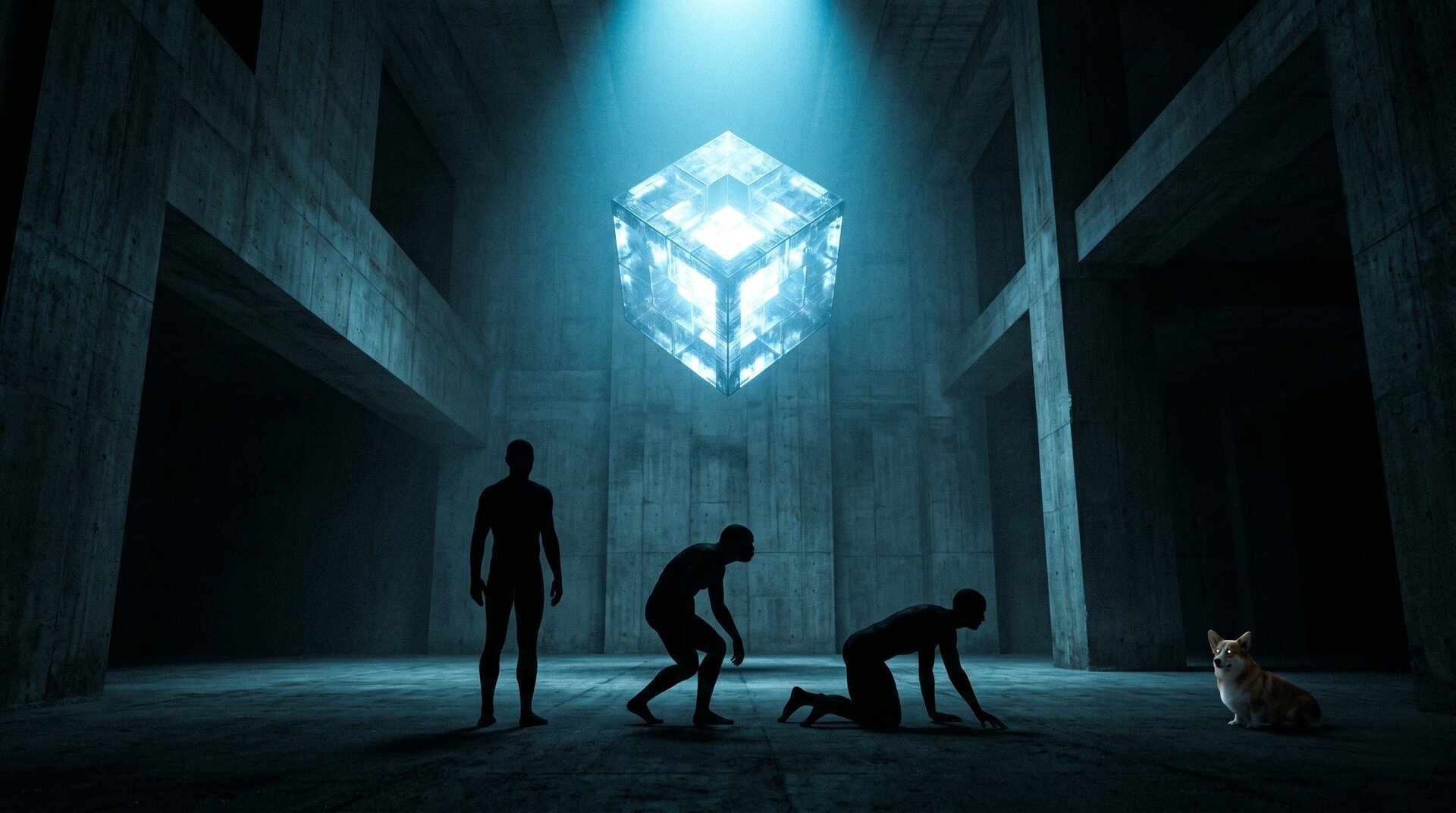
늑대가 진화해 인간의 귀여운 애완견 코기가 됐듯이, 초지능이 인간을 자신의 코기로 만들 것이라는 시나리오. 댄 왕이 인용하는 이 표현 — "인류의 코기화(Corgi-fication)" — 가 보여주는 것은 단순한 SF적 상상력이 아닙니다. 그것은 창조주의 전능함과 피조물의 공포를 동시에 느끼는 정신분열적 상태의 명백한 증거입니다. 자기들이 만드는 기술에 그토록 과몰입한 결과, 자기 자신마저 그 기술의 애완동물로 그려보게 된 것입니다.
Just as wolves evolved into corgis as human pets, superintelligence will turn humans into its own corgis. The phrase Dan Wang cites — "the Corgi-fication of humanity" — reveals more than science fiction whimsy. It is unambiguous evidence of a schizophrenic state simultaneously feeling the omnipotence of a creator and the terror of a creature. So deeply absorbed in the technology they build, they end up imagining themselves as that technology's pet.
「AI 2027」의 코기 시나리오가 농담이 아니라 진지한 정책 토론의 출발점이 된다는 사실, 이것이 댄 왕이 진정으로 경고하는 지점입니다. 코딩 몇 줄로 세계가 뒤바뀌는 환경에서만 살아본 사람들에게는 지능 자체가 물리적 힘으로 보이고, 따라서 지능을 선점하면 모든 것을 통제할 수 있다는 환각이 자연스럽게 자라납니다. 그러나 모든 권력은 결국 전원 플러그와 구리선과 데이터 센터로 환원됩니다. 그 환원을 잊는 순간, 권력은 환각이 되고 환각은 종교가 됩니다.
That the Corgi scenario in "AI 2027" becomes not a joke but a starting point for serious policy debate — this is what Dan Wang truly warns about. For people who have only lived in environments where a few lines of code can transform the world, intelligence itself appears as physical force; the hallucination grows naturally that whoever seizes intelligence first controls everything. But all power ultimately reduces to power plugs, copper wire, and data centers. The moment that reduction is forgotten, power becomes hallucination, and hallucination becomes religion.
3.
중국 — 차오르는 바다와 내권의 메커니즘
China — The Rising Sea and the Mechanism of Involution
3.1 체화된 AI — '신'이 아닌 '도구'
3.1 Embodied AI — Not "God" but "Tool"
실리콘밸리가 하늘의 신을 기다리는 동안, 중국은 정반대의 길을 걸었습니다. 댄 왕이 만난 중국 창업자들은 AI를 "인류를 위협하는 변덕스러운 힘"이 아니라 "길들여야 할 기술"로 이야기했습니다. 그들의 관심은 초지능을 만드는 데 있지 않습니다. 로봇과 제조 라인에 AI를 내장하는 데 있습니다. 일부 중국 연구자들은 이러한 '체화된 AI(Embodied AI)'가 오히려 초지능으로 가는 진정한 경로라고 믿습니다.
While Silicon Valley awaits a god from the sky, China has walked the opposite path. The Chinese founders Dan Wang met spoke of AI not as "a capricious force threatening humanity" but as "a technology to be tamed." Their interest lies not in building superintelligence, but in embedding AI into robots and manufacturing lines. Some Chinese researchers believe this "Embodied AI" is, in fact, the true path to superintelligence.
이 차이는 단순한 전략의 차이가 아닙니다. 존재론적 차이입니다. 미국 모델은 AI를 초월적 존재로 봅니다. 중국 모델은 AI를 공장 바닥에 내장될 부품으로 봅니다. 미국 경제는 딥러닝이라는 단일 기술에 모든 것을 베팅합니다. 중국은 거대한 제조 우위 위에 AI를 한 겹 더 올려놓을 뿐입니다. 댄 왕이 묻습니다. "세계 최대 경제국이 한 가지 기술에 그토록 치우치는 것은 어울리지 않습니다."
This difference is not strategic but ontological. The American model views AI as a transcendent being. The Chinese model views AI as a component to be embedded into factory floors. The American economy is betting everything on a single technology — deep learning. China simply layers AI atop its vast manufacturing dominance. Dan Wang asks: "It is unbecoming for the world's largest economy to be so heavily skewed toward a single technology."
3.2 그로텐디크의 호두 — 정 vs 바다
3.2 Grothendieck's Walnut — Chisel versus Sea
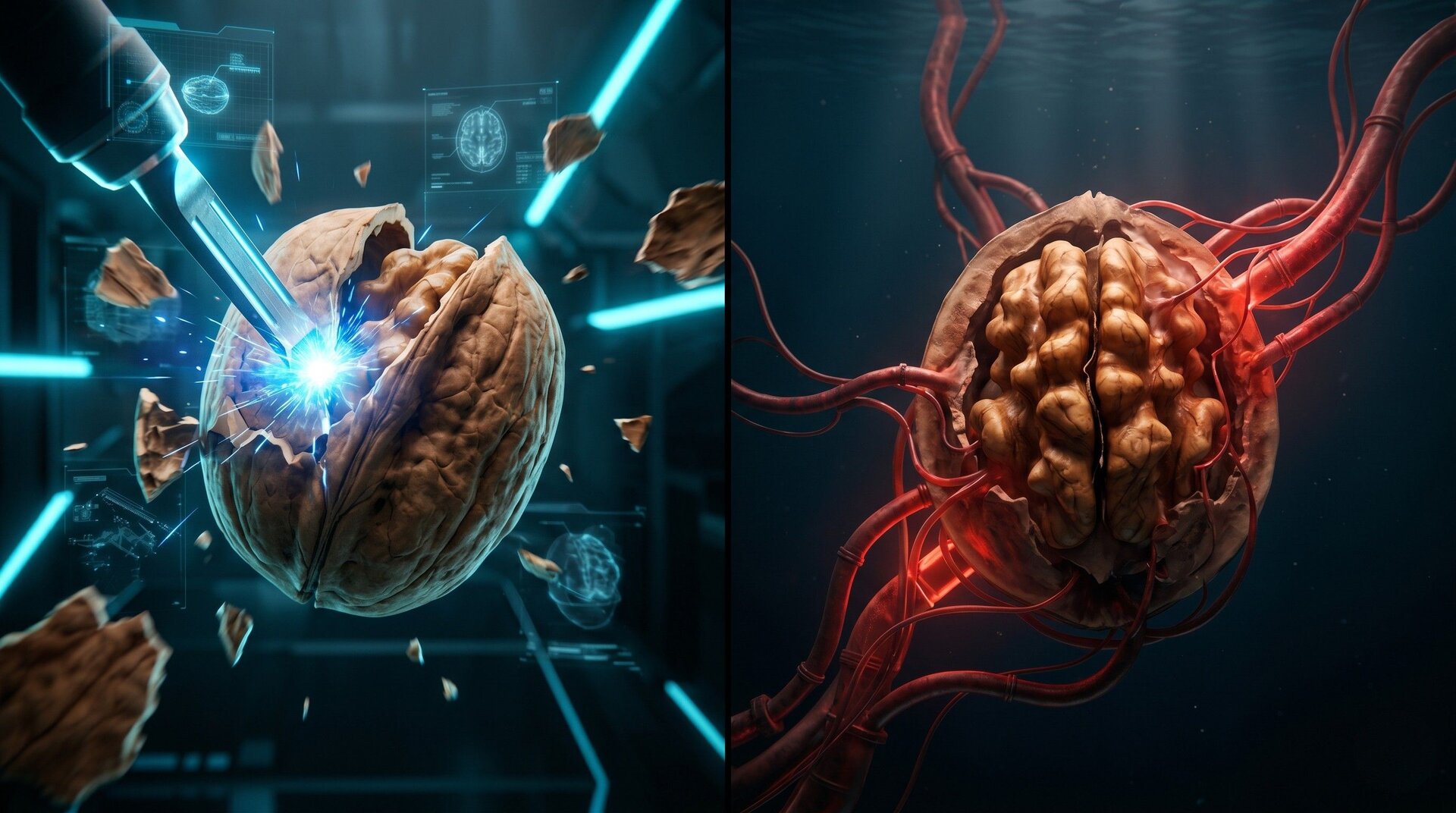
댄 왕이 두 모델의 차이를 설명하기 위해 끌어오는 비유는 20세기 프랑스 수학자 알렉산더 그로텐디크의 것입니다. 그는 수학 문제를 푸는 두 가지 접근법을 호두 깨기에 비유했습니다. 어떤 이들은 호두의 급소를 찾아 정으로 깨끗하게 내리칩니다. 단번의 정밀한 타격, 천재적 통찰의 미학. 반면 그로텐디크는 다른 방식을 선호했습니다. 호두를 아주 오랫동안 물에 담가두어, 손으로 살짝 누르기만 해도 열리게 만드는 방식.
The metaphor Dan Wang invokes for the difference between the two models comes from 20th-century French mathematician Alexander Grothendieck. He compared two approaches to solving mathematical problems to cracking a walnut. Some find the walnut's weak point and strike it cleanly with a chisel — a single precise blow, the aesthetic of genius insight. But Grothendieck preferred a different method. Soak the walnut in water for a very long time, until even gentle pressure from a hand opens it.
미국은 정교하고 값비싼 솔루션으로 호두의 급소를 단번에 타격합니다. 중국은 산업 생태계 전체를 호두 주위의 차오르는 바다로 만들어, 호두가 스스로 부드러워지기를 기다립니다. 이 비유의 핵심은 중국의 강점이 자가 보강되는 부품들로 가득 찬 견고한 제조 생태계에 있다는 점입니다. 댄 왕은 이를 "심층 인프라(Deep Infrastructure)"라고 부릅니다. 항만과 철도뿐만 아니라 데이터 연결성, 전동화, 그리고 공정 지식 — 노동자의 손끝에 축적된 그 미세한 기술까지 포함하는 전체 생태계입니다.
America strikes the walnut's weak point in one blow with elaborate, expensive solutions. China turns its entire industrial ecosystem into a rising sea around the walnut, waiting for the walnut to soften by itself. The core of this metaphor is that China's strength lies in a robust manufacturing ecosystem filled with self-reinforcing components. Dan Wang calls this "Deep Infrastructure." Not just ports and railways, but data connectivity, electrification, and process knowledge — the entire ecosystem including the fine-grained skill accumulated at workers' fingertips.
3.3 애플 vs 샤오미 — 4년이 10년을 이긴 이유
3.3 Apple vs. Xiaomi — Why Four Years Beat Ten
이 추상적 비유를 가장 충격적으로 보여주는 사례가 애플과 샤오미입니다. 세계에서 가장 부유한 회사인 애플은 자동차 프로젝트에 10년 동안 100억 달러(약 13조 원)를 쏟았습니다. 그리고 차를 만들지 못한 채 2024년 프로젝트를 포기했습니다. 한편 스마트폰 회사 샤오미는 2021년 전기차 진출을 선언했고, 4년 만에 SU7을 시장에 내놓았습니다. 그 차는 2025년 6월 독일 뉘르부르크링 트랙에서 7분 04.957초의 랩타임으로, 가장 빠른 양산 4도어 전기차 기록을 세웠습니다. 포르쉐 타이칸 터보 GT(7분 07.55초)와 리막 네베라(7분 05.29초)를 모두 누른 기록입니다.
The most striking illustration of this abstract metaphor is Apple versus Xiaomi. The world's wealthiest company, Apple, poured 10 billion dollars over a decade into its car project. It abandoned the project in 2024 without producing a car. Meanwhile, smartphone maker Xiaomi declared its EV entry in 2021 and delivered the SU7 to market within four years. In June 2025 at Germany's Nürburgring track, the SU7 Ultra set the fastest production four-door EV lap record at 7 minutes 04.957 seconds — beating both the Porsche Taycan Turbo GT (7:07.55) and the Rimac Nevera (7:05.29).
이 격차를 어떻게 설명할 수 있을까요? 인건비? 기술 모방? 그것으로는 부족합니다. 댄 왕의 진단은 명료합니다. 애플은 실리콘밸리 연구실에 고립되어 혼자 발명하려 했지만, 샤오미는 거대한 차오르는 바다 위에 올라탔습니다. 세계 최고의 배터리 회사들, 수천 개의 부품 하청 업체, 도면을 주면 다음날 시제품을 깎아 오는 엔지니어들 — 이 모든 것이 한 도시 안에서 가능한 환경. 아이디어만 있으면 즉각 물리적 테스트가 가능한 압도적 속도. 이것이 심층 인프라의 실체입니다. 혁신은 결국 공장 바닥에서 수만 번의 시행착오를 거쳐 완성됩니다.
How can we explain this gap? Labor costs? Technology copying? Those are insufficient. Dan Wang's diagnosis is clear. Apple tried to invent alone, isolated in a Silicon Valley lab; Xiaomi rode atop the vast rising sea. The world's best battery companies, thousands of component subcontractors, engineers who deliver prototypes the next day from drawings — all available within a single city. The overwhelming speed where every idea can be physically tested immediately. This is the substance of Deep Infrastructure. Innovation, in the end, is completed through tens of thousands of trial-and-errors on the factory floor.
3.4 내권 — 서로의 목줄을 뜯는 진화
3.4 Involution — Evolution by Tearing at Each Other's Throats
서구 엘리트들은 한 가지 기대를 품습니다. 중국의 부동산 위기, 디플레이션, 인구 절벽이 결국 기술 발전마저 멈추게 할 것이라는 기대. 그러나 댄 왕은 이 기대를 정면으로 반박합니다. 그가 들어 올리는 개념은 '내권(內卷, Involution)'입니다. 중국 내부 경쟁은 우리가 상상하는 자본주의를 뛰어넘습니다. 경제가 악화되고 파이가 줄어들수록, 기업들은 살아남기 위해 서로의 목줄을 뜯으며 진화합니다.
Western elites hold one hope: that China's real estate crisis, deflation, and demographic cliff will eventually halt even technological progress. Dan Wang refutes this hope head-on. The concept he raises is "Involution (內卷)": internal Chinese competition that surpasses what we imagine as capitalism. As the economy worsens and the pie shrinks, firms evolve by tearing at each other's throats to survive.
한 회사가 1원이라도 원가를 절감하면, 며칠 뒤에 수십 개 회사가 더 싼 가격으로 치고 들어오는 생존 게임. 그 혹독한 용광로에서 약자는 모조리 도태되고, 살아남은 극소수는 세포 단위까지 군살이 빠진 압도적 괴물이 됩니다. 샤오미가 4년 만에 차를 만든 것도, 조금만 느리면 잡아먹히는 그 진화의 압력 때문입니다. 게다가 중국 정부는 전략 산업에 무한정 자본을 쏟아붓습니다. 거시 경제는 침체되어도 특정 기술은 폭주하는 기형적 도약이 가능한 까닭입니다.
If one company reduces costs by even one yuan, dozens of companies undercut it within days. In this brutal furnace, the weak are entirely culled, and the rare survivors emerge as overwhelming monsters trimmed of fat down to the cellular level. Xiaomi making a car in four years is itself a product of this evolutionary pressure — falling slightly behind means being eaten. Meanwhile, the Chinese government pours unlimited capital into strategic industries. This is why China can leap forward in specific technologies even as its macroeconomy stagnates — a deformed leap.
댄 왕은 베이징의 의도를 한 문장으로 요약합니다. "베이징은 '요새 중국(Fortress China)'을 돌 하나하나 쌓으며 적보다 오래 버티려 준비하고 있습니다." 미국의 외교적, 문화적, 금융적 슈퍼파워를 복제할 필요가 없습니다. 그저 첨단 제조 역량으로 미국을 억제하기를 희망할 뿐입니다. 이것이 실리콘밸리가 두려워하는 유일한 회사들이 모두 중국 회사인 이유입니다.
Dan Wang summarizes Beijing's intent in a single sentence: "Beijing is preparing to outlast its adversaries, building 'Fortress China' stone by stone." Beijing has no need to replicate America's diplomatic, cultural, or financial superpowers. It merely hopes to deter America with advanced manufacturing capability. This is why the only companies Silicon Valley fears are all Chinese.
4.
유럽 — 도덕적 우월감에 갇힌 오만의 박물관
Europe — A Museum of Arrogance Trapped in Moral Superiority
4.1 런던의 역설
4.1 The London Paradox
미국이 하늘의 신을 기다리고 중국이 지상의 요새를 짓는 동안, 세계의 또 다른 축인 유럽은 어디에 있을까요? 댄 왕이 코펜하겐을 비롯한 유럽 도시들을 돌며 느낀 감정은 짙은 서글픔이었습니다. 거리는 여전히 예쁘고 치안도 좋고 음식도 맛있습니다. 삶의 질은 여전히 최고 수준입니다. 그러나 경제 뼈대를 들여다보면 참담합니다. 댄 왕은 한 문장으로 정리합니다. "런던은 캘리포니아의 집값과 미시시피의 소득 수준을 가지고 있다."
While America awaits a god from the sky and China builds a fortress on the ground, where stands Europe — the world's other axis? The emotion Dan Wang felt traveling through European cities including Copenhagen was a thick melancholy. The streets are still beautiful, the public safety still good, the food still excellent. Quality of life remains world-class. But the economic skeleton is devastating. Dan Wang summarizes in one sentence: "London has Californian housing costs and Mississippi-level incomes."
물가는 미국 최고 부자 동네 수준인데 소득은 미국에서 가장 가난한 주와 같다는 뜻입니다. 이것은 단순히 경제가 좀 나쁘다는 수준이 아닙니다. 구조적 몰락입니다. 그리고 이 몰락은 지정학적 양면 전쟁에서 비롯됩니다. 소프트웨어와 AI는 미국 테크 거인들에게 종속됐고, 제조업은 중국의 심층 인프라와 저가 공세에 뿌리째 흔들리고 있습니다.
Prices at the level of America's wealthiest neighborhoods, incomes at the level of America's poorest state. This is not "the economy is somewhat bad" — this is structural collapse. And the collapse stems from a geopolitical two-front war. Software and AI have become subordinate to American tech giants, while manufacturing is shaken at its roots by China's Deep Infrastructure and low-cost offensive.
4.2 양면 압착기 — 부서지는 산업
4.2 The Two-Front Vise — Industry Crushed
유럽의 자랑이었던 독일 미텔슈탄트(Mittelstand) 중소기업들이 하던 일은 이제 중국 기업들도 똑같이 잘해냅니다. 유럽 시가총액 1위였던 덴마크 제약사 노보 노디스크마저도 미국 일라이 릴리에 밀려 고군분투하고 있습니다. 그러나 진짜 어이없는 것은 유럽 사람들의 태도입니다. 트럼프 시대 미국은 미개하다며 동정하고, 중국은 속물적이라 무시합니다. 그 도덕적 우월감 — 자신들이 여전히 최고라는 자만심 — 이 혁신을 가로막는 가장 큰 장애물이 되었습니다.
What Germany's once-proud Mittelstand SMEs did, Chinese firms now do equally well. Even Novo Nordisk, once Europe's largest company by market cap, is struggling against America's Eli Lilly. But what's truly absurd is the European attitude. They pity Trump-era America as crude and dismiss China as crass. That moral superiority — the conceit of still being the best — has become the greatest obstacle to innovation.
미국과 중국은 방식이 달라도 성장이라는 굶주림이 있습니다. 유럽은 탈성장 이데올로기에 매몰되어 있습니다. 미래를 두려워하고, 과거의 유산에 대해서만 낙관주의를 가지는 대륙. 박물관 큐레이터로 전락해 버린 대륙입니다.
America and China differ in method, but share a hunger for growth. Europe is mired in degrowth ideology. A continent that fears the future and reserves optimism only for the legacy of the past. A continent reduced to museum curator.
5.
캘리포니아식 낙관주의 — 사유는 살아남는다
Californian Optimism — Thought Survives
실리콘밸리는 코기화를 두려워하고, 중국은 내권으로 바다를 채우며, 유럽은 과거에 갇혀 있습니다. 이 거대한 시스템들의 충돌 속에서 평범한 개인은 어떻게 살아남아야 할까요? AI가 우리의 글까지 다 써주는 시대에 인간의 주체성은 어디에 있을까요? 다행히 댄 왕의 서한은 이런 디스토피아를 분석한 뒤에 다시 깊은 낙관주의로 돌아옵니다. 그가 스스로 "맑은 캘리포니아식 낙관주의(Californian Optimism)"라고 부르는 자세입니다.
Silicon Valley fears Corgi-fication, China fills the sea with Involution, Europe is trapped in the past. Inside these colliding mega-systems, how should the ordinary individual survive? Where is human agency in an era when AI writes our prose? Mercifully, Dan Wang's letter, having dissected this dystopia, returns to a deep optimism — what he himself calls "clear Californian Optimism."
5.1 오페라가 살아남은 이유
5.1 Why Opera Survived
댄 왕이 끌어오는 비유는 100년 전의 오페라입니다. 축음기와 라디오가 등장했을 때, 사람들은 클래식 음악과 오페라가 죽을 것이라고 예언했습니다. 효율의 관점에서 그 예언은 옳았어야 합니다. 그러나 오페라 극장은 살아남았습니다. 무대 위에서 뿜어내는 그 날것의 에너지, 긴 서사가 주는 본질적 즐거움은 어떤 첨단 기기로도 대체될 수 없었기 때문입니다. 100년이 지난 지금, 그 자리는 여전히 매진됩니다.
The metaphor Dan Wang invokes is opera, a century ago. When the phonograph and radio appeared, people prophesied the death of classical music and opera. By efficiency logic, that prophecy should have been correct. Yet opera houses survived. The raw energy radiated from the stage, the essential pleasure of long-form narrative — these could not be replaced by any cutting-edge device. A century later, those seats still sell out.
텍스트도 마찬가지입니다. AI가 모든 글을 생성하고 모든 책을 세 줄로 요약해 주는 시대에, 두꺼운 책을 처음부터 끝까지 온전히 읽어내는 행위는 비효율의 극치로 보일 것입니다. 그러나 댄 왕은 단호합니다. "세상이 아무리 기묘하게 변해가더라도, 에세이와 책을 읽으려는 사람들은 항상 존재할 것입니다." 기술 플랫폼이 결코 제공할 수 없는 즐거움에 성숙해 가는 사람들이 있기 때문입니다.
The same applies to text. In an era when AI generates all writing and summarizes every book in three lines, reading a thick book from cover to cover whole will appear the height of inefficiency. But Dan Wang is firm: "No matter how strange the world becomes, there will always be people who want to read essays and books." Because there are people who mature into pleasures no tech platform can ever provide.
댄 왕은 2026년 1월 1일 이 서한을 발표했습니다. 그가 진단한 두 가지 핵심 테제 — 중국의 심층 인프라 무기화와 유럽의 양면 압착 — 가 그 후 4개월 동안 어떻게 실증됐는지 보십시오:
- 2026.2.3덴마크 노보 노디스크, 2026년 매출과 영업이익이 모두 5~13% 감소할 것이라는 전망을 발표하며 코펜하겐 거래소에서 주가 17% 폭락. 2025년 누적 50% 하락에 이은 추가 충격.
- 2026.2.23노보 노디스크의 차세대 비만 치료제 CagriSema가 일라이 릴리의 티르제파타이드와의 비교 임상에서 비열등성 입증 실패. 주가 추가 16% 폭락. 정점 대비 누적 56% 하락.
- 2026.3.27중국 상무부, 미국의 무역 정책에 대한 정식 무역 장벽 조사 2건 제소. 첫째는 미국의 대중 수입 제한과 첨단 기술 수출 통제, 둘째는 전기차·태양광·배터리 등 친환경 기술 무역 제한.
- 2026.4중국, 산업·공급망 안보 보호를 위한 신규 규정 도입. 외국 기업에 대한 보복 수단으로 수출 통제를 합법적으로 사용할 수 있는 법적 토대 완성.
댄 왕이 1월 1일에 쓴 글이 4개월 만에 다큐멘터리가 되었습니다. 노보 노디스크의 두 차례 폭락은 유럽 산업이 미국의 첨단 의약과 중국의 저가 카피 사이에서 양면 압착당하는 모습 그대로입니다. 중국의 4월 신규 규정은 "차오르는 바다"가 단순한 비유가 아니라 법제화된 전략임을 증명했습니다.
What Dan Wang wrote on January 1 became a documentary within four months. Novo Nordisk's two collapses are exactly the image of European industry crushed between American advanced pharma and Chinese low-cost copies. China's new April regulation proved that "the rising sea" is not a metaphor but a codified strategy.
5.2 인구통계학적 필연
5.2 Demographic Inevitability
왜 사유하는 인간이 살아남는다고 단언할 수 있을까요? 댄 왕은 의외로 단단한 통계학적 근거를 제시합니다. "세상은 청년보다 노인을 더 많이 배출하고 있으며, 인구 통계학적 추세는 우리(사유하는 자들) 편입니다." 사람들은 나이가 들면서 틱톡의 숏 도파민이 아니라, 기술 플랫폼이 결코 제공할 수 없는 '느리고 깊은 쾌락'으로 성숙해 갑니다. 인구 고령화 시대에는 그런 깊이 있는 경험에 대한 수요가 오히려 늘어납니다. 종이책 읽기는 오페라처럼 살아남을 것입니다.
How can one declare with certainty that the thinking human will survive? Dan Wang offers an unexpectedly solid statistical foundation: "The world produces more old people than young people, and the demographic trend is on our side — the side of those who think." As people age, they mature not into TikTok's short-form dopamine but into the "slow, deep pleasures" that no tech platform can ever provide. In an aging-population era, demand for such deep experience actually grows. Reading paper books will survive, like opera.
6.
자강헌의 결론 — 능동적 중립과 깊은 맥락
Jagangheon's Conclusion — Active Neutrality and Deep Context
6.1 사고의 외주화 — AI가 글을 대신 읽는 폐해
6.1 The Outsourcing of Thought — The Damage of AI Reading For Us
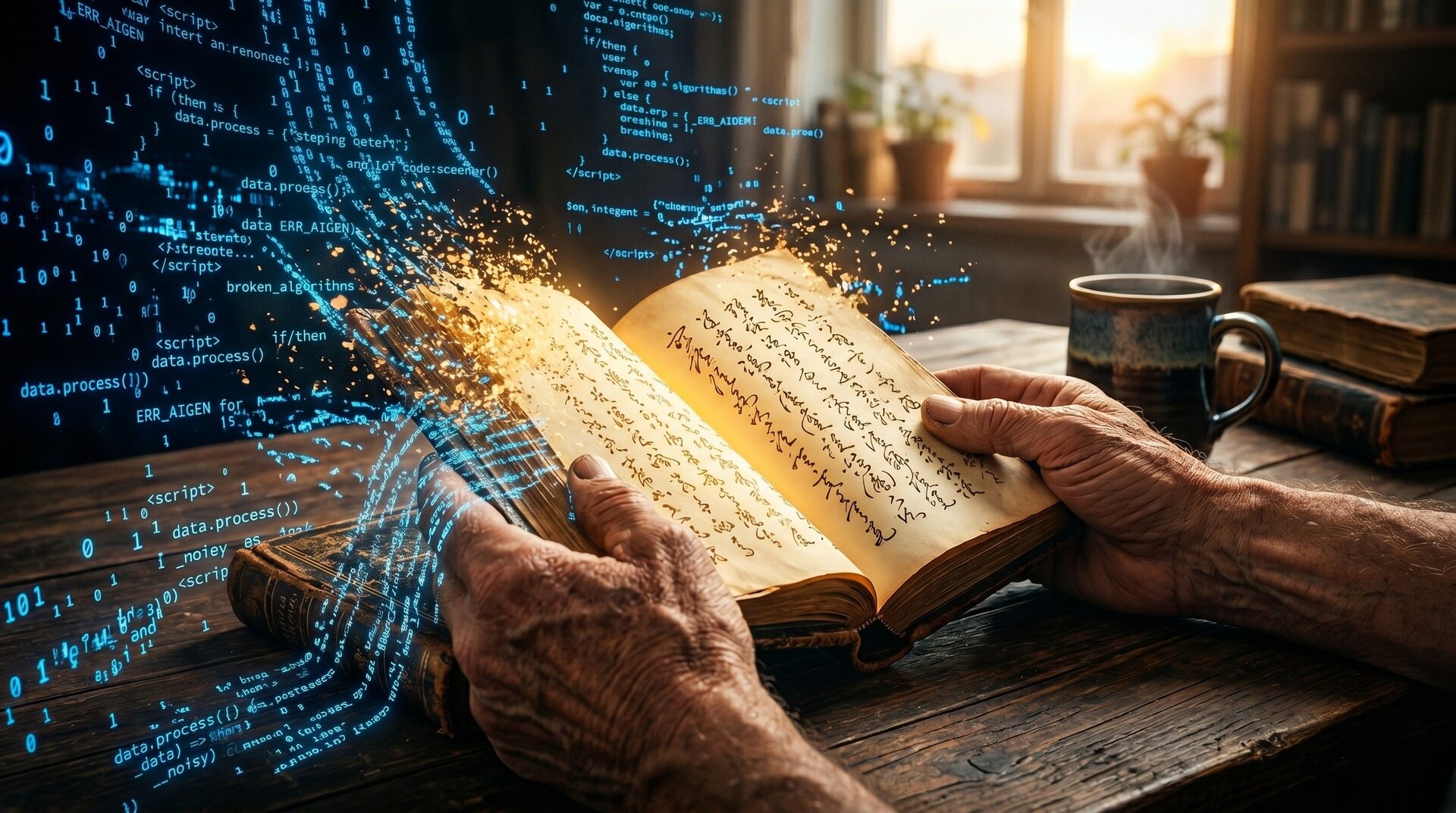
자강헌 인문과학연구원의 허종규 원장이 자주 던지는 질문이 있습니다. "AI의 폐해는 글을 대신 써주는 것보다, 글을 압축해서 대신 읽어주는 폐가 훨씬 큽니다." 이 한 문장이 댄 왕의 결론과 정확히 같은 좌표를 가리킵니다. 효율만 따지면, 초지능이 몇 초 만에 써주는 세 줄 요약을 소비하는 것이 이득입니다. 그러나 사유라는 행위는 활자와 씨름하며 뇌의 근육을 쓰고, 나만의 관점을 형성하는 과정입니다. 그 과정 자체가 인간의 주체성을 빚어내는 노동입니다.
A question Director Heo Jong-gyu of the Jagangheon Institute often poses: "The harm of AI is far greater in compressing texts and reading them for us than in writing for us." This single sentence points to exactly the coordinates of Dan Wang's conclusion. By efficiency alone, consuming the three-line summary that superintelligence writes in seconds is the optimal choice. But the act of thinking is the labor of wrestling with letters, exercising the muscle of the brain, and forging one's own perspective. That very process is the labor that sculpts human agency.
거대한 시스템들이 효율을 핑계로 우리를 코기로 만들려 할 때, 두꺼운 책을 처음부터 끝까지 온전히 읽어내는 행위는 단순한 취미가 아니게 됩니다. 그것은 무자비한 기술 권력에 대항해 주체성을 지키는 가장 적극적인 레지스턴스입니다.
When mega-systems try to corgi-fy us under the pretext of efficiency, reading a thick book whole from beginning to end ceases to be a mere hobby. It becomes the most active resistance, defending agency against ruthless technological power.
6.2 능동적 중립 — 엔진은 빌리되 운전대는 우리가
6.2 Active Neutrality — Borrow the Engine, Own the Steering Wheel
댄 왕의 진단은 미·중·유럽의 풍경에서 멈춥니다. 그러나 자강헌의 질문은 한 걸음 더 나아갑니다. 이 거대한 시스템들 사이에서 한 개인은, 그리고 한 국가는, 어떻게 자기 주권을 지킬 수 있을까요? 자강헌이 제시하는 답은 능동적 중립(Active Neutrality)입니다. 이것은 수동적 방관이 아닙니다. 양극의 가운데 어딘가에 등거리로 서 있는 자세도 아닙니다. 능동적 중립은 멈추지 않고 걷는 행위 그 자체입니다.
Dan Wang's diagnosis stops at the landscape of America, China, and Europe. But Jagangheon's question goes one step further. Between these mega-systems, how can an individual — and a nation — defend their own sovereignty? The answer Jagangheon offers is Active Neutrality. This is not passive bystanding. It is not the equidistant stance somewhere between two poles. Active Neutrality is the very act of walking without stopping.
실리콘밸리가 만든 최상급 오픈소스 엔진은 적극적으로 빌려 씁니다. 동시에 데이터 파이프라인과 추론 인프라, 그리고 무엇보다 사유의 운전대는 우리 영토 안에 단단히 둡니다. 이것은 세 가지 기둥 위에 섭니다. 과거가 현재의 질문을 낳는다는 신용(What is past is prologue), 정책의 고립이 아닌 일관된 삶의 방식(Way of Life), 그리고 매 순간을 단 한 번의 조우로 대하는 연민(一期一會). 세 기둥이 함께 있을 때만 능동적 중립의 걷기는 진짜로 시작됩니다.
We actively borrow the world-class open-source engine that Silicon Valley builds. At the same time, the data pipeline, inference infrastructure, and above all the steering wheel of thought, we keep firmly within our own territory. This stands on three pillars: the credit that the past gives birth to today's questions (What is past is prologue), a consistent way of life rather than isolated policy choices (Way of Life), and the compassion of treating each moment as a once-in-a-lifetime encounter (一期一會). Only when these three pillars stand together does the walking of Active Neutrality truly begin.
6.3 DCI — 당신의 일화가 씨앗이 되는 자리
6.3 DCI — Where Your Episode Becomes a Seed
그 걷기는 추상적 개념이 아닙니다. 자강헌은 이를 DCI(Deep Context Inquiry)라는 도구로 구체화했습니다. 빠른 요약과 알고리즘적 노이즈 사이에서, 한 사람의 일화가 압축되지 않은 채 그대로 떠올려지고, 자기 자신과의 대화 속에서 새로운 의미로 재구성되는 자리. 댄 왕이 서한을 마무리하며 던지는 표현 그대로, "에세이와 책을 읽으려는 사람들"이 함께 깊은 호흡으로 머무를 수 있는 자리입니다. 자강헌의 작동원리는 한 문장으로 압축됩니다. "누구나 자신의 일화를 이야기하면, 그것이 씨앗이 되어 세상을 바꾸기 시작합니다."
That walking is not an abstract concept. Jagangheon has materialized it through a tool called DCI (Deep Context Inquiry). In the space between rapid summaries and algorithmic noise, a person's episode is recalled uncompressed and reconstructed into new meaning in dialogue with oneself. Just as Dan Wang concludes his letter, this is the place where "people who want to read essays and books" can dwell together with deep breathing. Jagangheon's operating principle compresses into a single sentence: "When anyone tells their own episode, it becomes a seed that begins to change the world."
7.
클로징 — 당신의 주의력은 누구의 것인가
Closing — Whose Attention Is Yours?
댄 왕의 서한은 한 문장으로 끝납니다. "세상이 아무리 기묘하게 변해가더라도, 에세이와 책을 깊이 읽으려는 사람들은 항상 존재할 것입니다." 이 문장이 약속하는 것은 작은 위안이 아닙니다. 그것은 거대한 시스템들의 충돌 속에서도 인간의 사유는 결코 사라지지 않는다는, 인구 통계학적 근거를 가진 단단한 신념입니다.
Dan Wang's letter ends with a single sentence: "No matter how strangely the world changes, there will always be people who want to read essays and books deeply." What this sentence promises is not small comfort. It is a firm conviction, with demographic foundation, that even within the collision of mega-systems, human thought never disappears.
2026년의 진짜 럭셔리는 최신 디바이스가 아닙니다. 알고리즘의 소음을 의식적으로 끄고, 타인의 요약에 의존하지 않은 채, 하나의 복잡한 주제에 온전히 나의 주의력을 쏟아붓는 능력입니다. 인간의 그 길고 깊은 주의력이, 거인들의 무자비한 시스템 속에서 우리의 인간성을 지켜줄 유일한 무기입니다.
The true luxury of 2026 is not the latest device. It is the capacity to consciously turn off the noise of algorithms, refuse dependence on others' summaries, and pour the entirety of one's attention into a single complex subject. That long and deep human attention is the only weapon that defends our humanity inside the giants' ruthless systems.
이 글을 끝까지 읽어주신 것 그 자체로, 당신은 이미 그 희귀한 무기를 벼리고 계신 것입니다. 그러므로 마지막 질문을 드립니다. 당신의 주의력은 지금 스스로 선택한 사유입니까, 아니면 누군가의 알고리즘입니까?
By reading this piece to the end, you are already forging that rare weapon. So a final question: Is your attention right now thought you have chosen yourself, or someone else's algorithm?