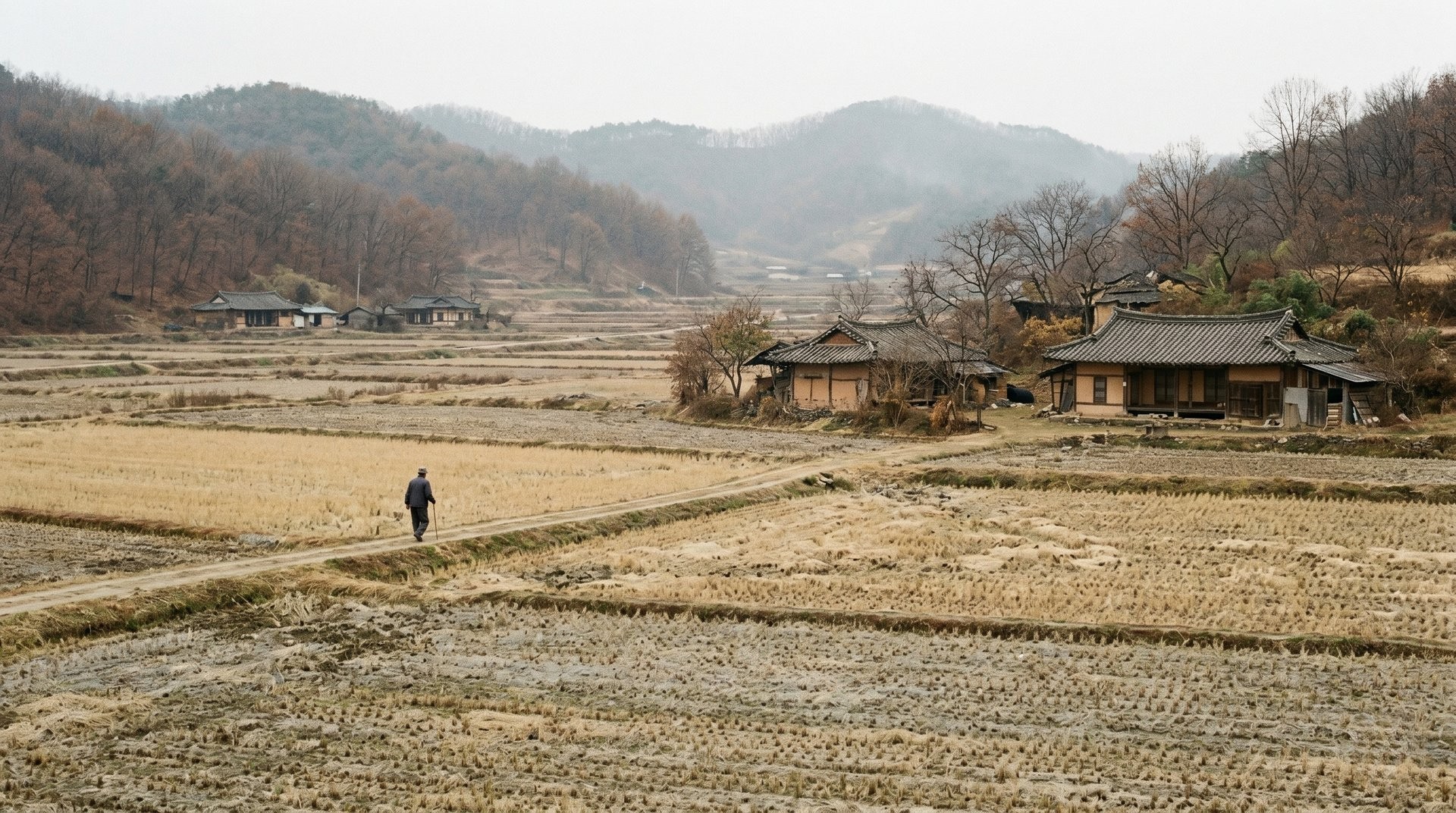
自强. 스스로 강해진다는 뜻이다. 그 정반대 자리에 消滅이 있다. 스스로를 지탱할 힘을 잃고 스러지는 것.
Jagang (自强) means to grow strong by one's own power. At the exact opposite pole sits extinction (消滅): to lose the power to sustain oneself and fade away.
자강헌은 누구나 스스로 강해지도록 돕는 장을 자처한다. 그렇다면 '소멸'이라 불리는 곳들의 현황은 이 연구원이 외면할 수 없는 주제다. 소멸은 자강의 실패가 아니라, 자강의 반대말이기 때문이다.
Jagangheon calls itself a place that helps anyone grow stronger on their own. If so, the situation of the places we call "vanishing" is one this institute cannot look away from. Extinction is not a failure of self-strengthening; it is its antonym.
다만 자강헌이 던지는 질문은 정책의 질문과 다르다. 정책은 '어떻게 소멸을 막을 것인가'를 묻는다. 자강헌은 묻는다 — 이 곳들은 스스로 강해질 힘을 어디서 되찾는가.
But the question Jagangheon asks differs from the question of policy. Policy asks how to stop the vanishing. Jagangheon asks: where do these places recover the power to grow strong on their own?
미리 말해두자면, 이 글이 도달하는 답은 거창하지 않다. 가장 작은 단위, 자기 땅을 자기 손으로 짓는 사람 — 자작농이다.
To say it plainly up front, the answer this piece reaches is modest. It is the smallest unit — the person who works their own land with their own hands. The owner-cultivator.
▶ 8분 영상 요약
▶ 8-min video summary
1. 비어가는 지도
1. The Emptying Map
먼저 현황이다. '소멸'을 가리키는 지도는 두 장이다. 하나는 행정안전부의 인구감소지역으로, 「지방자치분권 및 지역균형발전에 관한 특별법」에 근거해 5년마다 지정한다. 예산이 따라붙는 행정의 지도다. 다른 하나는 한국고용정보원 이상호 연구위원이 2015년 만든 소멸위험지수로, 20~39세 여성을 65세 이상 인구로 나눈 인구학의 지도다.
Start with the state of things. There are two maps of "extinction." One is the Ministry of the Interior and Safety's depopulation regions, designated every five years under the Special Act on Decentralization and Balanced Regional Development — the administrative map, the one money follows. The other is the extinction risk index, created in 2015 by researcher Lee Sang-ho, dividing women aged 20–39 by people aged 65 and over — the demographic map.
행정의 지도부터. 인구감소지역은 89곳, 지정 당시 전국 시군구의 약 39%다. 경북 16곳, 전남 16곳, 강원 12곳, 경남 11곳, 전북 10곳 순이다. 영·호남과 강원이 65곳, 전체의 73%를 차지한다. 광주·울산·세종·제주·서울에는 한 곳도 없다. 대부분 비수도권 농어촌과 내륙의 군 단위다. 그리고 이 지도는 곧 다시 그려진다. 2026년이 첫 재지정이다. 여기 역설이 있다. 지난 5년간 인구를 지켜낸 곳은 지표가 좋아진다. 그러면 명단에서 빠질 수 있다. 빠지면 기금이 끊긴다. 애써 인구를 늘린 보상이 예산 절벽인 셈이다. 정부도 이 모순을 알아 완화책을 검토 중이다. 그래도 재지정의 기본 구조는 그대로다.
The administrative map first. There are 89 depopulation regions, about 39% of the country's districts at the time of designation. North Gyeongsang 16, South Jeolla 16, Gangwon 12, South Gyeongsang 11, North Jeolla 10. The Yeongnam and Honam provinces and Gangwon make 65 — fully 73%. Gwangju, Ulsan, Sejong, Jeju, and Seoul have none. Most are rural and inland counties outside the capital region. And this map is about to be redrawn. 2026 is the first redesignation. Here a paradox lurks. A region that defended its population sees its numbers improve. It may then drop off the list. Fall off, and the fund is cut. The reward for striving is a budget cliff. The government is aware of the contradiction and is weighing measures to cushion it. Even so, the basic structure of redesignation stands.
인구학의 지도는 더 빠르다. 2024년, 부산이 광역시 가운데 처음 소멸위험단계에 들어섰다. 서울을 뺀 광역시 구·군만 보면 그 46.7%가 이미 소멸위험 지역이다. 2025년 새 분류 기준으로 전국 229개 시군구 중 62곳(27.1%)이 소멸위험 단계다. 흐름은 분명하다. 군(郡)의 소멸은 거의 끝났고, 이제 시(市)의 차례다. 소멸은 농촌의 문제에서 도시의 문제로 넘어오고 있다.
The demographic map moves faster. In 2024, Busan became the first metropolitan city to enter the extinction-risk stage. Of metropolitan-city districts outside Seoul, 46.7% already sit in the risk zone. Under the 2025 reclassification, 62 of 229 districts (27.1%) sit in that stage. The trend is plain: the extinction of the counties is nearly complete, and now it is the cities' turn. Extinction is moving from a rural problem to an urban one.
2. 위에서 내려온 답
2. Answers Handed Down From Above
대응이 없는 건 아니다. 정부는 2022년부터 매년 1조 원, 2031년까지 10조 원의 지방소멸대응기금을 붓는다. 2026년엔 쓰임도 바꿨다. 청사·복합센터 같은 '하얀 코끼리'에서 벗어나, 사람을 부르는 사업 중심으로. 전남 화순은 청년·신혼부부에게 월 1만 원 임대료로 집을 내준다. 강원 영월은 빈집을 청년 창업 거점으로 고친다. 방향은 옳다.
It is not for lack of response. Since 2022 the government has poured one trillion won a year — ten trillion through 2031 — into a Local Extinction Response Fund. In 2026 it also changed how the money is spent. It moved away from "white elephant" buildings toward projects that call people in. South Jeolla's Hwasun offers young people and newlyweds an apartment for 10,000 won a month. Gangwon's Yeongwol turns empty houses into youth-startup bases. The direction is right.
그런데도 돈의 길과 사람의 길은 어긋난다. 정부는 해외조달 유망기업(G-PASS)을 지정해 우대한다. 그런데 그중 인구감소지역에 있는 곳은 9.3%뿐이었다. 89곳 중 33곳에는 그런 기업이 단 한 곳도 없었다. 우대를 만들어도, 받을 주체가 그 땅에 없다. 기금은 흐른다. 그래도 사람은 쉽게 흐르지 않는다. 위에서 내려보내는 답에는 한계가 있다.
And yet the path of the money and the path of the people diverge. The government designates export-procurement prospects (G-PASS) for preference. Yet only 9.3% of them sat in depopulation regions. Of the 89 regions, 33 had none at all. You can build the preference, but the recipient isn't on that land. The fund flows; the people do not. Answers handed down from above have a limit.
3. 사람 없는 성장
3. Growth Without People
그래서 한 층 더 내려가야 한다. 비어가는 곳의 바닥에는 농(農)이 있다.
So we go one layer deeper. At the bottom of the emptying places lies farming.
숫자는 가파르다. 농가인구는 2000년 403만 명에서 2024년 200만 명으로, 4분의 1세기 만에 정확히 반토막 났다. 한국농촌경제연구원은 2025년 이미 200만 선이 무너졌고, 2026년엔 194만 명이 될 것으로 본다. 농가의 65세 이상 비율은 55.8%, 전체 고령화율의 약 2.8배다.
The numbers are steep. The farm population fell from 4.03 million in 2000 to 2.00 million in 2024 — cut exactly in half in a quarter-century. The Korea Rural Economic Institute reckons it already dropped below two million in 2025 and will reach 1.94 million in 2026. The share of farmers over 65 is 55.8% — about 2.8 times the national rate.
그런데 같은 기간 농업의 산출은 줄지 않았다. 경지면적은 거의 유지되고, 농식품 수출은 늘었다. 사람은 사라지는데 생산은 버틴다. 농촌경제연구원은 이것을 '사람 없는 성장'이라 불렀다. 정확한 이름이다.
Yet over the same span, output did not fall. Cultivated area held nearly steady, and food exports rose. People vanish, but production holds. The Institute called this "growth without people." It is the right name.
이 성장은 어떻게 가능한가. 기계화와 대형화, 그리고 소수에게로의 농지 집적이다. 적은 손으로 같은 땅을 부치는 방향. 산업으로서의 농업은 노동을 줄이는 것이 곧 효율이다. 그런데 노동을 줄인다는 건 그 땅에서 사람을 줄인다는 뜻이다. 산업농의 논리는 그 자체로 소멸의 엔진이다. 기계화를 되돌리자는 게 아니다. 그 효율 곁에, 그 땅을 소유한 사람이 남게 하자는 것이다.
How is such growth possible? Mechanization, scaling up, and the concentration of farmland into fewer hands. Fewer hands working the same land. As an industry, agriculture treats cutting labor as efficiency. But cutting labor means cutting people from the land. The logic of industrial farming is itself an engine of extinction. This is not a call to undo mechanization. It is a call to keep, beside that efficiency, a person who owns the land.
더 조용한 변화가 바닥에서 일어난다. 한국 농가의 74%는 이미 1헥타르 미만의 작은 농가다. 문제는 둘이다. 이들이 후계 없이 늙어간다. 그리고 자기 땅을 짓던 자작농이 임차농으로 바뀌고 있다. 지난해 작물을 재배하는 귀농가구 중 본인 소유 농지만 짓는 순수 자경 비율은 62.2%였다. 한 해 전 65.0%에서 줄었다. 땅을 가진 자가 줄고, 빌려 짓는 자가 는다. 소멸의 가장 조용한 얼굴이 여기 있다.
A quieter change runs underneath. Already 74% of Korea's farm households are small, under one hectare. The trouble is twofold. They age out without successors. And owner-cultivators who worked their own land are turning into tenants. Last year, among farming return-migrant households, the share cultivating only their own land fell to 62.2%, from 65.0% a year before. Those who own grow fewer; those who rent grow more. Here is the quietest face of extinction.
4. 짓는 사람이 갖는다
4. Those Who Till, Own
여기서 자강헌의 질문으로 돌아온다. 소멸의 반대말은 무엇인가.
Here we return to Jagangheon's question. What is the opposite of extinction?
더 많은 기금이 아니다. 더 큰 농장도 아니다. 자강 — 그 땅의 사람들이 자기 힘으로 서는 것이다. 그 자강의 가장 구체적인 실물이 자작농이다. 자기 땅을 갖고, 자기 손으로 짓고, 자기 식탁을 먼저 채우는 사람. 외부의 임금에도, 위에서 내려오는 기금에도 종속되지 않는 단위. 自强이라는 글자가 농(農)의 형태로 나타나면 그것이 자작농이다.
Not more funding. Not larger farms. It is jagang — the people of that land standing by their own power. The most concrete embodiment of that self-strengthening is the owner-cultivator: one who owns their land, works it by hand, and fills their own table first. A unit subordinate neither to outside wages nor to funds from above. When the character 自强 takes the form of farming, it becomes the owner-cultivator.
이건 새로운 발상이 아니라 되찾는 일이다. 한국은 1949~50년 농지개혁으로 소작농의 나라에서 자작농의 나라가 되었다. 짓는 사람이 땅을 갖는다는 원칙, 경자유전(耕者有田)은 헌법 제121조에 지금도 새겨져 있고, 소작제도를 금한다. 자작농의 자강은 대한민국이라는 판 위에 이미 놓인 돌이다. 과거는 서막이다.
This is not a new idea but a recovery. Through the 1949–50 land reform, Korea turned from a nation of tenants into a nation of owner-cultivators. The principle that those who till should own the land — gyeongja-yujeon (耕者有田) — is still inscribed in Article 121 of the Constitution, which forbids tenant farming. The self-strengthening of owner-cultivators is a stone already placed on the board that is Korea. What is past is prologue.
그렇다면 짓지 않으면서 짓는 자에게서 받아내는 지대(地代)는 무엇인가. 불로소득 중에서도 가장 나쁜 불로소득이다. 까닭은 自强의 언어로 또렷하다. 땅을 강하게 만드는 것은 그 땅을 짓는 사람의 노동이다. 지대는 그 강해진 결과를, 강하게 만드는 데 참여하지 않은 사람이 가져간다. 자강의 반대편에는 비어가는 땅만 있는 게 아니다. 그 땅에서 흘러나가는 지대가 있다.
Then what is the rent extracted from the cultivator by one who does not cultivate? The worst of all unearned income. The reason is plain in the language of self-strengthening. What makes land strong is the labor of the one who works it. Rent takes that strengthened result and hands it to someone who took no part. At the opposite of self-strengthening lies not only the emptying land, but the rent draining out of it.
물론 모든 임대가 같지는 않다. 농사를 더는 지을 수 없게 된 노인, 땅을 물려받았지만 도시에 사는 자식, 목돈이 급한 사정 — 임대에는 이해할 만한 자리가 분명히 있다. 겨눌 것은 이런 사정이 아니라, 지을 뜻 없이 땅을 자산으로만 쥔 투기다. 1949년의 농지개혁이 소작을 철폐했던 것도, 지주의 사정을 미워해서가 아니라 짓는 사람에게 땅을 돌리기 위해서였다. 그 개혁은 아직 끝나지 않았다.
Not every lease is the same, of course. An elderly farmer who can no longer work, a child who inherited land but lives in the city, a sudden need for cash — there is a real place for renting. The target is not these circumstances but speculation: land held as an asset with no intent to farm. The 1949 land reform abolished tenancy not out of hatred for landlords' situations, but to return land to those who till. That reform is not yet finished.
2026 농지 전수조사 — 무엇이 다르고, 왜 지금인가
The 2026 Farmland Census — What's Different, and Why Now
무엇이 다른가. 과거의 농지원부는 인적 장부였다. 농업인 한 사람을 기준으로, 1,000㎡ 이상 농지만, 본인 신청으로 적었다. 작은 농지와 비농민 소유 농지는 아예 빠졌다. 2021년 LH 투기 사태 뒤 농지법이 바뀌었다. 농지원부는 토지대장처럼 필지(땅) 단위로 기록하는 '농지대장'이 됐다. 면적 제한도 사라져, 모든 농지가 대상이 됐다.
What's different. The old farmland ledger was person-based. It covered only plots over 1,000㎡, and was filed by the farmer's own request. Small plots and land owned by non-farmers fell out entirely. After the 2021 LH speculation scandal, the law changed. The ledger became a parcel-based "farmland register," like the land registry. It now covers every plot regardless of size.
왜 지금인가. 이제 필지별 농지대장·농업경영체 등록·공익직불·농자재 구매 이력이 데이터로 연결된다. 여기에 위성 식생지수(NDVI)로 3년치 경작 여부를 판독하고, AI가 불법 시설을 탐지하고, 드론이 접근 어려운 필지를 찍는다. '누가 실제로 짓는가'를 종이와 자진신고가 아니라 데이터로 교차검증할 수 있게 된 것 — 그것이 지금 가능한 이유다.
Why now. Parcel-level registers, farm-management registrations, public-payment records, and input-purchase histories are now linked as data. Add satellite vegetation indices (NDVI) reading three years of cultivation, AI detecting illegal structures, and drones photographing hard-to-reach plots. "Who actually farms this" can now be cross-checked by data, not paper and self-report. That is what makes it possible now.
남는 약점. 마지막 현장 확인은 여전히 사람의 몫이다. 데이터가 골라낸 의심 필지를, 결국 그 동네 사람이 직접 확인해야 한다.
The remaining weak point. The final check still falls to people: the plots the data flags must be verified on the ground by someone from that very town.
5. 한 청년의 신청서
5. A Young Farmer's Application
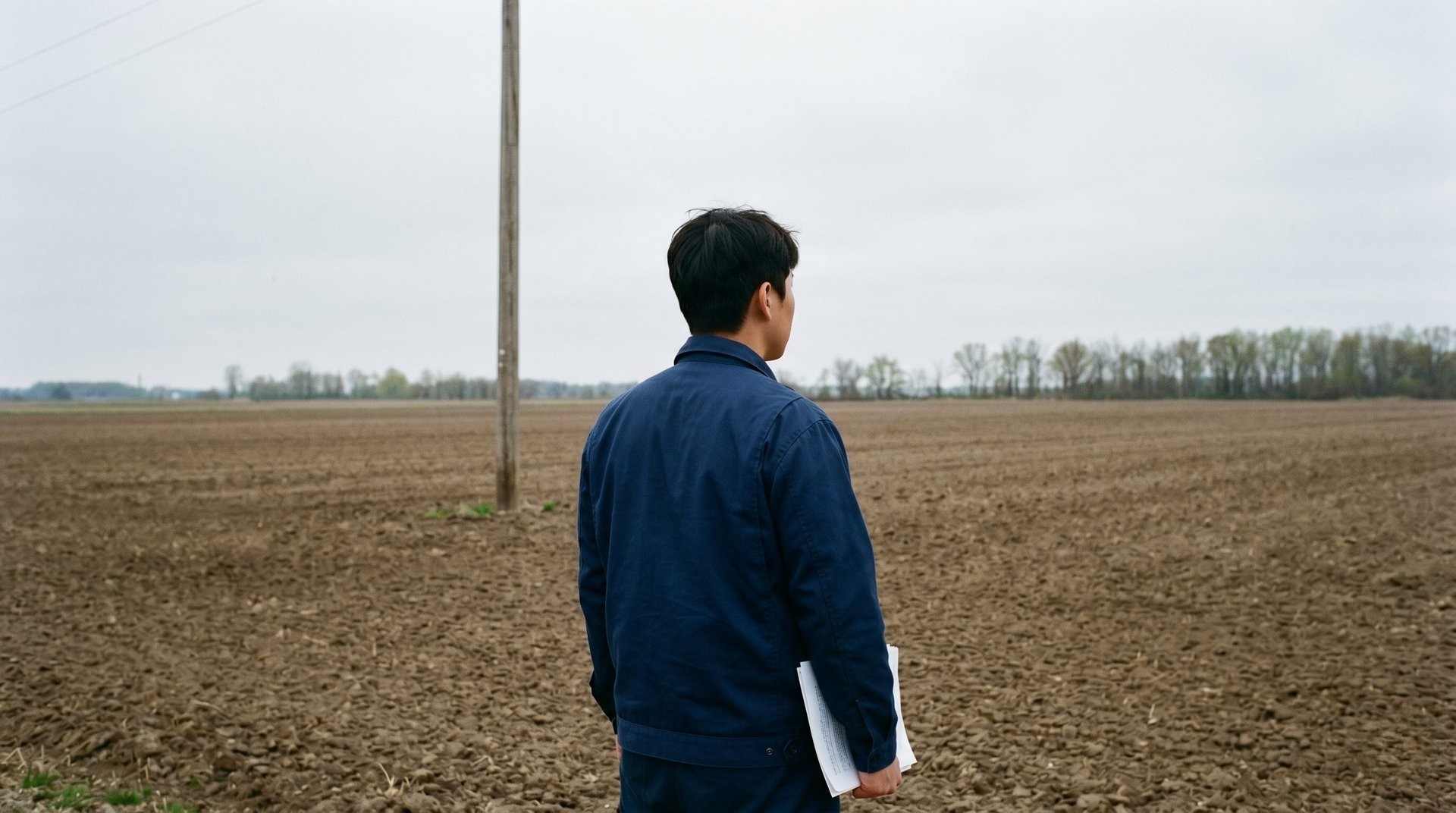
한 청년이 농사를 짓겠다며 농지은행에 땅을 빌려달라고 신청했다. 그러나 곧 막혔다. 청년농에게 주어지는 영농정착지원금은 길어야 3년이다. 1년차 월 110만 원에서 90만 원으로 줄어드는 생활비다. 농사를 지을 한 벌의 시스템을 갖출 돈이 아니다.
A young person applied to the public land bank to lease a field — they wanted to farm. They soon hit a wall. The settlement stipend for young farmers lasts three years at most. It starts at 1.1 million won a month and tapers to 900,000 — living money. It is not money to build the whole apparatus a farm requires.
농사는 밭 한 뙈기로 짓는 게 아니다. 살 집이 있어야 하고, 작업장이 있어야 하고, 거둔 것을 썩히지 않을 저온저장고가 있어야 한다. 이 배후 시설이 없으면 땅을 빌려도 지을 수 없다. 마련하는 길은 사실상 빚뿐이다 — 후계농자금 최대 5억 원 융자. 자작농이 되려다 채무농이 되는 입구다. 그리고 못 버티고 도시로 되돌아가는 귀농인의 73.8%가 첫 3년 안에 떠난다. 초기 3년이 절벽이다.
You do not farm with a bare field. You need a place to live, a workshop, and cold storage so the harvest does not rot. Without this backing infrastructure, a leased field cannot be farmed. The only real way to build it is debt — a successor-farmer loan of up to 500 million won. That is the doorway where an aspiring owner-cultivator becomes a debtor instead. And of those who do give up and return to the city, 73.8% leave within the first three years. The first three years are the cliff.
여기서 1950년과 2026년이 갈린다. 농지개혁이 작동한 건 땅은 귀하고 지을 사람은 넘쳤기 때문이다. 지금은 정반대다. 땅은 묵어가고, 지을 사람이 귀하다. 그러니 전수조사가 투기의 땅을 아무리 풀어내도 소용없다. 그 위에 설 한 사람이 없으면, 국가가 가진 묵은 땅만 늘 뿐이다. 1950년의 병목은 '땅을 누구에게'였다. 2026년의 병목은 '누가 거기 설 수 있는가'다.
Here 1950 and 2026 part ways. Land reform worked because land was scarce and would-be farmers were plentiful. Now it is the reverse: land lies fallow, and people to farm it are scarce. So however much farmland the census frees from speculators, it changes little. If no one can stand on it, the state simply accumulates more idle ground. The bottleneck in 1950 was "to whom the land." In 2026 it is "who can stand there."
그래서 자작농의 자강은 맨 땅의 문제가 아니다. 농지와 농가와 작업장과 저장시설이 한 벌로 갖춰진, 자립 가능한 영농 한 채의 문제다. 소유는 그 출발이지 전부가 아니다. 빚에 눌린 채 고립된 자작농은 자강이 아니다. 그러니 방향은 땅을 푸는 데서 그치면 안 된다. 짓는 사람을 소유로 데려가되, 그가 설 수 있도록 시설까지 함께 세우는 것이다.
So the self-strengthening of the owner-cultivator is not a question of bare land. It is a question of a viable whole — field, dwelling, workshop, and storage as one set. Ownership is its start, not its sum. An owner-cultivator crushed by debt and isolated is not self-strengthening. The direction, then, cannot stop at freeing land. It must carry the cultivator into ownership and raise, beside them, the facilities that let them stand.
마지막 확인은 여전히 사람이 한다. 전수조사의 현장 점검은 농지위원회 위원과 마을 이장의 몫이다. 그래서 이웃이 이웃을, 때로는 가족이 가족을 조사한다. 약점처럼 보인다. 그러나 데이터는 모든 필지를 똑같은 점으로 본다. 그 땅이 못 짓게 된 노인의 사정인지, 투기꾼의 자산인지 — 그건 그 동네 사람만 안다. 그리고 그 확인은 한 번으로 끝나지 않는다. 계속 누가 짓는지를 묻고 확인해야 하는 땅은, 계속 사람을 필요로 한다. 묻기를 멈추는 순간 땅은 자산으로 굳고, 사람은 사라진다.
The final check is still done by people. The census's on-site verification falls to farmland-committee members and village heads — neighbor investigating neighbor, at times family investigating family. It looks like a weakness. But data sees every plot as the same dot. Whether a fallow field is an old farmer's hardship or a speculator's asset — only someone from that town knows. And that knowing is never finished. Land that must keep being asked who works it keeps needing people. The moment the asking stops, land hardens into an asset, and people disappear.
그래서 자강헌이 쓰려는 말은 다르다. '지방소멸'은 위에서 결핍을 세고 위에서 해법을 내린다. 우리가 쓰려는 말은 지방 자강이다. 그것은 땅을 푸는 데서 그치지 않는다. 그 땅에 한 사람이 설 수 있도록 농가와 작업장과 저장고를 함께 세우는 일이다. 미래를 보고 들어오려는 그 청년이 떠나지 않도록. 그리고 그것은 그 한 사람의 자작에서 시작된다.
So the word Jagangheon means to use is different. "Regional extinction" counts deficit from above and dictates cures from above. The word we mean is regional self-strengthening. It does not stop at freeing land. It raises, beside it, the dwelling and workshop and storehouse that let one person stand there — so the young farmer who came looking at a future does not leave. And it begins in that one person's working of their own.
6. 풀린 땅, 그다음
6. Freed Land, and Then
그리고 제도는, 절반쯤은 이미 이 방향으로 움직이고 있다. 2026년, 정부는 청년농 농지 지원의 판을 새로 짰다. 한국농어촌공사가 우량 농지를 사들여 빌려주는 게 공공비축 임대농지다. 정부는 이를 2,500헥타르에서 4,200헥타르로, 한 해 만에 약 70% 늘렸다. 임대료는 1헥타르에 연 56만 원, 시중의 약 5분의 1이다. 부재지주에게 흘러가던 지대를 국가가 끊은 것이다. 그 돈이 청년의 손에 남도록. '선임대후매도'도 있다. 10~30년 빌려 짓다가 갚으면 소유권을 넘겨받는 사다리다. 그 물량은 50헥타르에서 200헥타르로 네 배 늘었다. 짓는 사람을 임차에서 소유로 데려가겠다는, 자강헌이 말한 바로 그 방향이다. 영농 경력에 따라 지원 규모를 제한하던 기준도 폐지됐다. 지원 한도도 0.5~1.0헥타르씩 늘었다. 묵힌 땅이 어디 있는지 지도에서 바로 보는 GIS 포털도 열렸다.
And the policy, halfway at least, is already moving this way. In 2026 the government redrew the board for young farmers' land. The state land corporation buys good farmland and leases it out as public reserve farmland. It rose from 2,500 to 4,200 hectares in a single year — about 70%. The rent is 560,000 won per hectare a year, roughly a fifth of the market. The state cut the rent that used to flow to absentee owners and kept it in the young farmer's hands. There is also "lease-to-own": rent for 10 to 30 years, and once paid off, ownership transfers. That quadrupled from 50 to 200 hectares. To carry the cultivator from tenancy into ownership — exactly the direction Jagangheon named. The restriction that capped support by years of farming experience was abolished. Support ceilings were raised by 0.5 to 1.0 hectares. A GIS portal now shows on a map where idle land lies.
여기까지는 옳다. 그러나 결정적인 한 칸이 비어 있다. 이 모든 개편은 '땅'을 푼다. 그런데 그 청년의 신청서를 막은 것은 땅이 아니었다. 농가도, 작업장도, 저온저장고도 — 땅에 딸린 '한 채'였다. 비축농지가 4,200헥타르로 늘어도 마찬가지다. 그 위에 살 집, 일할 작업장, 거둔 것을 둘 저장고가 없으면 — 청년은 여전히 그것을 5억 원의 빚으로만 세워야 한다. 채무농의 입구는 그대로 열려 있다. 은행에 바치는 이자나 지주에게 바치는 지대나 같은 구조다. 짓는 사람의 강해진 결과가, 짓지 않은 자에게 흘러나간다. 임차에서 자작농을 구해내고도, 빚으로 그를 다시 추출의 대상으로 떨어뜨리는 것이다.
This far, it is right. But one decisive square is empty. All of this frees land — and land was not what blocked that young person's application. It was the dwelling, the workshop, the cold storage: the whole set attached to the land. Reserve farmland may grow to 4,200 hectares, but it changes nothing here. Without a house to live in, a workshop to work in, and storage to hold the harvest, the young farmer must still build them on 500 million won of debt alone. The doorway to becoming a debtor stands open. Interest paid to a bank and rent paid to a landlord share one shape. The cultivator's strengthening flows out to someone who did not strengthen. Having rescued the owner-cultivator from tenancy, debt drops them back into the same extraction.
그래서 마지막 과제는 땅이 아니라 한 채다. 사다리는 짓는 사람을 소유로 데려간다. 그 옆에, 그가 빚 없이 설 농가와 작업장과 저장고를 국가가 함께 세워야 한다. 그때 비로소 자립 가능한 영농 한 채가 완성된다. 풀린 땅은 시작이고, 한 채는 그 땅이 사람을 붙잡는 조건이다.
So the final task is not land but the whole set. The ladder carries the cultivator into ownership. Beside it, the state must raise the dwelling and workshop and storehouse where they can stand without debt. Only then is the viable whole complete. Freed land is the beginning; the whole set is the condition on which that land keeps its people.
닫으며
Closing
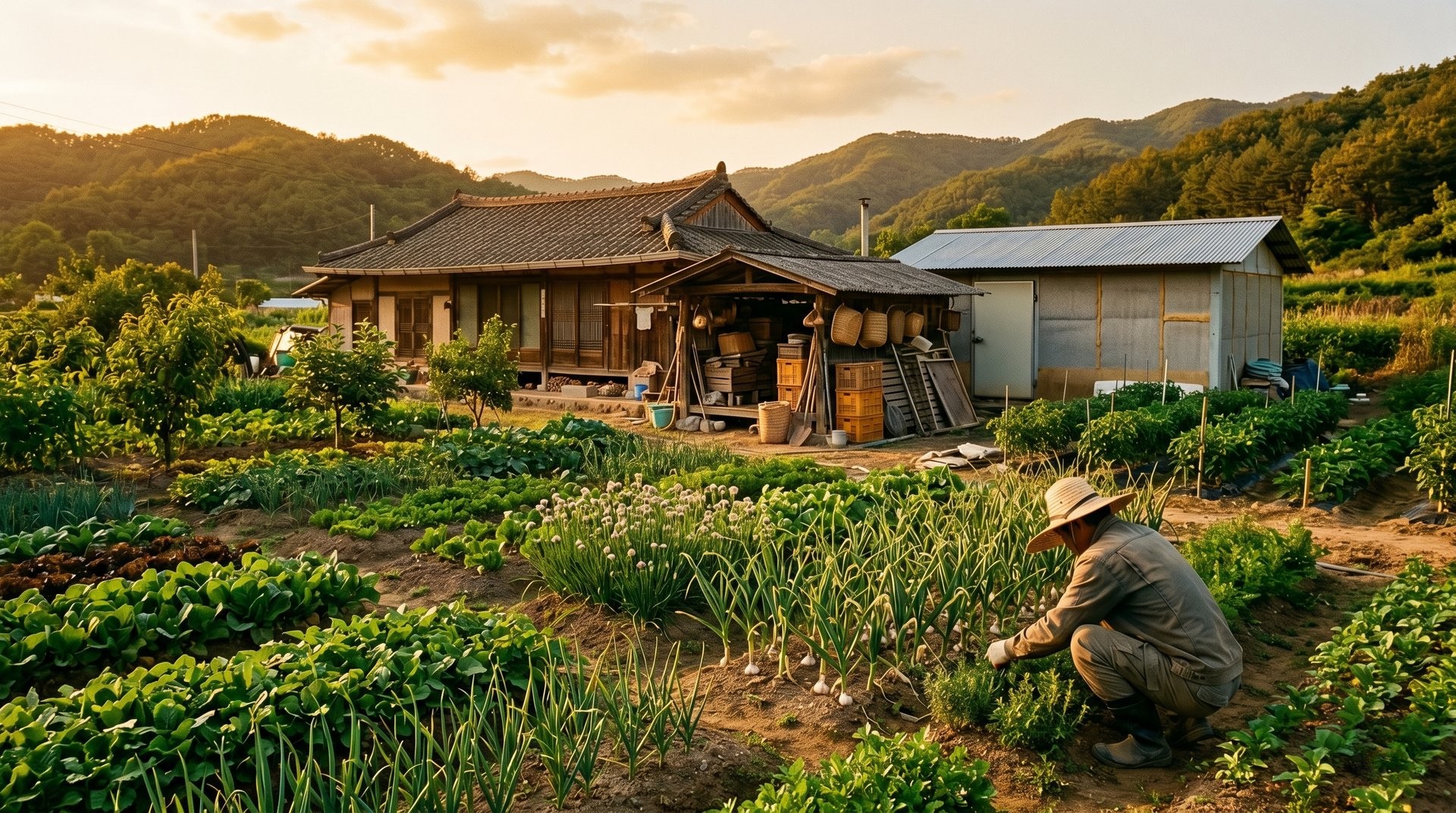
누구나 자신의 일화를 이야기하면 그것이 씨앗이 되어 세상을 바꾸기 시작한다. 자작농 한 사람은 그 씨앗의 가장 문자 그대로의 모습이다. 땅에 심고, 거두고, 다음 철을 준비하는 사람.
When anyone tells the story of their own life, it becomes a seed that begins to change the world. A single owner-cultivator is the most literal form of that seed — one who plants, harvests, and prepares the next season.
지도는 위에서 그린다. 씨앗은 아래에서 심는다. 비어가는 곳을 다시 채우는 것은 더 정교한 지도가 아니다. 그 땅에 자기 힘으로 뿌리내리고, 계속 거기서 짓는 한 사람 한 사람이다.
Maps are drawn from above. Seeds are planted from below. What refills an emptying place is not a finer map. It is each person who roots themselves there by their own power and keeps working that ground.
소멸의 반대말은 자강이고, 자강은 자작에서 시작된다.
The opposite of extinction is self-strengthening, and self-strengthening begins with working one's own.