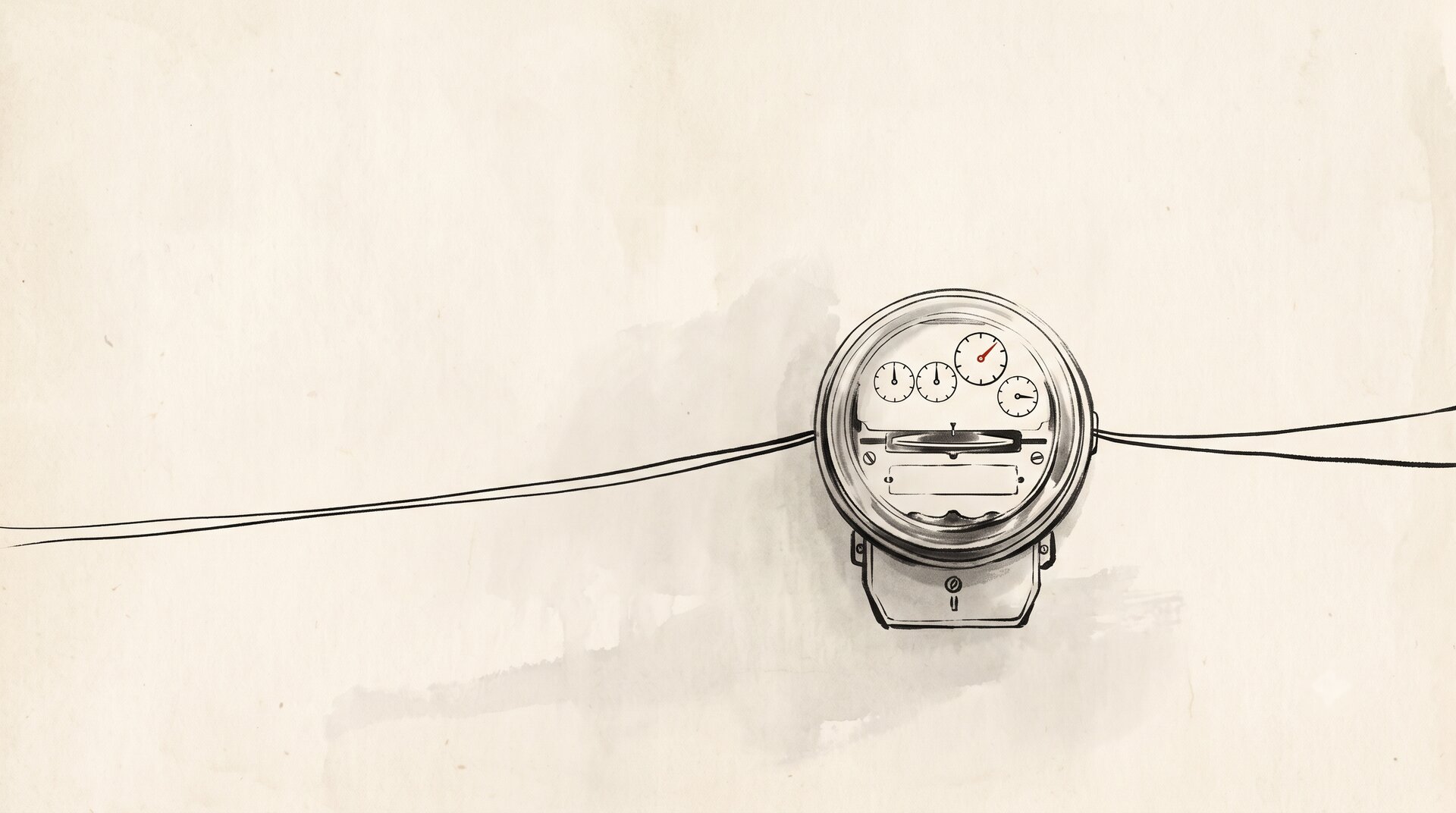
전기가 처음 팔리던 시절, 계량기는 에너지를 재지 못했다. 최초의 계량기는 전등이 몇 시간 켜져 있었는지를 세는 시계였다. 쓰임새가 전등 하나뿐이던 시절엔 그걸로 충분했다. 그러나 전기의 쓰임이 다양해지자 시계는 버려졌고, 에너지 자체를 재는 계량기가 그 자리에 섰다. 에디슨은 계량기가 미덥게 돌기 전까지 청구서를 보내지 않았다. 최초의 전기요금 청구서는 1883년 1월에야 발송됐다. 계량 단위가 서자 발전소와 송전망과 요금표가 따라 섰다. 킬로와트시라는 눈금 하나가 산업 하나를 세운 것이다.
When electricity was first sold, the meter could not measure energy. The earliest meters were clocks that counted how many hours a lamp had burned. As long as the lamp was electricity's only use, a clock was enough. When its uses multiplied, the clock was abandoned and a meter that measured energy itself took its place. Edison refused to send bills until his meter ran reliably; the first electricity bill went out only in January 1883. Once the unit of measurement stood, the power plants, the grid and the tariff followed. A single scale — the kilowatt-hour — raised an entire industry.
지금 인공지능에서 같은 일이 벌어지고 있다. 이번 눈금의 이름은 토큰이다.
The same thing is now happening in artificial intelligence. This time, the scale is called the token.
토큰이라는 눈금
A Unit Called the Token
AI 모델은 문장을 통째로 읽지 않는다. '토큰'이라는 조각으로 쪼개서 읽고, 조각 단위로 답을 짓는다. 질문을 넣을 때도, 답이 나올 때도 토큰이 소모된다. 전기를 킬로와트시로 재듯, AI 사용량은 토큰으로 잰다. 여기까지는 전 세계가 같다.
An AI model does not read a sentence whole. It breaks language into fragments called tokens, and it builds its answers fragment by fragment. Tokens are consumed when you ask and consumed again when it answers. Just as electricity is measured in kilowatt-hours, AI usage is measured in tokens. Up to this point, the whole world is the same.
다른 것은 그 눈금을 누가, 어떻게 쥐고 있느냐다.
What differs is who holds that scale, and how.
중국 — 도량형을 접수하다
China: Seizing the Weights and Measures
올해 3월, 중국 국가데이터국장 류례훙(刘烈宏)이 공식 석상에서 토큰의 중국어 표준 명칭을 발표했다. 词元(사원). 국가가 도량형에 이름을 붙인 것이다. 그는 토큰을 이렇게 정의했다. "지능 시대의 가치 닻이자, 기술 공급과 상업 수요를 잇는 결산 단위."
In March this year, Liu Liehong, head of China's National Data Administration, announced the official Chinese name for the token: ciyuan (词元). The state had named a unit of measurement, as governments once proclaimed the metric system. He defined the token as "the value anchor of the intelligence era, and the settlement unit connecting technological supply with commercial demand."
명명과 함께 국가 통계가 시작됐다. 중국의 일평균 토큰 조회량은 2024년 초 1,000억이었다. 2025년 말 100조가 됐고, 올해 3월 140조를 넘었다. 두 해 만에 1,000배다. 5월에는 170조로 다시 갱신됐다.
With the name came national statistics. China's daily token calls stood at 100 billion in early 2024. By the end of 2025 they had reached 100 trillion; by March this year, over 140 trillion. A thousandfold in two years. By May the figure had been updated again, to 170 trillion.
숫자만 세는 게 아니다. 지난 6월 베이징 이좡에 "베이징 1호 사원공장(北京壹号词元工厂)"이 가동됐다. 서버로 가득한 데이터센터인데, 이름이 공장이다. 기존 데이터센터가 GPU를 시간 단위로 임대했다면, 이 공장은 전기와 칩과 모델을 묶어 토큰이라는 완제품을 생산해 판다. 1기 일산 1.4조 토큰. 장기 목표는 일산 10조다. 장자커우와 우란차부의 녹색전력 기지와 연결해 클러스터를 만들 계획도 나와 있다.
And they are not merely counting. In June, "Beijing Token Factory No. 1" went into operation in Yizhuang. It is a data centre full of servers — but its name is a factory. Where data centres once leased GPUs by the hour, this factory bundles electricity, chips and models to produce and sell a finished product: tokens. Phase one turns out 1.4 trillion tokens a day; the long-term target is 10 trillion. Plans call for linking it to green-power bases in Zhangjiakou and Ulanqab to form a regional cluster.
공장이 서자 생산성 지표도 바뀌었다. 업계가 재는 것은 이제 최대 알력이 아니라 "와트당 토큰 수(每瓦Token数)"다. 전기 1와트로 토큰 몇 개를 뽑아내는가. 공장의 언어다.
With the factory came a new measure of productivity. What the industry now tracks is not peak compute but "tokens per watt" — how many tokens a single watt of electricity can yield. The language of the factory floor.
이 '공장' 비유의 원산지는 사실 미국이다. 올해 3월 GTC에서 젠슨 황이 말했다. 데이터센터는 저장창고가 아니라 토큰을 생산하는 공장이고, 와트당 성능이 상업의 명줄이라고. 중국은 이 말을 넉 달 만에 도시 정책 언어로 수입해 실물로 지었다. 베이징시는 7월 21일 하반기 계획을 발표했다. 토큰의 생산·분배·응용을 규율하는 토큰경제 정책을 제정하고, 토큰 공장과 분배 플랫폼을 더 짓는다. 지능 연산력은 상반기에만 2.2만 페타플롭스를 늘려 8.2만에 이르렀고, 연내 13만을 넘기는 것이 목표다.
The factory metaphor was, in fact, made in America. At GTC in March, Jensen Huang declared that data centres are not warehouses but token factories, and that performance per watt is the lifeline of the business. Within four months China had imported the phrase into municipal policy and poured it in concrete. On July 21 the Beijing city government announced its second-half plan: a formal token-economy policy governing the production, distribution and application of tokens, plus more token factories and distribution platforms. The city added 22,000 petaflops of intelligent computing in the first half alone, reaching 82,000, with a target of surpassing 130,000 by year's end.
요금고지서에 오른 지능
Intelligence on the Utility Bill
계량 단위가 서면 다음은 요금표다.
Once the unit stands, the tariff follows.
5월, 중국 통신 3사가 일제히 토큰 요금제를 내놨다. 차이나텔레콤의 개인용 최저 요금제는 월 9.9위안에 1,000만 토큰. 우리 돈 2천 원이 안 된다. 기업용은 월 39.9위안부터 299.9위안까지, 1,500만에서 1.5억 토큰까지다. 데이터 요금제를 고르듯 토큰 요금제를 고르고, 휴대폰 요금 고지서로 결제한다. 상하이 쪽 통신사들의 표어는 이 구조를 한 줄로 요약한다. "하나의 한도, 하나의 가격, 모델은 마음대로." 요금제 하나로 30여 개 모델을 골라 쓴다. 발전소가 어디든 콘센트 하나로 전기를 쓰는 것과 같다.
In May, all three of China's telecom giants rolled out token plans. China Telecom's cheapest consumer tier: 10 million tokens for 9.9 yuan a month — less than two US dollars. Business tiers run from 39.9 to 299.9 yuan, for 15 million to 150 million tokens. You choose a token plan the way you choose a data plan, and you pay through your phone bill. The Shanghai carriers' slogan captures the structure in one line: "one allowance, one price, any model." A single plan lets you draw on some thirty models — the way a single socket delivers electricity, whichever power plant made it.
수십 년간 기가바이트를 팔던 통신사가 토큰을 팔기 시작했다. 지능이 수도·전기·통신 다음의 공과금 자리로 들어온 것이다.
Carriers that sold gigabytes for decades have begun selling tokens. Intelligence has taken its seat on the utility bill, after water, electricity and telecoms.
그리고 전기요금의 문법이 완성됐다. 모델사 DeepSeek은 봄에 가격을 원가의 4분의 1로 영구 인하해 지능을 싸게 만들었다. 그 다음 수가 피크 요금제다. 6월 말 발표된 새 요금 체계에서, 평일 오전 9시부터 12시, 오후 2시부터 6시까지 토큰 값은 2배가 된다. 백만 토큰당 출력 6위안이 피크엔 12위안. 낮엔 비싸고 밤엔 싸다. 정확히 전기요금이다. 현지의 한 분석이 정곡을 찔렀다. 알력의 시간 분포는 본질적으로 전력의 시간 분포이며, 모든 토큰 뒤에는 전기가 있다는 것이다. 실제로 기업들은 급하지 않은 대량 작업을 야간으로 옮기고 있다.
Then the grammar of the electricity bill was completed. In spring, the model maker DeepSeek permanently cut its prices to a quarter of list, making intelligence cheap. Its next move was peak pricing. Under the new schedule announced in late June, token prices double on weekdays from 9 to 12 in the morning and 2 to 6 in the afternoon: six yuan per million output tokens off-peak, twelve at peak. Expensive by day, cheap by night — exactly like electricity. One local analysis cut to the heart of it: the time distribution of compute is, in essence, the time distribution of power, and behind every token there is electricity. Companies are already shifting bulk, non-urgent jobs to the night.
배급과 그 그림자
Rations and Their Shadow
기업 담장 안에서 토큰은 수당이 됐다. 바이트댄스의 한 직원은 매달 10억 토큰 가까이 쓴다고 말한다. 그런데도 부서 소비 랭킹 상위권 근처에 못 간다고 한다. 알리바바와 텐센트도 사내 도구에 토큰을 배급했고, 어떤 회사는 토큰 소비량을 인사평가에 직접 반영한다.
Inside company walls, tokens have become an allowance. One ByteDance employee says he burns through nearly a billion tokens a month — and still ranks nowhere near the top of his department's consumption table. Alibaba and Tencent have rationed tokens through in-house tools; at least one firm ties token consumption directly to performance reviews.
배급이 있으면 통제와 위조도 따라온다. 텐센트는 6월부터 한도를 절반 이하로 줄이고 2주마다 재승인을 받게 했다. 미국 쪽 전례는 더 노골적이다. 아마존은 개발자를 AI 사용량으로 줄 세우는 내부 순위표를 운영하다 지난 5월 폐지했다. 직원들이 무의미한 작업을 AI 에이전트에 시켜 토큰을 태우고 순위를 올렸기 때문이다. 직원들 스스로 이 행위에 이름까지 붙였다. 토큰맥싱(tokenmaxxing) — 토큰 사용량 부풀리기. 산출 없이 비용만 튀자 아마존은 순위표를 내렸고, 지표를 바꿨다. 사용한 토큰 수가 아니라, 실제로 배포된 AI 보조 코드의 양으로. 토큰 수는 산출의 그림자일 뿐, 산출 그 자체가 아니라는 것을 이 실패가 보여준다.
Where there are rations, control and counterfeit follow. Since June, Tencent has cut allowances to less than half and required fresh approval every two weeks. The American precedent is blunter. Amazon ran an internal leaderboard ranking developers by AI usage — and shut it down in May. Employees had been assigning pointless tasks to AI agents to burn tokens and climb the table. The staff even coined a name for it: tokenmaxxing. With costs spiking and nothing shipping, Amazon took the board down and changed the metric — from tokens consumed to AI-assisted code actually deployed. The failure makes the lesson plain: the token count is the shadow of output, not output itself.
성능의 시대에서 값의 시대로
From Capability to Cost
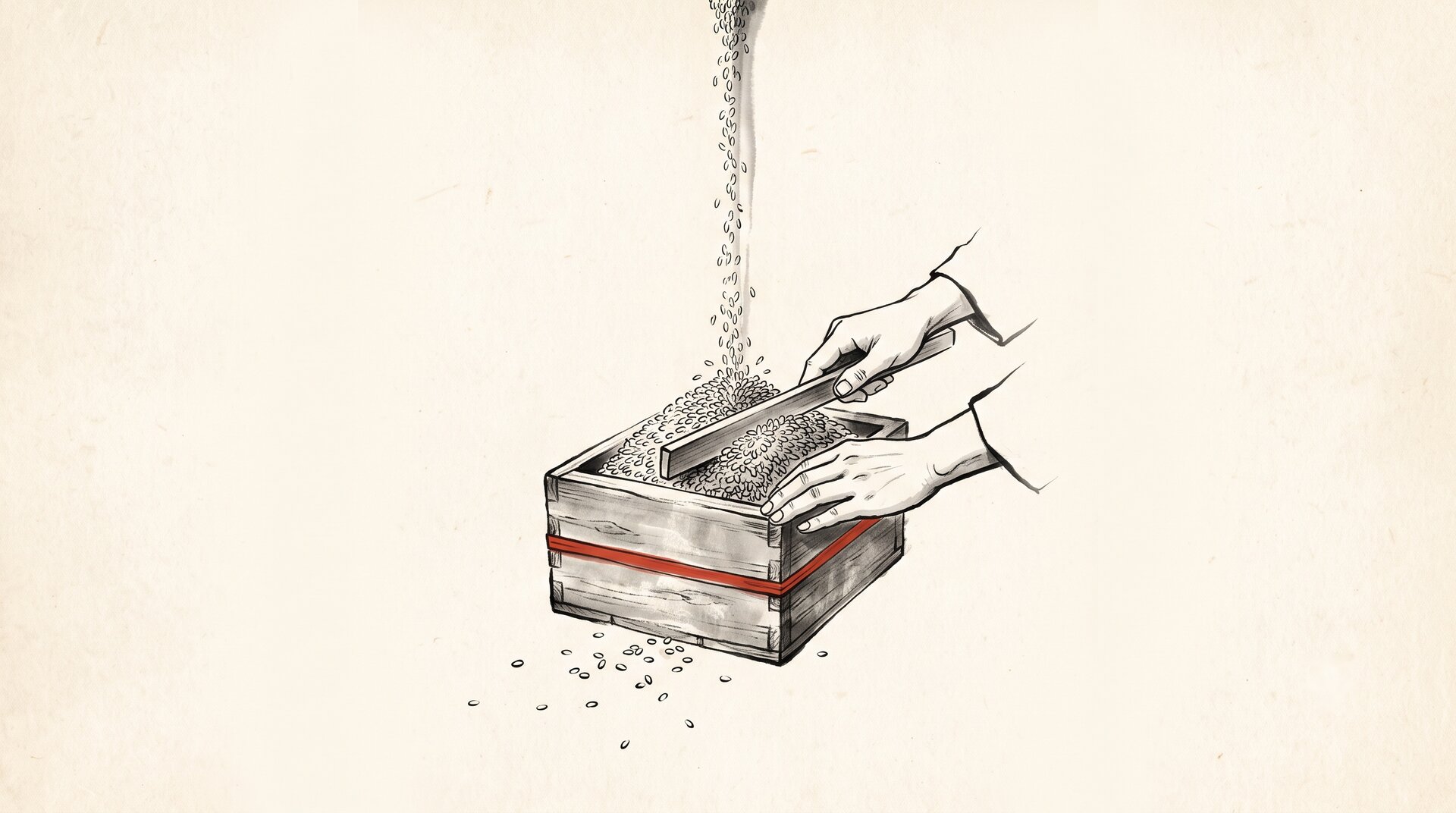
세계의 요금표를 한 장에 놓으면 스펙트럼이 보인다. 2026년 7월 현재, 출력 백만 토큰의 값은 가장 비싼 모델과 가장 싼 모델 사이에 640배가 벌어져 있다. 거의 같은 요청 형식으로 부를 수 있는 두 서비스 사이의 격차다.
Lay the world's rate cards side by side and a spectrum appears. As of July 2026, the price of a million output tokens spans a 640-fold gap between the most and least expensive models — two services you can call with nearly identical request formats.
이 사다리의 바닥을 만든 것이 오픈웨이트 모델이다. 오픈웨이트란 학습이 끝난 모델의 가중치 — 신경망의 매개변수 전체 — 를 누구나 내려받게 공개하는 방식이다. 레시피(학습 데이터와 과정)까지 다 여는 것은 아니지만, 완성된 엔진을 통째로 나눠주는 것이어서 받은 쪽은 자기 서버, 자기 GPU에서 마음대로 돌릴 수 있다. 남의 계량기 없이 쓰는 지능인 셈이다. 중국 모델들이 이 바닥을 담당한다. DeepSeek과 즈푸의 GLM이 가중치를 공개해 왔고, 문샷은 프런티어급 K3의 가중치 공개를 예고했다. 공개된 모델은 여러 사업자가 받아다 서로 값을 낮춰 파니, 요금표 전체의 바닥이 끌려 내려간다.
The floor of this ladder was built by open-weight models. Open-weight means publishing the trained model's weights — the neural network's entire set of parameters — for anyone to download. The recipe (training data and process) may stay closed, but the finished engine is handed over whole: whoever takes it can run it on their own servers, their own GPUs. Intelligence used without someone else's meter. Chinese models hold this floor. DeepSeek and Zhipu's GLM have released their weights, and Moonshot has announced the release of its frontier-class K3. Once weights are public, multiple providers serve the same model and undercut one another — dragging down the floor of the entire rate card.
사다리의 가운데는 더 흥미롭다. 대표적인 코딩 벤치마크에서 0.4점 차이 안에 다섯 개 모델이 몰려 있는데, 그 다섯의 출력 가격은 다섯 배가 벌어져 있다. 성능이 상향 평준화되자 변별점이 가격으로 옮겨간 것이다. 서비스는 이미 충분히 좋아졌다. 무엇을 살 수 있느냐의 시대가 저물고, 같은 지능을 얼마에 사서 어떤 가치를 만드느냐의 시대가 열린 것이다. 계량 단위가 중요해진 이유가 바로 여기에 있다. 성능의 시대에 토큰은 기술 용어였지만, 값의 시대에 토큰은 회계 단위다.
The middle of the ladder is more interesting still. On a leading coding benchmark, five models sit within 0.4 points of one another — while their output prices span a fivefold range. As capability converged upward, the differentiator moved to price. The services are already good. The era of what you can buy is closing; the era of what the same intelligence costs, and what value you create with it, has opened. This is precisely why the unit of measurement matters. In the age of capability, the token was a technical term. In the age of cost, it is an accounting unit.
세 나라, 세 개의 계기판
Three Countries, Three Dashboards
미국에서 토큰은 투자자에게 보여주는 계기판이다. 구글은 5월 개발자 행사에서 월 3.2경(京) 토큰을 처리한다고 발표했다. 1년 새 약 7배라는 이 수치는 자사 발표이고, 외부 감사는 없다. 소비자 과금은 여전히 월 구독제 중심이다. 토큰 단가는 몇 해 사이 수백분의 1로 떨어졌지만, 추론 모델과 에이전트가 작업당 토큰량을 수십 배로 불리면서 청구서는 오히려 커지는 흐름이다. 단가는 내리고 지출은 늘어난다.
In America, the token is a dashboard shown to investors. At its developer event in May, Google announced it processes 3.2 quadrillion tokens a month — a roughly sevenfold jump in a year, by its own unaudited count. Consumer billing remains subscription-first. Token prices have fallen by orders of magnitude in a few years, yet reasoning models and agents have multiplied the tokens each task consumes, so the bills keep growing. Unit prices fall; spending rises.
중국에서 토큰은 국민에게 과금하는 계량 단위다. 국가가 이름을 정하고, 통계를 내고, 도시가 공장을 짓고, 통신사가 요금제로 팔고, 모델사가 시간대별로 값을 매긴다. 계량에서 생산, 유통, 과금, 배급까지 전 층위가 제도로 들어섰다.
In China, the token is a metering unit billed to the public. The state names it and counts it; cities build factories for it; carriers sell plans of it; model makers price it by the hour of the day. From measurement through production, distribution, billing and rationing, every layer has been institutionalised.
한국에서 토큰은 아직 내는 쪽의 언어다. 계량기는 남의 것이고, 눈금마저 불리하다. 같은 뜻을 한국어로 물으면 영어보다 토큰이 서너 배, 측정에 따라 다섯 배까지 소모된다. 같은 구독료를 내고 받는 서비스가 3분의 1 안팎이라는 뜻이다. 계량기의 눈금이 영어 자로 매겨져 있는 것이다. 정부와 기업이 수 조 원 단위의 인공지능 투자를 말하지만, 그 계획서의 숫자들은 대부분 투입 단위다. 몇 조 원, 몇 메가와트, GPU 몇 장. 그 돈과 쇠로 무엇이 얼마나 생산되는지를 재는 산출 단위는 계획서에 보이지 않는다.
In Korea, the token is still the language of the paying side. The meter belongs to someone else, and even its markings run against us. Ask the same question in Korean and it consumes three to four times the tokens of English — up to five, by some measurements. The same subscription buys roughly a third of the service. The meter's scale is ruled in English inches. Government and industry speak of AI investment in the trillions of won, but the numbers in the plans are almost all input units: so many trillion won, so many megawatts, so many GPUs. The output unit — what all that money and metal actually produces — is nowhere on the page.
계량 없는 무료
Free, Unmetered
한국 정부는 지금 '모두의 AI'라는 사업을 공모 중이다. 전 국민이 "비용 부담이나 이용량 제한 없이" 쓰는 국산 AI 챗봇을 12월에 출시한다는 계획이다. 국산 모델을 절반 이상 쓰는 조건으로 민간 기업 두세 곳을 뽑고, 올해는 GPU를 현물로 대주고, 내년부터는 운영비를 예산으로 지원한다. 참여 기업은 이용자의 프롬프트 데이터 활용 같은 자체 수익 모델을 마련해야 한다는 조건도 붙어 있다. 국민PC를 나눠주고 인터넷 정액제를 깔던 기억의 연장선이다. 그 시절 그 프레임은 맞았다. 회선은 깔아두면 더 쓰는 데 드는 비용이 거의 없었다.
The Korean government is now tendering a project called "AI for Everyone": a domestically built chatbot, launching in December, that every citizen can use "without cost or usage limits." Two or three private firms will be selected, required to run Korean models for more than half the service; the state supplies GPUs in kind this year and operating budgets from next. Participants must also devise their own revenue models — such as making use of users' prompt data. It is the lineage of the People's PC and flat-rate internet. In that era, the frame was right: once the line was laid, the marginal cost of using it was nearly zero.
추론은 다르다. 호출 한 번마다 전기가 타고 GPU가 돈다. 토큰마다 원가가 있는 재화를 무료·정액의 틀에 넣는 것은, 사용자 눈앞에서 계량기를 떼어내는 일이다. 계량기가 없으면 아낄 이유가 없고, 낭비를 알아챌 방법도 없다. 중국이 굳이 피크 시간에 2배를 물리는 이유가 그것이다. 가격 신호로 소비의 시간을 규율한다. 무료는 그 신호를 세금으로 지운다.
Inference is different. Every call burns electricity and spins a GPU. To place a good that has a cost per token inside a free, flat-rate frame is to unbolt the meter before the user's eyes. Without a meter there is no reason to economise and no way to notice waste. That is precisely why China doubles the price at peak hours: the price signal disciplines when people consume. Free erases that signal — with tax money.
정부도 이 질문을 받았고, 토큰의 언어로 답했다. 단순한 기능 위주라 토큰 소모가 부담스러운 수준은 아니고, GPU를 현물로 지원하니 문제없다는 것이다. 서비스가 정말 단순한 기능에 머문다면 맞는 계산일 수 있다. 다만 계획은 내년 "1인 1 AI 에이전트"까지 뻗어 있다. 에이전트는 챗봇의 수십 배로 토큰을 태우는 물건이다. 무제한이라는 약속과 에이전트라는 목표 사이의 셈은, 아직 공개된 적이 없다.
The government has faced this question, and answered in the language of tokens: the service will be simple, so token consumption will not be burdensome, and GPUs are supplied in kind. If the service truly stays simple, the arithmetic may hold. But the plan extends to "one AI agent per citizen" next year — and an agent burns tokens at tens of times a chatbot's rate. The arithmetic between an unlimited promise and an agent-shaped goal has never been published.
여기에 한국어 페널티가 얹힌다. 검색 한 번이면 될 질문을 AI에게 던지면 검색의 몇 배, 몇십 배 전기가 탄다. 한국어라서 그 소모가 다시 3~5배로 뛴다. 그리고 이 소모를 국가가 성과로 셀 위험이 있다. 몇백만 명이 몇억 회 사용했다는 숫자가 정책 성과로 발표되는 순간, 호출 수는 산출 지표가 아니라 낭비 촉진 지표가 된다. 아마존의 순위표가 기업 담장 안에서 겪은 실패를, 국가 단위로 반복하는 길이다.
On top of this sits the Korean-language penalty. Put a question to an AI that a search engine could answer, and you burn several times — sometimes tens of times — the electricity of a search; in Korean, that consumption multiplies again by three to five. And there is a risk the state will count this consumption as achievement. The moment "millions of citizens, hundreds of millions of uses" is announced as policy success, the call count stops being an output metric and becomes an incentive to waste. It is the path to repeating, at national scale, the failure Amazon's leaderboard suffered inside company walls.
물론 반대편의 논리도 그 무게대로 세워야 한다. 소버린 모델론의 가장 강한 형태는 보호론이 아니라 효율론이다. 한국어 토큰 페널티는 영어 자로 눈금이 매겨진 계량기의 문제다. 다만 이것은 차별이라기보다 셈법의 결과다. 토크나이저의 어휘 슬롯은 유한하고, 배분은 데이터의 빈도가 정한다. 사용자 15억의 영어와 8천만의 한국어 사이에서, 글로벌 사업자가 한국어에 슬롯을 더 쓸 유인은 크지 않다. 불공정이 아니라 무유인(無誘因)이다. 그들에겐 고칠 이유가 없고, 그래서 아무도 우리 대신 눈금을 고쳐주지 않는다. 여기서 분모가 뒤집힌다. 글로벌 사업자에게 한국어는 시장의 한두 퍼센트지만, 국산 모델에게 한국어는 시장의 전부다. 한국어에 최적화된 국산 모델은 같은 질문을 더 적은 토큰으로 처리할 수 있다. 한국어 사용자에게는 국산 모델이 더 싼 계량기일 수 있다는 뜻이다. 태국에서 최대 은행 계열사가 태국어 최적화 모델을 직접 만든 것도 같은 셈법이다. 이 모델은 태국어 토큰 처리 효율이 2.6배 높다고 자체 발표했다. 접속 격차를 줄이고 해외 사업자에 대한 협상력을 갖추자는 논리도 가볍지 않다. 중국 역시 보조금을 쓴다. 다만 방식이 다르다. 창업팀에 주는 것은 5만 위안어치 토큰 크레딧이고, 무료 체험에는 날짜가 박힌 기한이 달려 있다. 전부 세어지는 보조금이다.
The other side of the argument deserves its full weight. The strongest form of the sovereign-model case is not protectionism but efficiency. The Korean token penalty is a fault of a meter ruled in English — yet it is less discrimination than arithmetic. A tokenizer's vocabulary slots are finite, and frequency in the training data decides their allocation. Between English's 1.5 billion users and Korean's 80 million, a global provider has little incentive to spend more slots on Korean. Not unfairness — the absence of incentive. They have no reason to fix it, so no one will fix the scale on our behalf. And here the denominator flips. To a global provider, Korean is one or two percent of the market; to a Korean model, Korean is the entire market. A model optimised for Korean can process the same question in fewer tokens — for Korean users, a domestic model can be the cheaper meter. Thailand's largest banking group built a Thai-optimised model on exactly this arithmetic — claiming, by its own account, 2.6 times the efficiency in tokenizing Thai. Nor are the arguments about access gaps and bargaining power against foreign providers trivial. China subsidises too — but differently. Its startup grants are 50,000 yuan in token credits; its free trials carry a dated expiry. Every subsidy is counted.
문제는 무료가 아니다. 계량 없는 무료다.
The problem is not that it is free. It is that it is free and unmetered.

눈금을 쥔 손
The Hand That Holds the Scale
전기의 세기가 가르쳐 준 것이 있다. 계량 단위를 정의하는 쪽이 요금표를 쓰고, 요금표를 쓰는 쪽이 지대를 걷는다. 중국은 지능의 도량형을 국가 표준으로 세우는 중이고, 미국은 자기 계기판의 숫자로 자본을 모으는 중이다.
The century of electricity taught one thing: whoever defines the unit writes the tariff, and whoever writes the tariff collects the rent. China is raising the weights and measures of intelligence into a national standard; America is raising capital on the numbers of its own dashboard.
한국은 지금 남의 계량기로, 불리한 눈금으로, 셈하지 않은 채 쓰고 있다. 그리고 세금으로 그 사용을 무료로 만들려 한다.
Korea, for now, consumes on someone else's meter, against an unfavourable scale, without counting — and plans to make that consumption free with tax money.
계량기 없는 보조금은 복지인가, 낭비의 촉진인가. 우리는 무엇을 몇 토큰어치, 어떤 산출을 위해 사고 있는가. 요금 고지서가 날아오기 전에, 각자 세어 볼 일이다.
Is an unmetered subsidy welfare, or an accelerant of waste? What are we buying, how many tokens' worth, and for what output? Before the bill arrives, it is worth doing the counting — each of us, for ourselves.
주요 출처Sources
류례훙 국가데이터국장 발언·일평균 토큰 통계(2026.3.23 중국발전고위급포럼):Liu Liehong, National Data Administration, China Development Forum (Mar 23, 2026): stcn.com · news.cn
베이징시 경제정보화국 하반기 계획(2026.7.21) — 토큰경제 정책·13만P:Beijing Municipal Bureau of Economy and IT, H2 plan (Jul 21, 2026): 163.com (財聯社)
베이징 1호 사원공장 가동(2026.6.9):Beijing Token Factory No. 1 (Jun 9, 2026): sina.com.cn
차이나텔레콤 토큰 요금제(2026.5.17):China Telecom token plans (May 17, 2026): nbd.com.cn
DeepSeek 피크·오프피크 요금제(2026.6.29 발표):DeepSeek peak/off-peak pricing (announced Jun 29, 2026): thepaper.cn
중국 기업의 토큰 배급·감시(SCMP, 2026.7.18):Token rations and surveillance in Chinese firms (SCMP, Jul 18, 2026): scmp.com
아마존 KiroRank 폐지·토큰맥싱(FT 최초 보도, 2026.5):Amazon KiroRank shutdown and tokenmaxxing (first reported by FT, May 2026): infoworld.com
구글 월 3.2경 토큰(Google I/O 2026 키노트, 자사 발표):Google's 3.2 quadrillion monthly tokens (I/O 2026 keynote, self-reported): gigazine.net
API 가격 비교(2026.7, 각사 공표 가격 집계·검증):API pricing comparison (Jul 2026, verified against providers' published rates): developersdigest.tech · morphllm.com
'모두의 AI' 공모 요강(과기정통부, 2026.7):"AI for Everyone" tender (MSIT, Jul 2026): aitimes.com
한국어 토큰 소모 3~5배 — 커뮤니티 벤치마크·연구 종합:Korean token penalty (3–5x, community benchmarks and research): kitpa.org
초기 전기 계량 사료(램프-아워 미터·1883년 첫 청구서):Early electric metering (lamp-hour meters; first bill, 1883): ethw.org
본문 삽화 3점은 AI 이미지 생성 도구로 제작했으며, 실제 장면을 촬영한 사진이 아니다.The three illustrations were made with an AI image-generation tool; they are not photographs of real scenes.