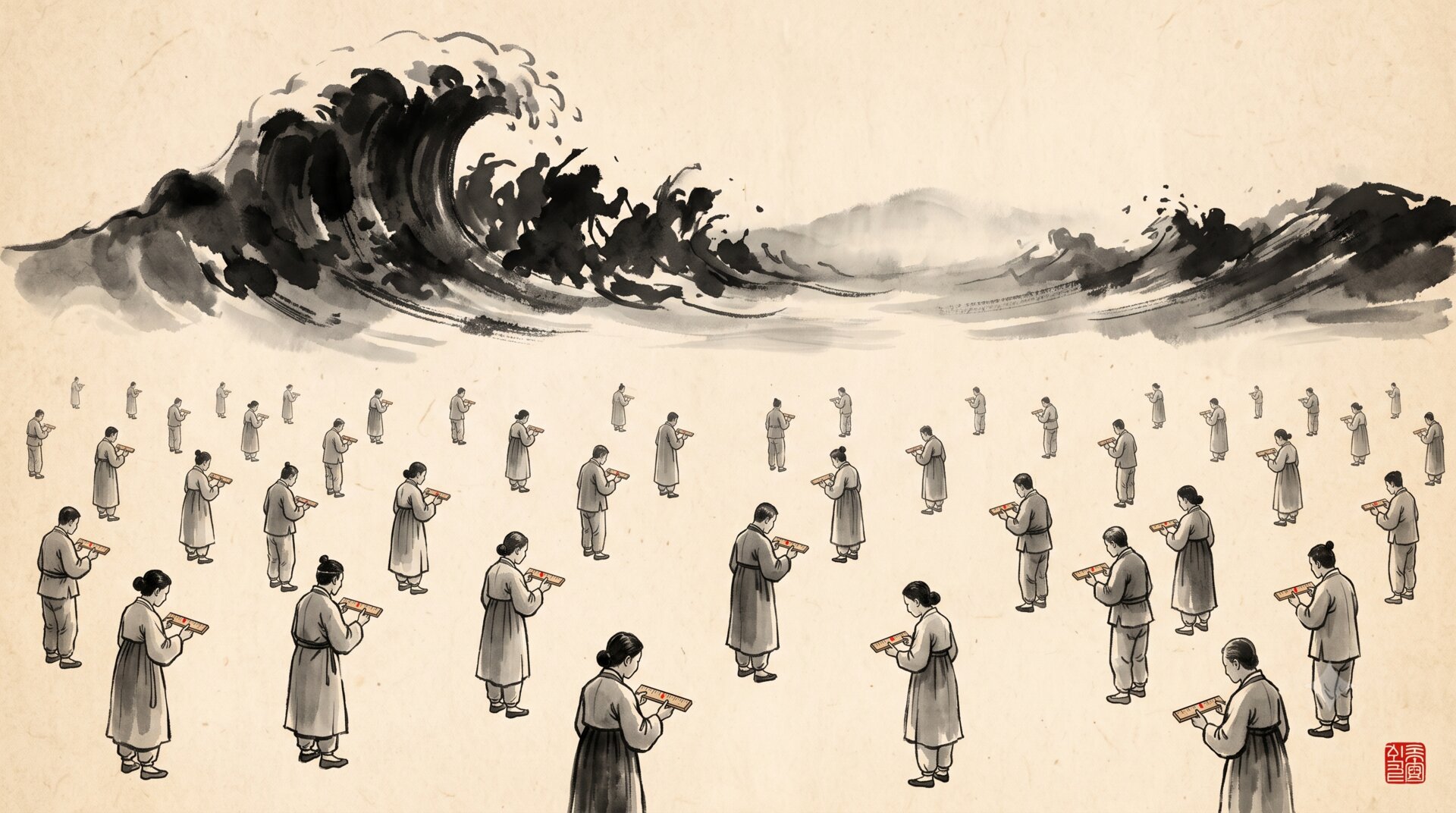
모두를 위한 대통령은 없다. 그러나 모두를 위한 자유를 높인 지도자는 있다. 이 문장은 정치 구호가 아니다. 2020년 코로나의 한복판, 모두가 버린 이태원의 한 거리에서 우리 사회가 교과서처럼 경험한 정의(定義)다.
There is no president for all. But there is a leader who raised freedom for all. This is not a political slogan. It is a definition our society experienced like a textbook case in 2020 — at the height of the pandemic, on an Itaewon street everyone else had given up on.
8분 27초 영상으로 먼저 보실 수 있습니다. 글은 영상이 다루지 않는 사상사적 층위(철인정치·로마·시스템의 계보)까지 담고 있습니다.
An 8:27 video version is available above. The essay goes further, into the intellectual lineage the video does not cover — the philosopher-king, Rome, and the genealogy of systems.
이태원 — 교과서가 된 거리
Itaewon — the Street That Became a Textbook
2020년 가을, 이태원은 낙인의 거리였다. 그해 5월 집단감염으로 주홍글씨가 찍혔다. 중대형 상가 공실률은 26.7%까지 치솟았다. 핼러윈이 다가왔다. 그러나 주최자 없는 자발적 모임이라, 규제할 방법도 없었다. 방역도, 상권도, 사람들도 그 거리를 버렸다.
In the autumn of 2020, Itaewon was a branded street. A May cluster infection had marked it with a scarlet letter. Vacancy in mid-to-large commercial units had climbed to 26.7%. Halloween was coming, but it was a leaderless, spontaneous gathering — nothing to regulate in advance. Public health, commerce, people: all had abandoned the street.
그 거리에서 작은 실험이 벌어졌다. 자원한 사람들이 방역게이트를 세웠다. 소독과 QR 체크와 체온 측정을 했다. 지나는 사람에게 마스크와 스티커를 나눠주었다. 상점은 스티커를 가진 사람만 들였다. 강제가 아니라 자발이었다. 배제가 아니라 포용이었다. 힘들었고, 많은 사람이 손을 보탰다. 그러나 확진자는 단 한 명도 나오지 않았다.
On that street, a small experiment took place. Volunteers built quarantine gates and ran disinfection, QR checks, temperature readings. We handed masks and stickers to everyone passing through. Shops admitted only those who carried a sticker. It was voluntary, not coerced. It was inclusive, not exclusionary. It was hard, and it took many hands. But not a single infection was traced back to it.
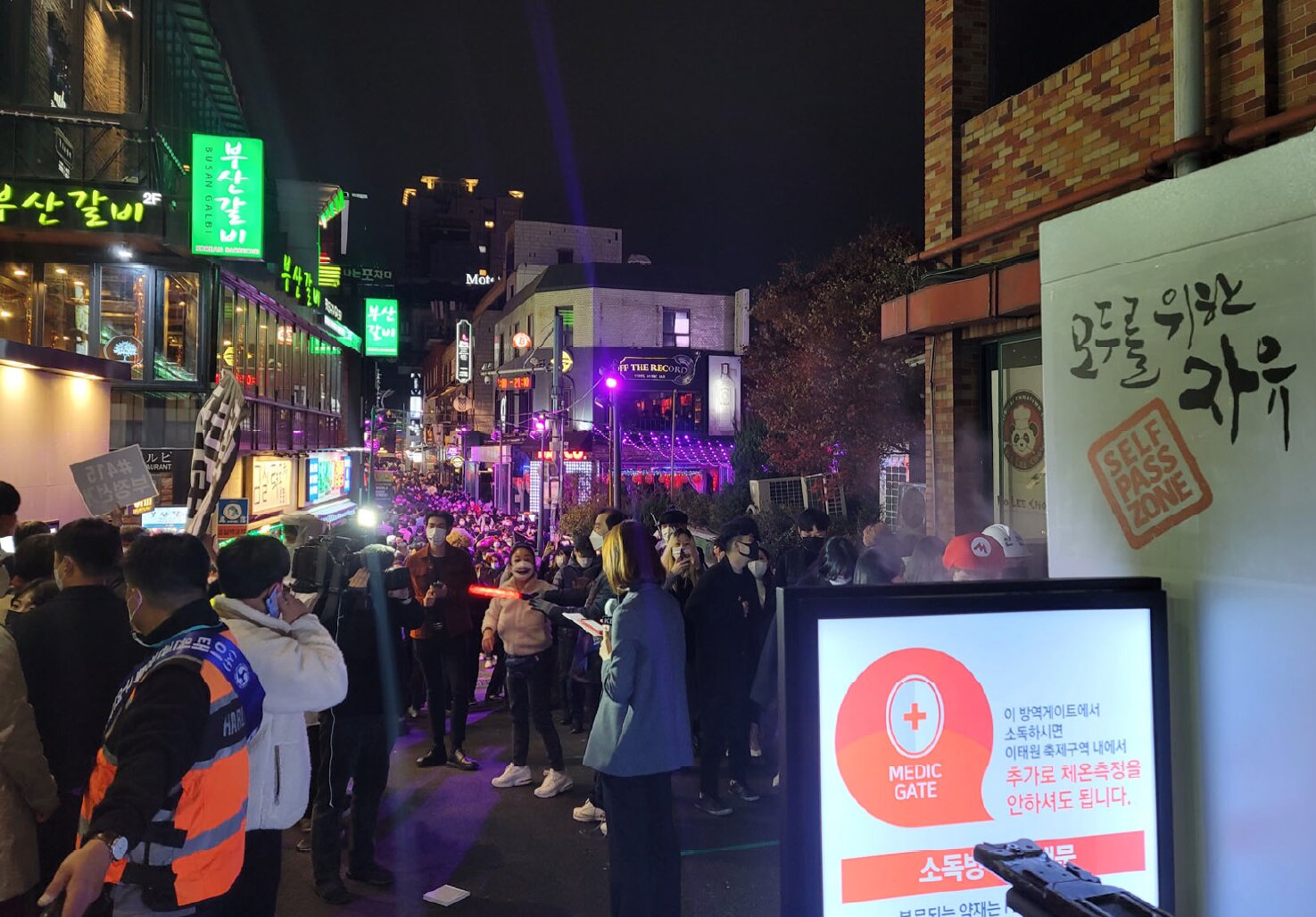
외부 보도도 이를 뒷받침한다. 당시 우려됐던 핼러윈발 대규모 확산은 현실화되지 않았다. — KBS 뉴스, 「우려했던 ‘핼러윈’ 관련 대규모 확산 아직 없어…배울 점은?」
External reporting bears this out: the large Halloween-linked outbreak that had been feared never materialized. — KBS News, “The feared Halloween-related surge hasn’t come — what can we learn?”
이 사건은 교과서다. 모두를 위한 자유가 왜 필요한지, 그것이 무엇인지 — 우리 사회는 이론이 아니라 사건으로 배웠다. 자유는 위에서 하사되지 않는다. 현장에서, 자발적으로, 모두를 향해 만들어진다. 모두를 위한 자유란 나만의 자유가 아니며, 공동체를 위해 개인의 자유를 포기하는 것도 아니다. 그것은 나의 자유와 공동체를 위한 자발적 배려 사이의 균형이다.
This event is a textbook. Why freedom for all is needed, and what it means — our society learned it not as theory but as an event. Freedom is not handed down from above. It is made — on the ground, voluntarily, toward everyone. Freedom for all is neither my freedom alone nor the surrender of individual freedom to the community. It is the balance between my freedom and voluntary care for the community.
의구심
The Doubt
그리고 물음이 남는다. 이태원은 거리 하나의 규모였다. 그렇다면 국가의 규모에서 이것을 해낸 지도자는 누구인가.
And a question remains. Itaewon was the scale of a single street. So who, at the scale of a nation, has actually done it?
이 물음은 곧 ‘모두를 위한 대통령’에 대한 의구심이 된다. 대통령은 필연적으로 선택하는 자리다. 누군가의 편을 들고, 반대자를 만들고, 어떤 이에게는 손해를 끼친다. 그러니 ‘모두의 대통령’은 형용모순이다. 그런 대통령은 없다.
That question becomes a doubt about the very idea of a “president for all.” The presidency is, by nature, a seat of choosing. It takes sides, creates opponents, imposes costs on some. So “a president for all” is a contradiction in terms. No such president exists.
이 물음은 강단의 것이 아니다. 이재명 대통령은 취임 이후 거듭 ‘모두의 대통령’을 자임해 왔다. 그 말이 선의에서 나왔더라도 명제는 변하지 않는다. 모두의 대통령은 없다. 그러므로 그 말이 반복될수록 시민이 할 일은 박수가 아니라 검증이다 — 그 ‘모두’에 반대자가 들어 있는가. 내리는 사람이 들어 있는가.
Nor is this an academic question. Since taking office, President Lee Jae-myung has repeatedly styled himself “a president for everyone.” Even if the words are well-intentioned, the proposition stands: there is no such president. So the more the phrase is repeated, the citizen’s task is not applause but verification — does that “everyone” include his opponents? Does it include those getting off the bus?
그러나 ‘모두를 위한 자유를 높인’ 지도자는 다르다. 그가 넓힌 것이 특정 집단이 아니라 자유 그 자체라면, 그 열매는 결과적으로 모두에게 열려 있다. 이건 성취 가능한 목표다. 문제는 누가 실제로 그렇게 했느냐다.
But a leader who “raised freedom for all” is different. If what they widened was not a faction but freedom itself, then the fruit is, in the end, open to everyone. That is an achievable goal. The question is who actually did it.
철인은 오지 않는다 — 선의에서 시스템으로
The Philosopher-King Is Not Coming — From Goodwill to Systems
사실 이 의구심은 오래된 것이다. 플라톤은 철인정치를 꿈꿨다. 지혜롭고 선한 자가 다스리면 모두가 행복하리라는 꿈. 그러나 그 꿈은 실현된 적이 없다. 플라톤 자신이 시라쿠사에서 철인 군주를 길러내려다 실패했다. 노예로 팔려갈 뻔하기까지 했다. 꿈의 설계자조차 꿈을 세우지 못했다.
This doubt is, in fact, an old one. Plato dreamed of the philosopher-king — the wise and good ruler under whom all would flourish. The dream has never been realized. Plato himself tried to raise one in Syracuse and failed. He was nearly sold into slavery. Even the dream’s architect could not build it.
시오노 나나미의 『로마인 이야기』가 보여주는 로마도 성인(聖人)들의 나라가 아니었다. 로마를 천 년 지탱한 노블레스 오블리주조차 개인의 선의가 아니라 제도화된 의무였다. 귀족이 전쟁의 맨 앞줄에 서고 제 돈으로 도로를 놓은 것은 그들이 착해서가 아니다. 그래야만 지위가 정당화되는 구조 속에 있었기 때문이다. 로마의 지혜는 선한 인간을 기다린 것이 아니라, 평범한 인간이 의무를 다하도록 만든 데 있다.
The Rome of Shiono Nanami’s Stories of the Romans was no nation of saints either. Even noblesse oblige, which held Rome up for a millennium, was not personal virtue but institutionalized duty. Patricians stood in the front line of battle and paved roads with their own money not because they were good, but because they lived inside a structure where status was legitimate only on those terms. Rome’s wisdom was not to wait for good men; it was to make ordinary men do their duty.
인간은 누구나 사적 욕망에 종사한다. 지도자도 예외가 아니다. 그러나 인간은 또한 배운다 — 타인의 행복 없이 나의 행복도 오래가지 않는다는 것을. 이 두 사실 사이에 정치의 과제가 놓인다. 선의에 기대지 않으면서, 욕망을 가진 인간들이 함께 살 수 있게 하는 것.
Every human serves private desire; leaders are no exception. Yet humans also learn — that my happiness does not last without the happiness of others. Between these two facts lies the task of politics: to let desiring humans live together, without leaning on anyone’s goodwill.
그래서 인류는 ‘누군가의 선의의 정치’가 불가능함을 인정하고, 시스템을 만들어 왔다. 투표는 통치자를 주기적으로 채점해 갈아치우는 제도다. 삼권분립은 어떤 선의도 믿지 않겠다는 선언이다 — 권력을 쪼개고, 서로 감시하게 한다. 민주주의는 성인을 기다리는 체제가 아니라, 성인이 없어도 굴러가도록 설계된 체제다.
So humanity, conceding that a politics of someone’s goodwill is impossible, has built systems instead. Elections are an institution for periodically scoring rulers and replacing them. The separation of powers is a declaration that no goodwill shall be trusted — power is split and set to watch itself. Democracy is not a regime that waits for saints; it is a regime designed to run without them.
‘모두를 위한 대통령은 없다’는 명제는 그래서 냉소가 아니다. 근대 정치제도 전체가 그 명제 위에 서 있다. 문제는, 우리가 자꾸 그 명제를 잊는다는 것이다.
“There is no president for all” is therefore not cynicism. The whole of modern political institutions stands on that proposition. The problem is that we keep forgetting it.
함성과 외주 — 팬덤의 시대
The Roar, Outsourced — the Age of Fandom
그리고 이 의구심은 대통령에게만 향하지 않는다. 우리 자신에게도 향한다.
And this doubt does not point only at presidents. It points back at us.
팬덤은 그 잊음의 가장 흔한 형식이다. 철인을 기다리던 이천 년의 꿈이 ‘우리 편’이라는 얼굴로 돌아온 것이다. 철인정치의 대중판 — 다만 철인의 자격이 지혜에서 소속으로 바뀌었을 뿐이다.
Fandom is the most common form of that forgetting. The two-thousand-year-old dream of the philosopher-king has returned wearing the face of “our side.” It is the mass edition of philosopher-king politics — except the qualification has changed from wisdom to belonging.
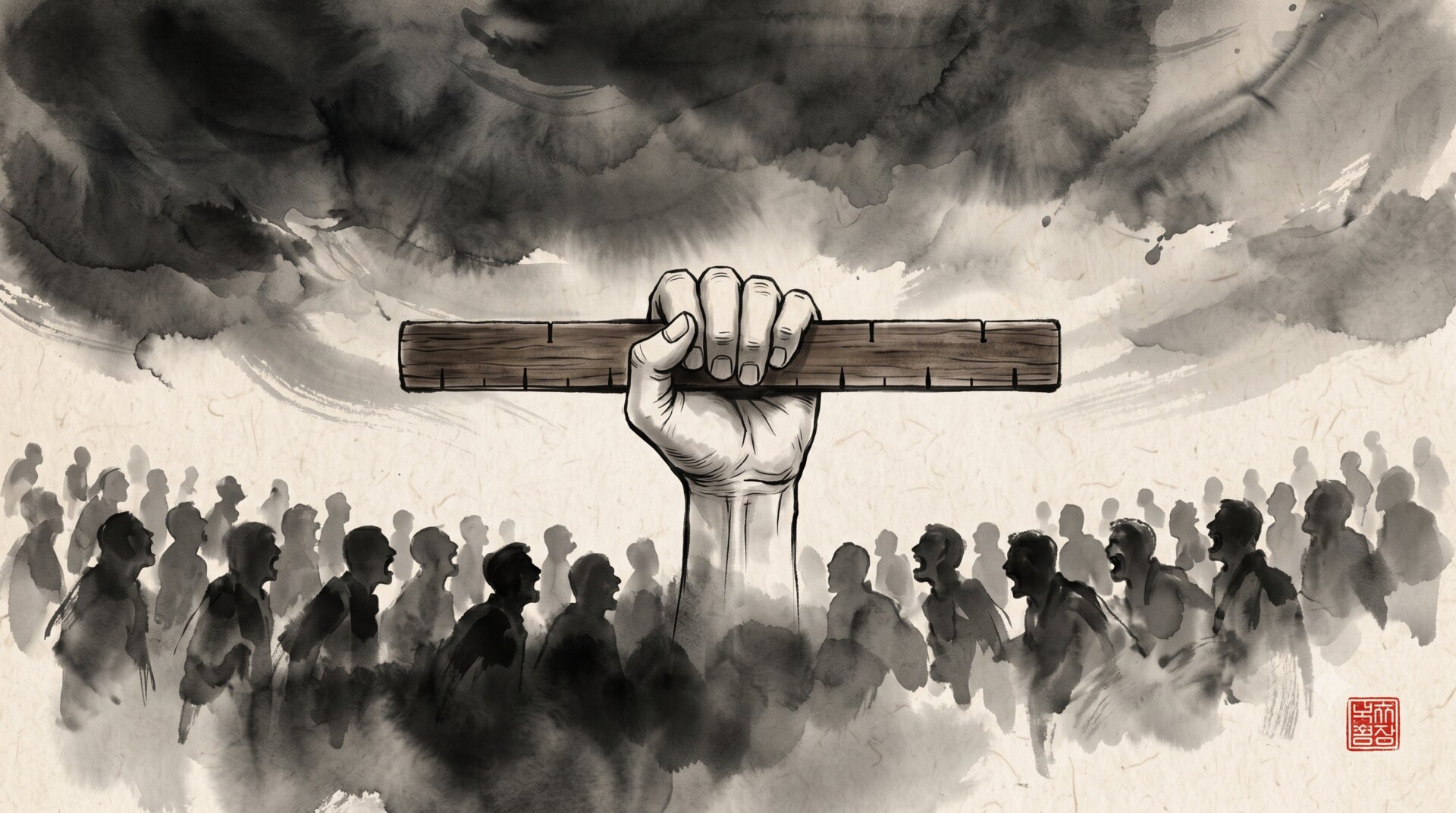
팬덤정치가 강해질수록, 판단은 응원으로 바뀐다. “우리 편 지도자는 늘 옳다.” 그 한 문장을 받아들이는 순간, 채점표는 사라진다. 잣대를 내려놓은 사람은 자유의 한 조각을 함께 내려놓은 것이다. 판단을 외주하면, 자유도 외주된다.
As fandom politics hardens, judgment turns into cheering. “Our side’s leader is always right.” The moment you accept that one sentence, the scorecard disappears. Whoever lays down the measure lays down a piece of their freedom with it. Outsource your judgment, and your freedom is outsourced too.
우리의 자유가 소수에 의해 지배되는 구조는 총칼로 오지 않는다. 함성으로 온다. 함성이 커질수록 잣대는 작아진다. 잣대가 사라진 자리에서, 소수가 모두를 대신해 판단한다. 자강헌의 강령은 그래서 이렇게 말한다 — 함성을 사지 않는다.
The structure in which a few come to rule everyone’s freedom does not arrive by bayonet. It arrives by roar. The louder the roar, the smaller the measure. Where the measure has vanished, a few do the judging for all. This is why Jagangheon’s manifesto says: we never buy the roar.
팬덤은 버스와도 닮았다. 정류장 보도블록이 공사판인 버스를 생각해 보라. 발 디딜 곳이 없는데도, 버스는 타는 사람을 위해 내리는 사람을 공사판 한가운데로 내려놓는다. 타는 사람에게만 친절한 구조다.
Fandom also resembles a bus. Picture a stop where the sidewalk is torn up for construction. There is nowhere solid to step — and still the bus, for the sake of those boarding, sets the one getting off down in the middle of the works. A structure kind only to those getting on.
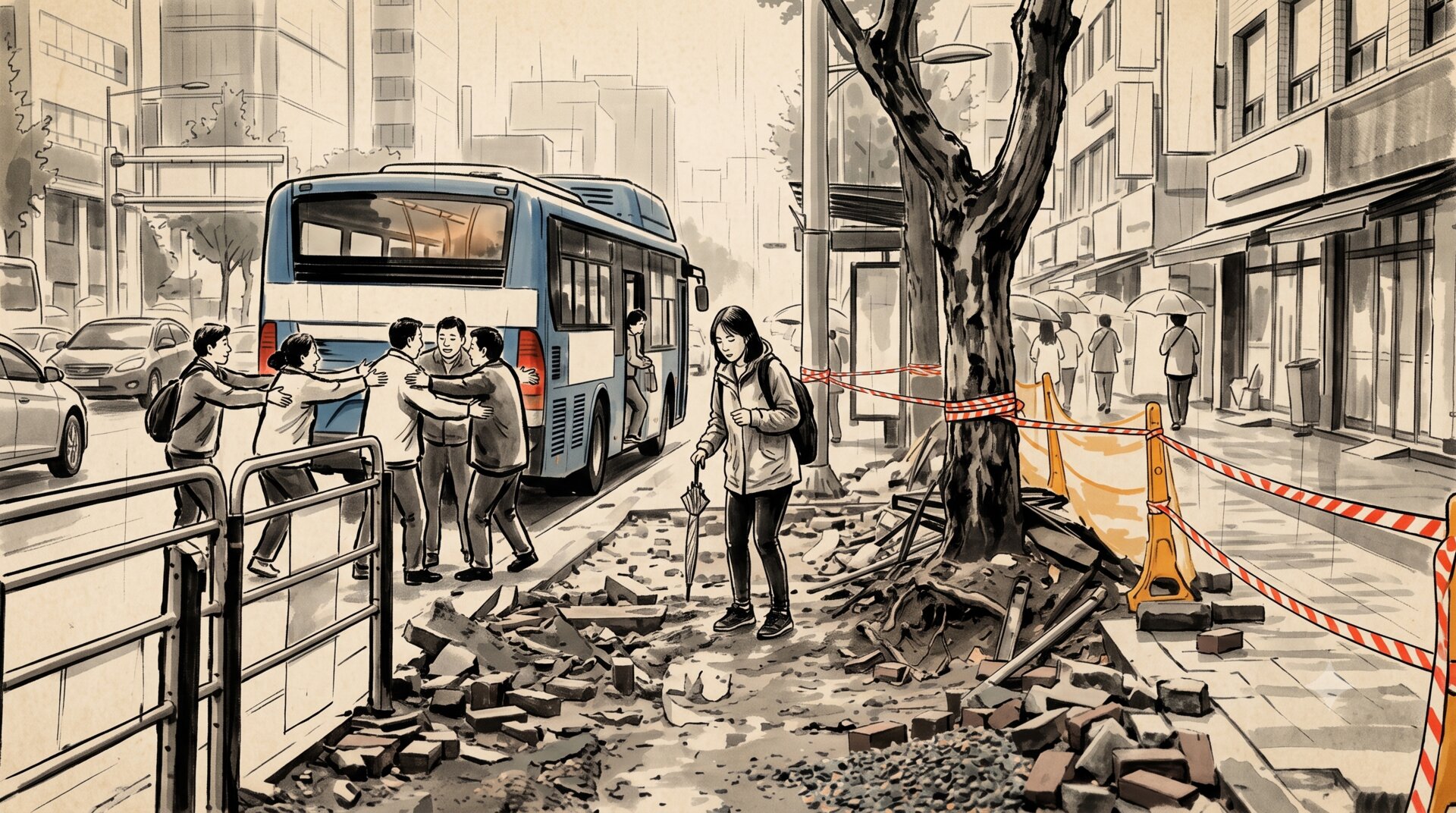
팬덤도 같다. 올라타는 지지자에게는 한없이 친절하고, 내리려는 사람에게는 공격이 쏟아진다. 그러나 ‘모두를 위한 자유’는 내리는 사람의 자유까지 포함해야 한다. 포용의 축이 묻는 것이 정확히 그것이다 — 그 자유가 반대자에게, 그리고 떠나는 사람에게까지 미쳤는가. 타는 사람에게만 친절한 사회, 내리는 사람에게 가혹한 사회가 오래간 적은 없다.
Fandom is the same. Boundlessly kind to the supporter climbing aboard; a barrage for anyone trying to step off. But freedom for all must include the freedom of those getting off. That is exactly what the inclusion axis asks — did that freedom reach the opponent, and the one who leaves? A society kind only to those boarding, cruel to those alighting, has never lasted long.
그 구조를 푸는 일은 제도 이전에 인식에서 시작된다. 내 손으로 잰다는 것 — 응원 대신 채점한다는 것 — 그것이 정치적 自强의 첫걸음이다. 그래서 잣대가 필요하다.
Undoing that structure begins with awareness before it begins with institutions. To measure with your own hand — to score instead of cheer — is the first step of political self-strengthening, 自强. That is why a measure is needed.
잣대: 모두를 위한 자유 지수
The Measure: A Freedom-For-All Index
그래서 자강헌은 잣대를 만들었다. 「2FA 지수」 — 모두를 위한 자유 지수(Freedom For All Index). 다섯 개의 축, 각 20점, 합계 100점이다. 이름의 2FA는 Freedom For All의 약자다. IT에서 2FA는 이중 인증(two-factor authentication)을 뜻한다. 우연이 아니다. ‘자유를 늘렸다’는 주장은 언제나 두 번 검증되어야 한다 — 정말 넓혔는가, 그리고 모두에게였는가.
So Jagangheon built a measure: the 2FA Index — the Freedom For All Index. Five axes, twenty points each, one hundred in total. The name abbreviates Freedom For All; in technology, 2FA means two-factor authentication, and the pun is deliberate. Any claim that “freedom was expanded” must be verified twice — was it truly widened, and was it for all?
이 지수는 시스템의 계보 위에 서 있다. 투표가 몇 년에 한 번 돌아오는 채점이라면, 이 지수는 시민이 상시로 쥐는 채점표다. 삼권분립이 권력을 쪼개 서로 감시하게 했다면, 이 지수는 판단을 쪼개 각자에게 돌려준다. 선의를 믿지 않고 구조를 만든다 — 같은 원리의, 손안의 작은 제도다.
The index stands in the lineage of systems. If the vote is a scoring that returns once every few years, this index is a scorecard the citizen holds at all times. If the separation of powers split authority so it would watch itself, this index splits judgment and returns it to each person. Trust no goodwill; build structure instead — the same principle, as a small institution in your hand.
이 지수의 설계 의도는 분명하다. 개발독재를 ‘모두를 위한 자유’로 인정하지 않는다. 성장을 위로부터 하사한 통치는 확장 점수는 높아도 포용과 자발이 낮아 총점이 눌린다. 이태원에서 배운 그대로다. 자유는 하사되는 것이 아니라 만들어지는 것이므로.
The design intent is explicit. It refuses to count developmental dictatorship as “freedom for all.” A rule that hands growth down from above may score high on expansion, but low inclusion and consent drag the total down. Exactly as Itaewon taught: freedom is made, not granted.
결과: 편집자 기준선
The Results: Editor’s Baseline
먼저 자강헌의 1차 채점 결과다. 이것은 확정된 순위가 아니라 논의의 출발점이며, 각 점수의 축별 근거는 앱에서 펼쳐볼 수 있다. 여론이 쌓이면 이 순위 위에 대중의 평균이 겹쳐진다.
First, Jagangheon’s first-pass scores. This is not a settled ranking but the starting point of a conversation; the axis-by-axis rationale for every score can be opened in the app, and as participation accumulates, the public average overlays this baseline.
한국 지도자Korean Leaders
2FA 지수 · 100점 만점 · 편집자 기준선2FA Index · out of 100 · editor’s baseline- 1김대중1998–200378
- 2김영삼1993–199868
- 3노무현2003–200866
- 4노태우1988–199354
- 5이명박2008–201348
- 6박정희1963–197937
- 7박근혜2013–201737
- 8이승만1948–196033
- 9전두환1980–198815
세계 지도자World Leaders
동일 잣대 적용same standard applied- 1넬슨 만델라남아공92
- 2마하트마 간디인도81
- 3바츨라프 하벨체코80
- 4에이브러햄 링컨미국79
- 5앙겔라 메르켈독일70
- 6고르바초프소련66
- 7리콴유싱가포르53
- 8아타튀르크튀르키예50
- 9덩샤오핑중국41
순위가 말하는 것은 명확하다. 최상위는 반대자에게까지 자유를 넓힌 이들이다. 경제 확장이 아무리 커도, 포용과 자발이 무너진 통치는 중하위를 벗어나지 못한다. 그리고 ‘자유’를 가장 크게 외친 지도자를 어디에 놓을지는 — 이제 당신의 몫이다.
What the ranking says is clear. The top belongs to those who extended freedom even to their opponents. However great the economic expansion, rule that collapsed inclusion and consent cannot escape the lower middle. And where the leader who shouted “freedom” loudest belongs — is now yours to decide.
당신이 재보라
Now You Measure
이제 당신 차례다. 응원을 잠시 내려놓고, 같은 잣대로 직접 지도자들을 재보라. 당신의 점수가 곧 당신이 본 순위가 된다. 참여가 쌓이면, 다른 사람들의 평균과 당신의 판단이 겹쳐 보인다. 어디서 당신과 세상이 갈리는지 보일 것이다. 채점은 아래의 앱에서 한다.
Now it’s your turn. Set the cheering down for a moment, and measure the leaders yourself, by the same standard. Your scores become your ranking. As participation grows, the public average overlays your own judgment — showing exactly where you and the world diverge. The scoring happens in the app below.
앱에서 직접 재보라Measure It Yourself, in the App
채점은 앱 「모두를 위한 자유(2FA)」에서 한다. 이유가 있다. 이 잣대는 한 번 눌러보고 끝나는 설문이 아니라, 지속적으로 들여다보는 도구이기 때문이다. 앱에서는 —
Scoring happens in the app, “Freedom For All (2FA)” — for a reason. This measure is not a one-tap poll; it is an instrument to keep returning to. In the app you can —
- 근거를 읽는다. 각 지도자, 각 축의 점수마다 편집자가 왜 그 점수를 주었는지 근거를 펼쳐볼 수 있다.
- Read the rationale. For every leader and every axis, open the reasoning behind each editor score.
- AI와 이야기하며 채점한다. 앱에 내장된 인공지능과 “왜 이 점수인가”를 놓고 대화하면서 점수를 정할 수 있다. 확신이 아니라 숙고로 채점하기 위해서다.
- Score in conversation with an AI. Discuss “why this score?” with the built-in AI as you decide — so the score comes from deliberation, not reflex.
- 여론의 변화를 지켜본다. 참여가 쌓이면 평균이 움직인다. 평균은 표준편차를 적용해 극단값을 걸러낸 값이다.
- Watch the public shift. As participation accumulates, the average moves — an average filtered by standard deviation to resist outliers.
별도 다운로드 없이 브라우저에서 바로 열리고, ‘홈 화면에 추가’로 설치됩니다. 채점은 익명으로 집계됩니다.Opens right in your browser; installable via “Add to Home Screen.” Scores are aggregated anonymously.
칼끝: 네 가지 관찰
The Edge: Four Observations
채점을 마쳤다면, 네 가지를 함께 짚고 싶다.
If you’ve finished scoring, four things are worth naming.
1. 개발독재의 함정
1. The developmental-dictatorship trap
박정희, 리콴유, 덩샤오핑은 확장(주로 경제)만 높고 포용·자발이 낮아 중하위에 머문다. ‘성장을 줬으니 자유를 준 것’이라는 논리를 이 지수는 기각한다. 성장은 자유의 한 조건일 뿐, 자유 그 자체가 아니다.
Park Chung-hee, Lee Kuan Yew, Deng Xiaoping score high on expansion — mostly economic — but low on inclusion and consent, landing mid-to-low. The index rejects the logic that “growth given is freedom given.” Growth is one condition of freedom, not freedom itself.
2. 만델라라는 원형
2. Mandela as the archetype
적을 사면하고, 진실화해위원회를 세우고, 단임 후 스스로 물러난 자가 최상위에 선다. ‘모두를 위한’의 실체가 무엇인지 그가 보여준다. 그것은 반대자에게까지 미치는 자유다.
The man who pardoned his enemies, built a Truth and Reconciliation Commission, and stepped down after a single term stands at the top. He shows what “for all” actually means: a freedom that extends even to one’s opponents.
3. ‘자유’의 역설
3. The paradox of “freedom”
윤석열 전 대통령은 ‘자유’를 국정의 대표 가치로 내걸었다. 취임사에서 ‘자유’를 서른 번 넘게 외쳤고, 광복절마다 그것을 반복했다. 그리고 계엄을 선포했다. 슬로건의 자유와 실질의 자유 — 균형과 자발 — 는 같은 것이었는가. 이 물음은 아직 역사적 평가가 진행 중이므로 편집자는 점수로 답하지 않는다. 다만 이 지수의 다섯 축은 바로 이런 물음을 재기 위해 만들어졌다. 답은 앱에서, 당신의 채점으로.
Former president Yoon Suk-yeol made “freedom” the signature value of his government — invoking it more than thirty times in his inaugural address, repeating it every Liberation Day. And then he declared martial law. Were the freedom of the slogan and the freedom of substance — balance and consent — the same thing? Because that historical assessment is still in progress, the editor does not answer with a score. But the five axes of this index were built precisely to measure such questions. The answer is yours to give, in the app.
4. ‘모두의 대통령’이라는 말
4. The words “a president for everyone”
그리고 지금, 현직 대통령이 ‘모두의 대통령’을 거듭 자임한다. 이 지수는 그를 채점하지 않는다 — 임기가 진행 중이기 때문이다. 그러나 명제는 지금도 유효하다. 모두의 대통령은 존재할 수 없다. 존재할 수 있는 것은 ‘모두를 위한 자유를 높인 대통령’뿐이다. 그 말이 약속이 되려면 다섯 축을 통과해야 한다. 특히 포용 — 그 ‘모두’에, 그를 반대한 절반이 들어 있는가. 전임 대통령이 ‘자유’라는 말로 보여주었듯, 슬로건은 실질을 보증하지 않는다. 앞세우는 말은 다를 뿐, 검증의 원리는 하나다. 2FA — 모든 주장은 두 번 검증된다. 판정은 말이 아니라, 재임이 끝난 뒤의 채점이 내린다.
And now a sitting president repeatedly styles himself “a president for everyone.” This index does not score him — his term is in progress. But the proposition holds even now: no such president can exist; what can exist is a president who raised freedom for all. For the words to become a promise, they must pass the five axes — above all inclusion: does that “everyone” contain the half that opposed him? As his predecessor showed with the word “freedom,” a slogan guarantees no substance. The word out front differs; the principle of verification is one. 2FA — every claim is verified twice. The verdict is delivered not by words, but by the scoring that comes after the term ends.