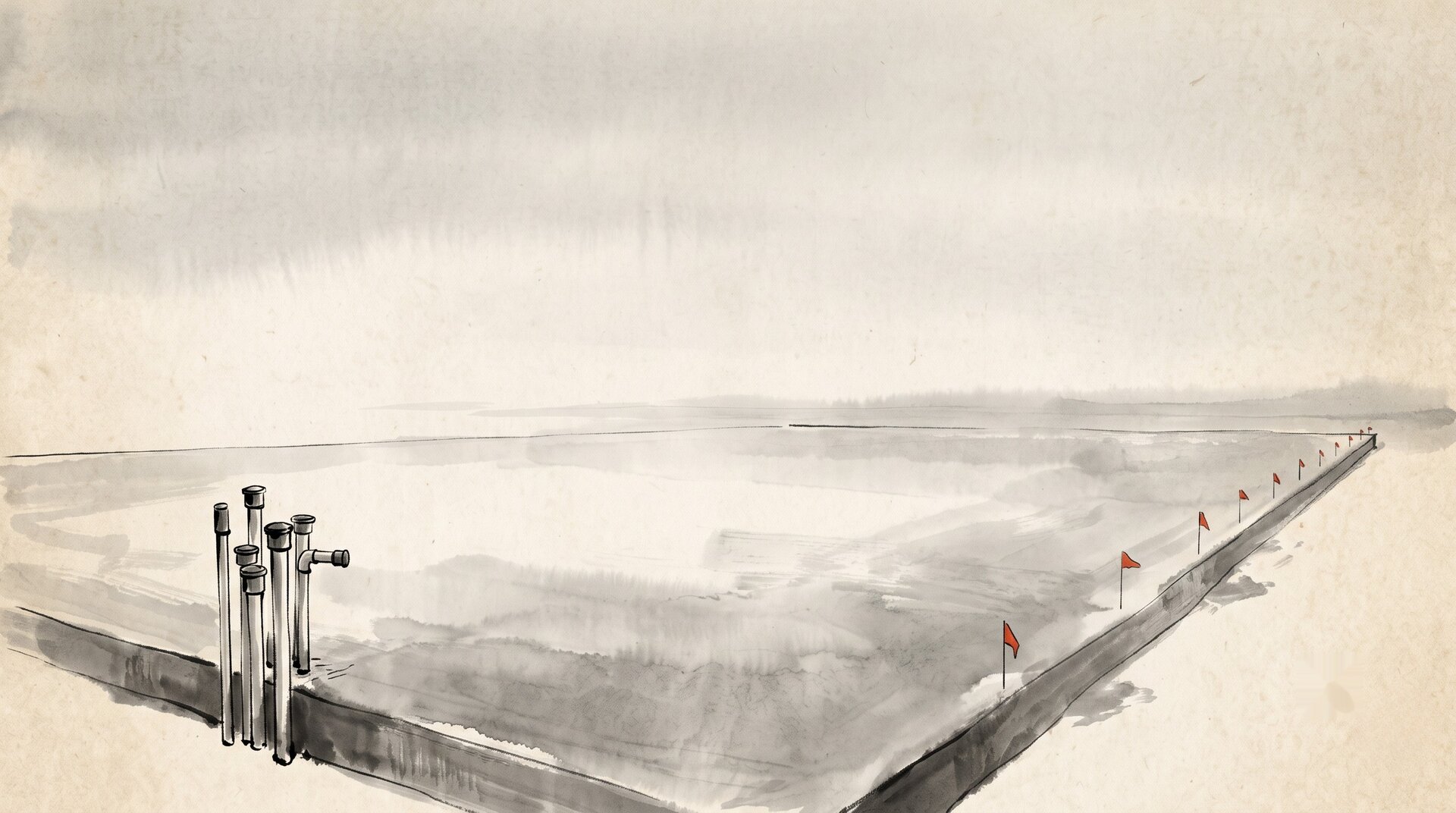
발표는 한 번이 아니라 네 번이었다. 6월 29일 청와대 영빈관에서 시작해 광주, 아산, 진주로 이어졌고, 총액은 회차마다 자라 나흘 만에 1,600조 원에서 멈췄다. 사우스차이나모닝포스트는 첫날 기사에 "5,760억 달러"라는 제목을 달았는데, 그 기사의 웹 주소에는 지금도 "6,500억 달러"가 화석처럼 남아 있다. 발행하는 사이에 숫자가 한 번 더 자랐다는 뜻이다. 숫자가 이 속도로 자랄 때 물어야 할 것은 크기가 아니다. 그 돈이 어느 계층으로, 어떤 동사와 함께 내려가는가다.
There was not one announcement but four. It began on June 29 at the presidential compound and moved through Gwangju, Asan, and Jinju; the total grew with each stop and came to rest, four days later, at 1,600 trillion won — over a trillion US dollars. The South China Morning Post headlined its first-day story "US$576 billion," yet the article's web address still reads "us650-billion," a fossil of a number that moved while the story was being published. When figures grow at that speed, the question is not how big. It is which layer the money flows to — and with which verb.
네 번의 보고회
Four Announcements
순서부터 적는다. 6월 29일 청와대 영빈관의 「대한민국 대도약 3대 메가프로젝트 국민보고회」에는 이재명 대통령과 이재용 삼성전자 회장, 최태원 SK그룹 회장이 나란히 섰다. 이튿날 광주에서 서남권 896조 원이 발표됐다. SK하이닉스가 470조 원을 들여 메모리 팹 2기와 1기가와트급 AI 데이터센터를, 삼성이 425조 원을 들여 광주 신규 팹 2기 등을, 앰코가 1조 원을 들여 패키징 공장을 짓는다.
First, the sequence. On June 29, at the June 29 national briefing on the "Three Megaprojects for Korea's Great Leap," President Lee Jae Myung stood alongside Samsung's Lee Jae-yong and SK's Chey Tae-won. The next day in Gwangju came the southwest package: 896 trillion won. SK Hynix pledged 470 trillion for two memory fabs and a one-gigawatt AI data center; Samsung pledged 425 trillion, anchored by two new fabs in Gwangju; Amkor added one trillion for advanced packaging.
7월 2일 아산에서는 충청권 392조 원이 이어졌다. 삼성이 HBM과 차세대 디스플레이에 140조 원, SK하이닉스가 청주 낸드 거점에 100조 원, 여러 기업이 AI 데이터센터에 약 150조 원, 셀트리온이 바이오에 2조 원을 얹었다. 7월 3일 진주에서는 영남권 312조 원 — AI 데이터센터와 휴머노이드 로봇, 우주항공에 삼성·SK·한화·현대차·두산·LG가 이름을 올렸다. 합이 1,600조 원이다. 한 통신사는 "단군 이래 최대 규모"라고 적었다.
On July 2 in Asan, the Chungcheong package followed: 392 trillion won — Samsung's 140 trillion for HBM and next-generation displays, SK Hynix's 100 trillion for a NAND hub in Cheongju, roughly 150 trillion in AI data centers from a cluster of firms, two trillion from Celltrion in bio. On July 3 in Jinju came the southeast: 312 trillion won for AI data centers, humanoid robots, and aerospace, with Samsung, SK, Hanwha, Hyundai Motor, Doosan, and LG all signing on. The sum: 1,600 trillion won. One wire service called it the largest investment plan in the nation's history.
속도도 함께 발표됐다. 김정관 산업통상부 장관은 당초 2040년대 중후반으로 예정됐던 팹 구축을 2030년대 중반까지 최대 12년가량 앞당기고, 수도권 메모리 생산능력을 5년 안에 두 배로 늘리겠다고 했다. 근거는 수요다 — "글로벌 메모리 시장은 향후 5년 내 4배 이상 폭발적인 성장을 할 전망"이라는 것이다.
Speed was announced along with scale. Industry Minister Kim Jung-kwan said fab construction once slated for the mid-to-late 2040s would be pulled forward to the mid-2030s — up to twelve years earlier — and that memory capacity in the capital region would double within five years. The rationale is demand: the global memory market, he said, is projected to grow more than fourfold within five years.
다섯 계층 위에 펼쳐 보면
Spread Across Five Layers
자강헌은 지난 4월 국회 토론회에서 인공지능 생태계를 다섯 계층으로 읽자고 제안했다. 에너지, 칩, 인프라, 모델, 앱 — 그리고 그 전부를 관통하는 보안. 1,600조 원을 이 지도 위에 펼쳐 보면 먼저 눈에 들어오는 것은, 비어 있는 계층이 없다는 사실이다.
At its National Assembly forum this past April, Jagangheon proposed reading the AI ecosystem as five layers — energy, chips, infrastructure, models, applications — with security running through all of them. Spread the 1,600 trillion won across that map and the first thing you notice is that no layer is empty.
에너지 계층. 대통령은 광주 보고회 당일 헬기로 신안의 태양광 단지와 목포의 해상풍력 전진기지를 시찰했고, 8월 시행되는 반도체특별법 시행령은 송전망 지중화를 포함한 전력 공급 시설을 국비 지원 대상에 명시했다. 칩 계층에는 서남권과 충청권을 합쳐 1,288조 원 — 전체의 8할이 여기에 쌓인다. 인프라 계층에는 1기가와트급 데이터센터와 국가 AI 컴퓨팅센터, 충청권 데이터센터 약 150조 원이 배치됐고, 정부는 별도로 GPU 26만 장 확보를 올해 업무계획에 담았다.
The energy layer: on the day of the Gwangju briefing the president toured, by helicopter, a solar complex in Sinan and an offshore-wind staging port in Mokpo, and the Semiconductor Special Act's enforcement decree — effective in August — explicitly lists power-supply facilities, including underground transmission, as eligible for state funding. The chip layer takes 1,288 trillion won across the southwest and Chungcheong — eight-tenths of the whole. The infrastructure layer gets the gigawatt data center, a national AI computing center, and roughly 150 trillion in Chungcheong data centers, while the government's own annual plan separately targets 260,000 GPUs.
모델 계층도 비어 있지 않다. 과기정통부의 「독자 AI 파운데이션 모델」 프로젝트가 지난해 8월부터 돌아가고 있고, 2026년 정부 AI 예산은 9조 9천억 원으로 전년의 약 3배다. 앱 계층에는 영남권 312조 원이 있고, 7월 1일에는 피지컬 AI 전략이 별도로 발표됐다. 정부는 향후 3년을 "골든타임"이라 불렀다.
Nor is the model layer empty. The Ministry of Science and ICT's Sovereign AI Foundation Model project has been running since last August, and the government's 2026 AI budget, at 9.9 trillion won, is roughly triple last year's. The application layer holds the 312-trillion-won southeast package, and on July 1 a separate Physical AI strategy was unveiled, with the government calling the next three years a "golden window."
그러니 "모델에는 왜 안 쓰나"는 틀린 질문이다. 다 쓴다. 질문은 다른 곳에 있다. 같은 정부가 계층마다 다른 동사를 쓴다는 것 — 그것이 이 지도의 진짜 등고선이다.
So "why is nothing spent on models" is the wrong question. Something is spent on everything. The real question lies elsewhere: the same government conjugates a different verb for each layer — and that is the true contour line of this map.
동사가 다르다
The Verbs Differ
칩과 인프라의 계층에서 국가의 동사는 짓는다이다. 반도체특별법 시행령은 클러스터의 전력·용수·폐수·도로 등 기반시설 설치비의 50% 이상을 국비로 지원하는 것을 원칙으로 세웠고, 공급망 안보와 재난 대비 이중화, 균형발전 기여 같은 요건을 충족하면 최대 100%까지 올린다. 국유지는 사용료를 최대 100% 감면해 사실상 무상으로 내준다. 예비타당성조사는 면제하거나 단축하고, 인허가권자가 15일 안에 답하지 않으면 동의로 간주하는 타임아웃제를 뒀다. 산업단지 조성 기간은 10년에서 5년 이내로 줄이고, 대통령이 직접 특별위원회 위원장을 맡는다.
In the chip and infrastructure layers, the state's verb is build. The enforcement decree makes it a rule that the state funds at least 50 percent of a cluster's power, water, wastewater, and road infrastructure, rising to a full 100 percent where conditions like supply-chain security, disaster redundancy, or regional-balance contribution are met. State-owned land comes with usage fees waived by up to 100 percent — effectively free. Feasibility studies are exempted or shortened; a fifteen-day timeout rule deems any silent permitting authority to have consented. Industrial-park construction is compressed from ten years to five, and the president personally chairs the special committee.
요약하면 이렇다. 팹 앞에서 국가는 불확실성을 자기 몸으로 흡수한다. 땅과 물과 전기와 시간 — 기업이 망설일 이유를 국가가 하나씩 제거한다.
In sum: before the fab, the state absorbs uncertainty into its own body. Land, water, power, time — every reason a company might hesitate, the state removes, one by one.
모델 계층에서 국가의 동사는 빌려준다이다. 독자 AI 파운데이션 모델 프로젝트의 총예산은 2,136억 원. 정예팀에게는 GPU를 팀당 500~1,000장 규모로 임차해 지원하고, 데이터 공동구매와 해외 인재 유치 비용을 매칭한다. 그리고 6개월마다 평가한다. 평가 기준은 고정돼 있지 않다 — 평가 시점 기준 최근 6개월 내 출시된 세계 최고 모델의 95% 이상. 목표물이 계속 움직이는 것이다. 기준에 미달하면 탈락하고, 2027년에는 두 팀만 남긴다.
In the model layer, the state's verb is lend. The Sovereign AI Foundation Model project has a total budget of 213.6 billion won — about US$140 million. Each elite team is supported with 500 to 1,000 leased GPUs, plus matched funding for shared data purchases and overseas recruiting. And every six months, they are graded. The bar is not fixed: teams must reach 95 percent of the best model in the world released within the previous six months. The target keeps moving. Fall short and you are cut; by 2027, only two teams will remain.
같은 요약을 반대로 쓰면 이렇다. 모델 앞에서 불확실성은 제거 대상이 아니라 제도 그 자체다. 움직이는 목표물, 반년짜리 시한, 생존 경쟁 — 팹에게서 걷어내 준 바로 그것들이, 모델에게는 설계로 주어졌다.
Write the same summary in reverse: before the model, uncertainty is not something to be removed — it is the institution itself. A moving target, a six-month clock, a survival contest. The very things lifted off the fab's shoulders were handed to the model teams as design.
숫자를 나란히 놓기 전에. 1,600조 원은 기업들이 여러 해에 걸쳐 집행하겠다고 밝힌 민간 투자 계획이고, 2,136억 원은 단일 국가 R&D 프로젝트의 예산이다. 분모가 다르므로 배수를 계산하는 것은 정직하지 않다. 그러나 비교가 불가능하다는 사실 자체는 정직한 발견이다. 칩과 팹의 계층에서 국가는 기업의 조 단위 선언을 세울 수 있고, 모델의 계층에서 국가가 가진 것은 예산 항목 하나다. 한쪽은 조(兆)로 적히고, 한쪽은 억(億)으로 적힌다.
Before placing the numbers side by side: 1,600 trillion won is a multi-year private investment pledge; 213.6 billion won is the budget of a single national R&D project. The denominators differ, so computing a ratio would be dishonest. But the impossibility of comparison is itself an honest finding. In the chip layer, the state can summon corporate pledges denominated in trillions; in the model layer, what the state holds is one budget line. One side is written in trillions, the other in hundreds of millions.
빌린 칩 위의 국가대표
A National Team on Borrowed Chips
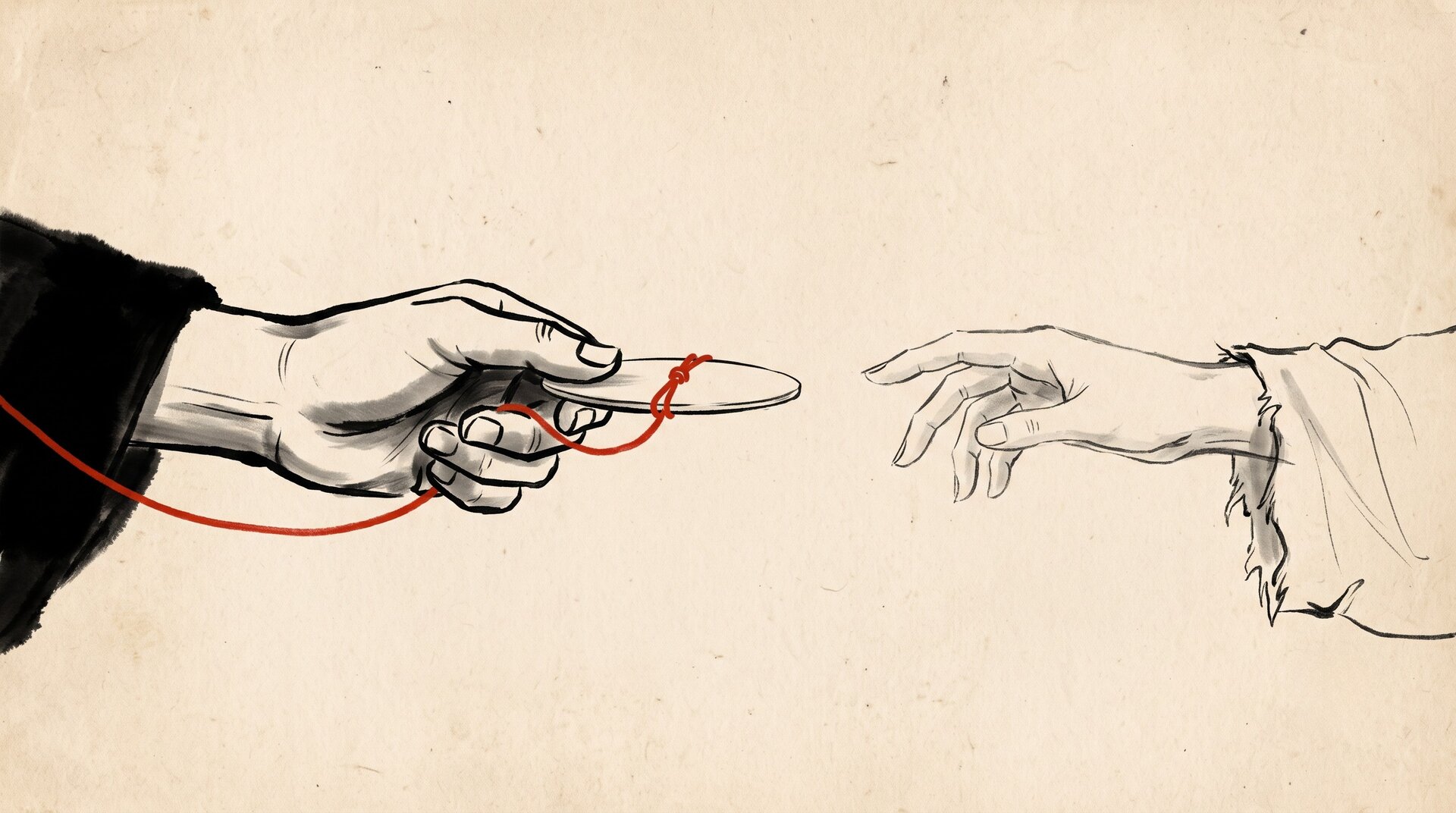
빌려준다는 동사는 비유가 아니라 회계다. 이 프로젝트에서 정부가 정예팀에 나눠주는 GPU부터가 정부 소유가 아니다. 정부에 GPU를 임대해 줄 공급사로 선정된 것은 SK텔레콤과 네이버클라우드 — 둘 다 경쟁에 참여한 정예팀의 주관사였다. 그래서 두 회사는 임차 사업이 진행되는 동안 GPU 지원 대상에서 제외됐다. 국가대표를 뽑는 경기장에서, 코트를 빌려준 팀이 그 코트 밖에서 뛰는 그림이다.
"Lend" here is not a metaphor; it is accounting. The GPUs the government distributes to its elite teams are not government property to begin with. The suppliers selected to lease GPUs to the state were SK Telecom and Naver Cloud — both of them lead firms of competing elite teams. For the duration of the lease, both were excluded from GPU support. Picture a national tryout in which the team that lent the court must play off it.
올해 1월 15일, 1차 단계평가 결과가 나왔다. LG AI연구원이 총점 90.2점으로 1위였고 SK텔레콤과 업스테이지가 통과했다. NC AI는 점수로 탈락했다. 그리고 네이버클라우드는 점수가 아니라 원칙으로 탈락했다 — 공개한 모델의 비전 인코더가 중국 알리바바 큐웬 2.5와 코사인 유사도 99.51%를 기록했고, 류제명 과기정통부 2차관은 "가중치를 그대로 갖다 쓴 부분에 대해 기술적 측면에서의 문제가 지적됐다"고 밝혔다. 국가는 '독자'라는 단어를 진지하게 읽은 것이다. 남의 가중치를 이어받은 모델은, 성적이 좋아도 국가대표가 아니다.
On January 15, the first-stage results came in. LG AI Research led with 90.2 points; SK Telecom and Upstage advanced. NC AI was cut on score. And Naver Cloud was cut not on score but on principle: the vision encoder of its published model showed a cosine similarity of 99.51 percent with Alibaba's Qwen 2.5, and Vice Minister Ryu Je-myung said the problem flagged was that "the weights were taken and used as they were." The state, it turns out, read the word "sovereign" literally. A model that inherits someone else's weights is not a national model, however well it scores.
업계의 반론도 기록해 둔다. 독자성의 기준과 범위를 사전에 충분히 정의하지 않은 채 지나치게 엄격하게 적용했다는 지적, 계획에 없던 '패자부활전'을 여는 것 자체가 기준의 불명확성을 방증한다는 지적이 나왔다. 타당한 비판이다. 다만 이 논쟁의 밑바닥에도 같은 구조가 깔려 있다. 류 차관은 추가 선발을 서두르는 이유를 이렇게 설명했다 — "임차한 GPU를 제공 중인데, 기다리면 임차 GPU 자원이 놀게 돼 예산 낭비가 생길 수 있다." 빌린 시간은 국가대표를 기다려 주지 않는다.
The industry's rebuttal deserves the record too: that the sovereignty standard was applied with severity never fully defined in advance, and that holding an unplanned "wild-card round" is itself evidence the criteria were unclear. Fair criticism. Yet even this dispute rests on the same underlying structure. Explaining why the replacement selection had to be rushed, the vice minister said: "We are providing leased GPUs — if we wait, the leased GPU resources sit idle and the budget is wasted." Borrowed time does not wait for a national team.
두 개의 시계
Two Clocks
이제 시계를 보자. 새 팹들은 2030년대 중반에 완공된다. 그런데 이 발표가 나온 바로 그 주에, 다른 두 개의 2028이 시장을 흔들었다.
Now look at the clocks. The new fabs are due in the mid-2030s. Yet in the very week of these announcements, two other 2028s shook the market.
하나. 7월 6일 리서치 회사 세미어낼리시스가 엔비디아의 차세대 서버 랙 '카이버 NVL144'가 12개월 이상 지연돼 2028년으로 밀렸다고 주장했고, 엔비디아는 "로드맵은 그대로"라고 반박했다. 진위와 무관하게 시장의 반응이 사실 하나를 드러냈다. 게시물 하나에 이비덴이 10%, 킹보드 라미네이트가 18%, 삼성전기가 11% 빠졌다. 올해 들어 수백 퍼센트씩 오른 종목들이었다. 이 랠리는 사실이 아니라 포지션의 두께에 반응하고 있었다.
One: on July 6, the research firm SemiAnalysis claimed Nvidia's next-generation Kyber NVL144 rack had slipped more than twelve months, to 2028; Nvidia countered that its "road map is intact." True or not, the market's reaction exposed a fact of its own. A single post knocked Ibiden down 10 percent, Kingboard Laminates 18, Samsung Electro-Mechanics 11 — stocks that had risen by hundreds of percent this year. The rally was reacting not to facts but to the thickness of its own positioning.
둘. 블룸버그 인텔리전스는 DRAM이 이르면 2028년 공급과잉으로 돌아설 수 있다고 전망한다. 영화 「빅쇼트」의 마이클 버리는 한국의 증설 발표를 "끝의 시작"이라 부르며 마이크론 공매도를 공개했다 — 물론 이것은 분석이 아니라 그의 포지션이다. 대만 업계도 같은 결의 우려를 냈다. 대규모 증설이 실제 공급으로 반영되는 시점의 업황이 예상보다 둔화되면, 공급과잉과 가격 하락 압력으로 이어질 수 있다는 것이다.
Two: Bloomberg Intelligence projects that DRAM could tip into oversupply as early as 2028. Michael Burry of "The Big Short" called Korea's expansion "the beginning of the end" and disclosed a short position in Micron — which is, of course, a position, not an analysis. Taiwan's industry voiced the same worry in quieter terms: if the cycle softens by the time this capacity reaches the market, it becomes oversupply and price pressure.
반대편 시계도 정직하게 읽어야 한다. 김정관 장관의 "5년 내 4배" 전망이 맞다면 이 증설은 늦은 것이지 이른 것이 아니다. 엔비디아 서버를 조립하는 훙하이의 분기 매출은 40% 뛰었고, 미국 하이퍼스케일러 네 곳의 올해 AI 지출은 약 7,250억 달러다. 수요는, 적어도 지금까지는, 진짜다.
The opposite clock must be read honestly as well. If Minister Kim's fourfold-in-five-years projection holds, this expansion is late, not early. Hon Hai, which assembles Nvidia's servers, just posted a 40 percent jump in quarterly sales, and the four US hyperscalers are budgeting roughly $725 billion for AI this year. The demand — so far, at least — is real.
어느 시계가 맞는지 여기서 판정하지 않는다. 확실한 것은 하나다. 팹의 완공 시점은 두 시계 모두의 사정거리 밖에 있다. 2030년대 중반의 메모리 가격을 아는 사람은 지구에 없고, 1,600조 원은 그 모르는 값에 걸려 있다.
We render no verdict here on which clock is right. One thing alone is certain: the fabs' completion date lies beyond the range of both. No one on Earth knows the price of memory in the mid-2030s, and 1,600 trillion won is staked on that unknown number.
세우고 나면 누구의 것인가
Once Built, Whose Is It?
정치의 층도 짧게 기록한다. 야당은 투자 지역이 지난 대선에서 여당이 85%를 득표한 곳이라며 정치적 동기를 물었고, 대통령은 "지지율 관리를 위한 수단이었다면 지방선거 전에 시작했을 것"이라고 받았다. 청와대는 수도권의 땅과 전력과 용수가 이미 물리적 한계에 닿았다는 점을 분산의 근거로 든다. 안철수 의원은 다른 층을 겨눴다 — 수백조 프로젝트에 국비·지자체 매칭 비율과 재원 조달 방안이 비어 있고, 신설되는 반도체 특별회계가 국회 심의를 우회하는 통로가 될 수 있다는 것이다. 시행령 초안의 '수도권 배제' 조항은 경기도의 반발 끝에 삭제되고 '비수도권 우대' 원칙으로 물러섰다. 이 논쟁들은 각자의 자리에서 유효하다. 자강헌은 어느 쪽의 함성도 사지 않는다.
The political layer, briefly. The opposition asked whether it was coincidence that the investment landed where the ruling party took 85 percent of the vote; the president replied that a popularity play would have launched before the local elections. The presidential office grounds the dispersal in physics: the capital region is out of land, power, and water. Lawmaker Ahn Cheol-soo aimed at a different layer — that a multi-hundred-trillion project lacks any stated cost-sharing ratio or funding plan, and that the new semiconductor special account could become a channel around parliamentary review. The draft decree's "capital-region exclusion" clause was dropped after Gyeonggi's pushback, retreating to a "non-capital priority" principle. Each of these disputes is valid on its own ground. Jagangheon buys no side's roar.
대신 여도 야도 묻지 않는 질문을 하나 묻는다. 세우고 나면, 그것은 누구의 것이 되는가.
Instead we ask the one question neither side is asking: once it is built, whose does it become?
광주에 팹 4기가 선다. 지역이 대는 것은 전력과 용수와 부지와 인허가의 속도다. 지역이 갖게 되는 것은 임금과 지가다. 소유는 이동하지 않는다. 이재용 회장은 "전력, 용수, 인력 확보 등 인센티브 지원이 기대되는 광주"라고 말했고, 노태문 사장은 "투자와 혁신을 지속하려면 정부의 전향적인 지원이 필요하다"고 말했다. 둘 다 조건문이다. 조건이 사라지면 문장 전체가 어떻게 되는지는, 조선업과 자동차의 도시들이 이미 안다.
Four fabs will rise in Gwangju. What the region supplies is power, water, land, and the speed of permits. What the region receives is wages and land prices. Ownership does not move. Chairman Lee Jae-yong spoke of "Gwangju, where incentive support — power, water, workforce — can be expected"; President Roh Tae-moon said "continued investment and innovation will require the government's forthcoming support." Both are conditional sentences. What happens to such sentences when the conditions lapse is something the shipbuilding and auto towns already know.
모델 다섯 팀에게 국가가 건넨 것은 반대의 문장이었다. 스스로 서라 — 빌려준 칩 위에서, 반년마다 증명하며. 그리고 둘이 떨어졌다. 국가는 쥐여주는 곳과 세우라는 곳을 갈랐다. 어느 쪽이 옳은 통치술인지는 논쟁할 수 있다. 그러나 그 기준이 무엇이었는지는, 네 번의 보고회 어디에서도 발표되지 않았다.
To the five model teams, the state handed the opposite sentence: stand on your own — on leased chips, proving yourself every six months. And two have already fallen. The state divided the world into places where it hands things over and places where it demands self-standing. Which is the better statecraft can be debated. But the criterion for the division was announced at none of the four briefings.
400장
Four Hundred GPUs
마지막으로, 탈락으로 비워진 자리를 채운 팀을 보자. 2월 20일 추가 선정된 모티프테크놀로지스는 지난해 GPU 400장과 5.5조 개 토큰으로 — 회사 발표 기준 — 단 7주 만에 127억 파라미터 모델을 밑바닥부터 학습시켰다. 그 모델은 글로벌 평가 지표에서 자기보다 두 배 이상 큰 국내 모델들을 제치고 한국 1위에 올랐다. 학습은 엔비디아가 아니라 AMD 칩 위에서 이뤄졌다.
Finally, the team that filled the vacated seat. Motif Technologies, added on February 20, trained a 12.7-billion-parameter model from scratch last year with 400 GPUs and 5.5 trillion tokens — the company's own figures — in just seven weeks. On a global benchmark it ranked first among Korean models, ahead of domestic models more than twice its size. The training ran not on Nvidia but on AMD chips.

낭만은 금물이다. 127억 파라미터는 프런티어가 아니고, 모티프 역시 정부의 칩과 벤처의 자본 위에 서 있다. 그러나 이 사례가 가리키는 방향은 분명하다. 1,600조 원이 사는 것은 생산능력이고, 400장이 증명한 것은 사람과 설계다. 능력은 사이클을 타고 오르내리지만, 기반은 사이클이 지나간 뒤에도 남는다.
No romance here. Twelve billion parameters is not the frontier, and Motif too stands on government chips and venture capital. But the direction the case points is unmistakable. What 1,600 trillion won buys is capacity; what 400 GPUs proved is people and design. Capacity rises and falls with the cycle. Foundations remain after the cycle has passed.
다음 보고회가 열리면 — 열릴 것이다 — 총액을 읽기 전에 동사를 읽을 일이다. 짓는다는 국가가 대신 들어 주는 말이고, 세운다는 스스로 들어서 끝내 제 것으로 남기는 말이다. 1,600조 원의 시대에 지녀야 할 잣대는, 그 한 줄이면 족하다.
When the next briefing comes — and it will — read the verb before you read the total. To build for someone is to carry the weight in their place; to stand is to carry it yourself — and what you carry yourself is finally your own. In the age of 1,600 trillion won, that one line of measure is enough.
출처와 검증Sources & Verification
권역별 투자(서남권 896조·충청 392조·영남 312조, 합 1,600조 원): 대한민국 정책브리핑(2026.6.30), 뉴스1·이투데이·EBN·더팩트·뉴시스 종합(2026.7.3~6). 반도체특별법 시행령(기반시설 50% 이상~최대 100% 국비, 국유지 감면, 예타 면제, 15일 타임아웃, '수도권 배제' 삭제): 산업통상부 입법예고(2026.6.25), 연합인포맥스·전자신문·파이낸셜뉴스. 팹 일정 12년 단축·"5년 내 4배": 김정관 장관, 뉴시스(2026.6.29).
Regional packages (896T southwest, 392T Chungcheong, 312T southeast; 1,600T total): Korea Policy Briefing (Jun 30, 2026) and cross-checked wire/press reports (Jul 3–6). Semiconductor Special Act enforcement decree (50%-to-100% state funding of infrastructure, land-fee waivers, feasibility exemption, 15-day timeout, deletion of the capital-exclusion clause): MOTIE legislative notice (Jun 25, 2026) with multiple press confirmations.
독자 AI 파운데이션 모델(총예산 2,136억 원, GPU 팀당 500~1,000장 임차, 95% 무빙 타겟, 2027년 2팀): 과기정통부 공고 및 브리핑, 바이라인네트워크(2025.8)·플래텀(2026.1) 교차. GPU 임차 공급사(SK텔레콤·네이버클라우드)와 지원 제외: 동 출처 + 류제명 2차관 브리핑 발언(정책브리핑·아시아경제, 2026.1.15). 1차 평가(LG 90.2점, 네이버클라우드 독자성 탈락, 큐웬 2.5 코사인 유사도 99.51%): 정책브리핑·플래텀·EBN·경향신문(2026.1.15~16). 모티프(400장·5.5T 토큰·7주, AAII 국내 1위): 전자신문(2025.11)·플래텀(2025.12), 회사 발표 기준, arXiv:2511.07464.
Sovereign AI Foundation Model project (213.6B-won budget, 500–1,000 leased GPUs per team, moving 95% target, two survivors by 2027): MSIT notices and briefings, cross-checked via Byline Network (Aug 2025) and Platum (Jan 2026). GPU lessors (SK Telecom, Naver Cloud) and their exclusion from GPU support: same sources plus Vice Minister Ryu Je-myung's briefing remarks (Jan 15, 2026). First-stage results and the Qwen 2.5 cosine-similarity finding (99.51%): Korea Policy Briefing, Platum, EBN, Kyunghyang (Jan 15–16, 2026). Motif (400 GPUs, 5.5T tokens, seven weeks; #1 Korean model on the Artificial Analysis index): ET News (Nov 2025), Platum (Dec 2025) — company-reported figures; technical report at arXiv:2511.07464.
시장·사이클: 카이버 NVL144 지연 주장과 엔비디아 반박, 아시아 부품주 급락 — 블룸버그(2026.7.6~7). DRAM 2028년 공급과잉 전망(블룸버그 인텔리전스)과 버리의 마이크론 공매도(포지션) — 블룸버그 오피니언 슐리 렌(2026.7.6). 훙하이 +40%·하이퍼스케일러 약 $725B — 블룸버그(2026.7.5). 대만 업계 공급과잉 우려 — 뉴시스(2026.7.2). 정치층(야당 의혹·대통령 X 게시물·안철수 특별회계 비판) — 파이낸셜뉴스(2026.7.4)·한국경제(2026.7.1). SCMP 제목 US$576B와 URL의 us650-billion — 해당 기사 원문.
Market and cycle: the Kyber NVL144 delay claim, Nvidia's denial, and the Asian supplier sell-off — Bloomberg (Jul 6–7). The 2028 DRAM oversupply projection (Bloomberg Intelligence) and Burry's Micron short (a position, noted as such) — Bloomberg Opinion, Shuli Ren (Jul 6). Hon Hai +40% and ~$725B hyperscaler capex — Bloomberg (Jul 5). Taiwanese industry concerns — Newsis (Jul 2). The political layer — Financial News (Jul 4), Hankyung (Jul 1). The SCMP headline (US$576B) versus its URL (us650-billion) — the article itself.
검증 원칙: 모든 핵심 수치는 복수 출처로 교차검증했고, 분모가 다른 수치의 직접 비교는 본문에 그 한계를 명시했다. 단일 출처이거나 회사 자기보고인 수치는 본문에 그 성격을 밝혔다. 사실 확인 과정에 AI 도구(Claude)의 보조를 받았으며, 최종 검증과 판단은 자강헌의 것이다. 본문 삽화 3점은 AI 이미지 생성 도구로 제작했으며, 실제 장면을 촬영한 사진이 아니다.
Verification: every key figure was cross-checked across multiple sources; where denominators differ, the text says so rather than computing a ratio; single-source and company-reported figures are labeled as such in the body. AI tooling (Claude) assisted the fact-checking process; final verification and judgment are Jagangheon's own. The three illustrations were made with an AI image-generation tool; they are not photographs of real scenes.